What Does a Public Adjuster Do in North Carolina?
On this page
A public adjuster works for you, not your insurance company, on a property damage claim. You hire one by signing a contract. The adjuster inspects the damage, puts a dollar value on the loss, reviews your policy and negotiates the settlement with your insurer. The fee is usually a percentage of the settlement. In North Carolina, a public adjuster must also hold a license from the North Carolina Department of Insurance (NCDOI).
We are a restoration company, so our part of a claim is the house itself. We dry it, document the damage and meet your insurer’s adjuster at the property. We do not negotiate the claim for you. The steps that are ours are laid out in our insurance claims process.
Below, we cover who a public adjuster works for, how one differs from your insurer’s adjuster, and what one can charge. Then we look at when one may be worth hiring and where a contractor’s part ends.
Who Does a Public Adjuster Work For on an Insurance Claim in North Carolina?
A public adjuster works for you, the person filing the claim, and for no insurance company. North Carolina’s General Statutes require the adjuster to serve your interest alone, with complete loyalty (G.S. 58-33A-80). The adjuster owes you, in good faith, the information and advice that best serve your claim. The adjuster also cannot agree to a settlement without your knowledge and consent.
Their work covers claims you make under your own property insurance, like a homeowners policy, for damage to your home or belongings (G.S. 58-33A-5). A claim against someone else’s insurance, like a neighbor’s, is outside it (G.S. 58-33A-1). On your own claim, a public adjuster can manage the whole claim process. That includes:
- Inspecting the damage at your home
- Listing damaged belongings and putting a dollar value on the loss
- Reviewing your policy
- Handling the claim paperwork your insurer requires
- Negotiating the settlement with your insurer
For example, say water from a broken supply line runs under a hardwood floor and soaks the rug on top. A public adjuster you hire would inspect the floor and list the rug and anything else ruined. Then they would price the loss, check it against your policy and present the claim to your insurer.
Check the license before you sign. North Carolina requires a public adjuster license for anyone who works as one, companies included (G.S. 58-33A-10). Ask to see the license, and write down the adjuster’s full name and license number. To check its status, call NCDOI at 855-408-1212, or use the license status lookup linked from the department’s licensing page. You can also ask the department about the adjuster’s complaint history. Ask the adjuster for references in your area, and check with your local Better Business Bureau.
Get the adjuster’s permanent address, too. After large disasters, public adjusters from other states sometimes travel in to work. They need a North Carolina license as well, so the same check applies.
How Is a Public Adjuster Different From the Insurance Company’s Adjuster in North Carolina?
The difference is who each one works for, and who pays. Your insurance company’s adjuster works for the insurer and is paid by it. A public adjuster works for you, and the fee is your obligation, not the insurer’s (G.S. 58-33A-65(f)).
Before you sign, a public adjuster must give you a separate disclosure. It names three kinds of adjuster who could be involved in your claim:
- Company adjuster. An employee of your insurance company who represents its interest. Paid by the insurer, and will not charge you a fee.
- Independent adjuster. Hired on contract by your insurance company to represent its interest in settling the claim. Paid by your insurer, and will not charge you a fee.
- Public adjuster. Works for no insurance company. Works for you to help prepare, present and settle the claim. Paid a fee or commission under a contract you sign, often a percentage of the settlement.
When you file a claim, your insurance company will probably assign an adjuster to review it. That adjuster evaluates the loss and recommends the amount the insurer will pay. Their license also comes from NCDOI, but their work is on the insurer’s behalf. For example, say a pipe leaks into a kitchen ceiling. The adjuster your insurer sends to look at the stain works for the insurer, on staff or under contract. A public adjuster cannot also act as the company or independent adjuster on the same claim (G.S. 58-33A-80(i)).
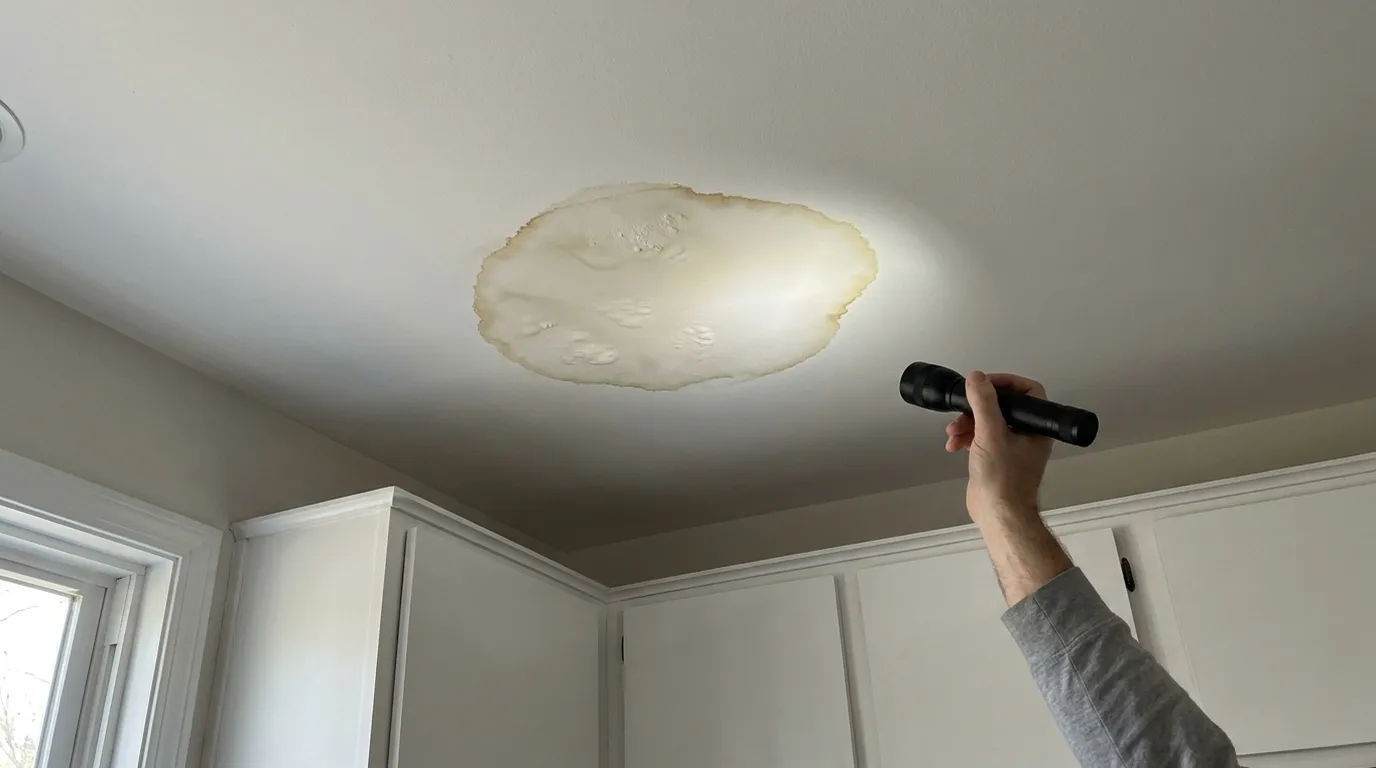
Hiring a public adjuster changes who your insurer talks to. The adjuster sends your insurer a letter, signed by you, saying they represent you (G.S. 58-33A-65(h)). From then on, your insurance company should deal with the public adjuster instead of with you. You keep the right to talk with your insurer, its adjuster or your own attorney about the claim yourself (G.S. 58-33A-65(f)).
What your policy covers is a separate question, and your insurance company decides it. Our post on whether homeowners insurance covers water damage walks through it.
How Much Does a Public Adjuster Cost in North Carolina?
A public adjuster usually charges a percentage of your insurance settlement. The contract must be in writing, and when the fee is a share of the settlement, it must state the exact percentage (G.S. 58-33A-65).
For example, under a contract with a 10% fee, a $50,000 settlement means you owe the public adjuster $5,000. The 10% there is only an example. The percentage in your own contract is the one that counts.
North Carolina’s fee cap is narrow. In a catastrophic incident declared by the President or the Governor, the fee cannot exceed 10% of the settlement (G.S. 58-33A-60(d)). Under the statute, a catastrophic incident is one that results in extraordinary levels of mass casualties, damage or disruption (G.S. 58-33A-5). A pipe that bursts inside one house does not fit that definition. Outside a declared catastrophe, the statute sets no percentage cap.
Another rule is not limited to disasters. Say your insurer pays your full policy limit within 72 hours after you report the loss, or commits in writing to pay it. Then the public adjuster cannot take a percentage of that payment (G.S. 58-33A-65(c)). The adjuster can charge only reasonable pay for time spent and expenses. The adjuster must also tell you the insurer’s payment might not go up.
Do not pay a public adjuster any money up front, since a percentage fee comes from your settlement.
North Carolina’s public adjuster law also gives you these protections:
- Expenses spelled out. Any expenses the adjuster will take from the claim payment must be listed in the contract by type, with dollar estimates. Extra expenses need your approval first (G.S. 58-33A-65(b)).
- Three business days to cancel. Send the cancellation in writing, mailed or delivered to the address in the contract, within three business days after signing (G.S. 58-33A-65(i)). Anything of value you gave must be returned within 15 business days after the adjuster gets your notice.
- The fee comes check by check. The contract cannot let the adjuster take the whole fee out of the insurer’s first check. The fee comes as a percentage of each check, and the contract cannot add collection costs or late fees. Ask how checks will be issued, and make sure they are payable to you and the adjuster. The contract cannot require checks made out only to the adjuster (G.S. 58-33A-65(e)).
- Claim money held in escrow. Money the adjuster holds for you must sit in an escrow or trust account at a federally insured financial institution (G.S. 58-33A-70).
When Is a Public Adjuster Worth Hiring in North Carolina?
It comes down to whether you can settle the claim on your own. Outside help may be worth considering in three cases NCDOI names. They are a large claim, a complicated claim, and a claim you cannot settle with your insurer. For those cases, a private attorney who handles insurance claims is the other option.
You are not required to hire a public adjuster to meet your duties under the policy. You also have the right to hire one (G.S. 58-33A-65(f)).
The fee is usually a share of what the claim pays. So the useful question is what that share buys on your claim. For example, say a dishwasher leak warps one stretch of kitchen floor, and your insurer agrees with the repair estimate. Now say water reached several rooms and the furniture in them. The cause is in dispute, and your insurer’s offer is far below the repair estimate. The first may be a claim you can settle on your own. The second is the kind of claim those three cases describe. Either way, the decision is yours.
Whether to file a claim at all is a separate decision. Our post on whether a water damage claim can raise your rates covers that side.
Take your time before you sign anything. Make sure you understand the total fee, when payments are due, and whether canceling carries a penalty. If you do decide to hire one, meet with two or more public adjusters first, as the department suggests. Ask each how long your claim may take to settle, and ask the one you hire for updates on your claim.
A public adjuster may not solicit your business between 9 p.m. and 9 a.m. (G.S. 58-33A-80(k)). After a large disaster, some people may pose as public adjusters and push homeowners to sign unfavorable contracts. Do not let anyone rush you into signing. Questions about a contract can go to NCDOI’s Consumer Services Division at the same number, 855-408-1212.
Where Does a Contractor’s Part of a Claim End and a Public Adjuster’s Begin in North Carolina?
A restoration contractor dries the house, documents the damage and shows the adjuster what it found. Negotiating or settling the claim on your behalf, for pay, is where a public adjuster’s work begins.
North Carolina defines a public adjuster by that work. It is anyone paid, in money or anything else of value, to negotiate or settle a homeowner’s property claim for them (G.S. 58-33A-5). Helping with that negotiation for pay counts too. The work needs a public adjuster license (G.S. 58-33A-10). An attorney acting as your attorney is exempt.
Our part stays with the building. We dry it to a measured moisture target, with readings taken every day. Our file holds photos, thermal images, moisture readings and daily drying logs, and you get a copy of all of it. We write the repair estimate in Xactimate, the software most carriers price restoration work in. When the adjuster inspects, we meet them at the property and walk them through what we found.
What your policy covers is decided by your insurance company, not by us. We do not negotiate or settle the claim for you.
For example, say a water heater leaks and soaks the floor of the hall beside it. We would dry the floor, log readings each day and price the repair. If you and your insurer then disagree on the amount, that negotiation is yours, or a public adjuster’s or attorney’s if you hire one.
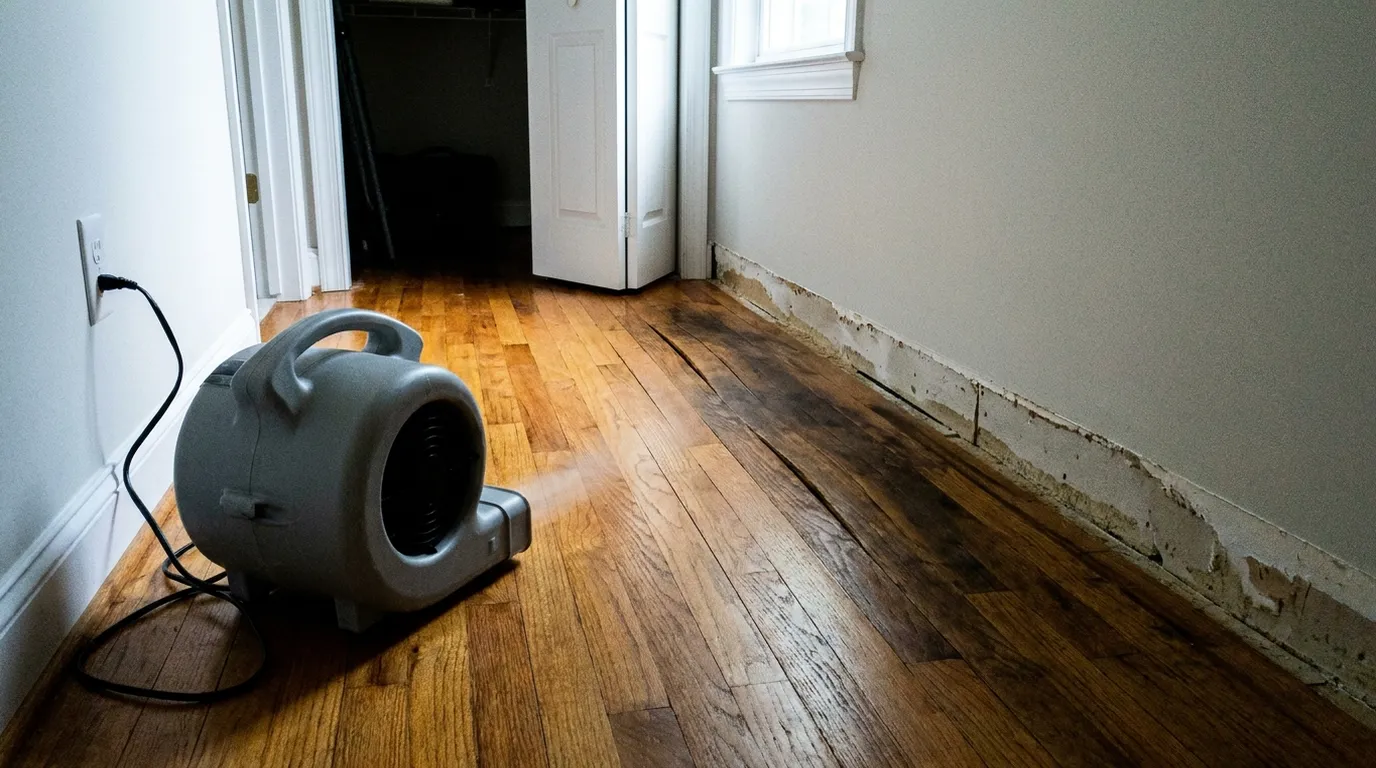
From the other side, a public adjuster can help hire contractors and inspect repairs as they happen. But neither the contract nor a power of attorney can give the adjuster the authority to choose who does your repairs (G.S. 58-33A-80(i)). If the adjuster has an interest in, or gets paid by, a construction firm working on your loss, they must tell you (G.S. 58-33A-80(g)).
We are also a general contractor in North Carolina. So once you and your insurer settle what is covered, the same company that dried the house can repair it. Our page on which parts of a claim are ours lays out each step.
The Bottom Line on Public Adjusters in North Carolina
A public adjuster works for you, not your insurer, and needs a North Carolina license you can check with NCDOI at 855-408-1212. The fee is usually a percentage of your settlement, stated in a written contract. North Carolina caps it at 10% only in a catastrophic incident declared by the President or the Governor. If your insurer pays or commits in writing to pay the policy limit within 72 hours of your report, no percentage fee is allowed. You can cancel in writing within three business days of signing. Whether to hire one is your decision.
Our part is the house. We dry it, document the damage and meet the adjuster at the property. Negotiating the claim stays with you, or with a public adjuster or attorney if you hire one. If a leak has soaked your home, we can start the drying and the record of it. If you are in the Charlotte area, our Charlotte water damage page shows how a job starts.