- Google5.0 Rating400+ reviews
- Yelp4.8 Rating16 reviews
- Facebook100% Recommend16 reviews
Emergency Sewage Backup Cleanup and Remediation
A sewage backup is not a water loss you dry harder. It is category 3 water, and what it soaked into has to come out and be remediated before anything is dried. Emergency response for homes and businesses across the Charlotte metro and into South Carolina.
- Free estimates, no upfront costs
- We answer 24/7, on site within 60 minutes
- We work with all insurance companies



Why us
Why homeowners call us for sewage cleanup
Two calls, and the order matters. Clearing and repairing the line is plumbing work. That is a plumber, or the municipality if the blockage sits in the public main, and it is not a trade we hold. Until the line runs again, anything cleaned inside will simply be filled again. The second call is the building itself: everywhere the wastewater traveled, everything it soaked into, and the rooms downstream of the one you found it in.
What follows is not a harder version of drying a spill. Porous material that absorbed contaminated water is cut out and disposed of rather than dried, the work zone is sealed and held under negative air so nothing migrates through the rest of the building, and drying is the last part of the job rather than the first.
We work for you, not the insurance
What has to be removed and what can be cleaned is most of the cost of a sewage job, and it is a judgment somebody always has an interest in. We take no work from carrier vendor programs, so that call is ours and yours to make. We document it: photographs, moisture readings, an itemized list of what left the building. The carrier evaluates it.
We dry it and we rebuild it
A sewage job is a removal job before it is a drying job. Subfloor, the lower band of drywall, insulation, cabinet bases, carpet and pad all leave the building. That is a room stripped back to framing, and somebody has to rebuild it. We are licensed general contractors in both Carolinas, so the same firm that takes it out puts it back, on one scope and one schedule.
Free estimate, any hour of any day
Nobody pays for an opinion here. We walk it, tell you where the wastewater actually traveled and what that means for the flooring and the lower walls, and if the honest answer is that a plumber and a mop is the whole of it, that is what you will hear. No cost either way, nothing owed, and the commitment is to be at your door within 60 minutes.
- 60 minutesFrom your call to our arrivalAt your door within 60 minutes.
- Since 2014Family-owned, not a franchise
- 5.0 ★Google-rated
How sewage gets back inside a building
Sewage almost never appears where the problem is. The blockage is downstream, often outside the building entirely, and what you find is the lowest fixture in the house overflowing with what the line was carrying.
A main line clog forces it back through the lowest drain
When the line leaving the building blocks downstream, everything still draining into it has nowhere to go but back. It surfaces at the lowest opening rather than at the blockage, so a basement floor drain, a downstairs toilet or a shower pan fills while the fixtures upstairs still seem fine. What comes back up is whatever the line was already carrying.
Tree roots and an aging lateral outside the building
The pipe between the building and the main is often clay or cast iron, and it is the only reliably damp thing in the yard. Roots find the joints and grow into them, and the line cracks, shifts or collapses over years rather than overnight. Because the failure is underground and outside, there is usually no warning at all until the flow reverses and arrives indoors.
A shared drain stack pushing back through a fixture
A washing machine, a toilet and a tub can all tie into the same stack, and when that stack is restricted below them, discharging one pushes back out of another. It reads as a single appliance misbehaving. It is not. Those fixtures share a line, which is why what surfaces in one room is rarely confined to it.
Heavy rain arriving faster than the system can carry it
Rainfall can put more into a municipal system than that system moves, particularly in older neighborhoods where storm and sanitary lines were never fully separated. With the mains at capacity the pressure has to go somewhere, and lower-level bathrooms and basement drains on the same street are the path of least resistance. It arrives with the rain and leaves with none of it.
A septic tank or drain field that has stopped taking it
On a property on septic rather than city sewer, a full tank, a failed pump or a saturated drain field means nothing leaves the building at all. Fixtures keep discharging into a system with no room in it, and the lowest ones back up first. What surfaces is not a day of use. It is what the tank has been holding.
A toilet overflowing at the fixture, not at the main
Here the blockage sits in the trap or in the few feet of branch behind the bowl rather than out in the yard, so one fixture misbehaves while the rest of the house drains as normal. It still puts contaminated water across a floor, and upstairs it reaches the ceiling below within minutes. A small volume reaching two rooms is a larger job than a large volume reaching one.
Our customer reviews
Customer reviews from our restoration work
Real reviews from real jobs, in the reviewer's own words, including homeowners in Waxhaw and Matthews.
Restoration work is a stressful thing to hire for, so see what people say about how fast we answered, and how the job actually went.
We had a major rain storm and had flooding all along the backside of our house, requiring all the sheet rock and insulation to be removed. Dan came in with his team and completely and efficiently removed all the debris and put machines in to dry out the area. He was there within an hour and stayed until the job was done. We live in Millbridge and highly recommend them.
 jeff mcfarland
The team was great to work with. Very responsive, professional, and detailed in their mitigation services. We are looking forward to working with them during the repair process!
Dan and Taylor were professional, prompt, and honest. They assessed my crawlspace after a water intrusion and were upfront about the damage. They assessed if there was any mold damage and gave me honest feedback without pushing any sales tactics. I appreciate their honesty and assistance in a time of need.
They were very responsive, and honest — when the crew came the next day to do water removal a lot had drained out; they let us know and charged accordingly. Would definitely use again.
 Ernesto Rodriguez
Dan was extremely helpful throughout the whole process helping us with water damage concerns at our property in Matthews. He was very knowledgeable, easy to work with, and took the time to explain everything clearly instead of just trying to rush through the job. You can tell he genuinely cares about helping people and doing things the right way.
Insurance billing
We bill your insurer directly for restoration work










You hire us for the restoration. We document the damage, coordinate with your adjuster, and keep you informed based on your policy and coverage. Where your policy and carrier allow it, we bill your carrier directly.
Direct billing subject to your policy and carrier approval.
What happens when you call
Our sewage cleanup process
The order matters more here than on any other kind of water loss, because drying a contaminated building moves the problem around instead of ending it. Every step below happens inside containment, and nothing is dried until what was carrying the contamination has left the building.
One step sits outside our scope and it comes first. The line has to be clear before anything inside is worth cleaning, and that is a plumber or the municipality. Assessment and containment can start while that is being sorted out, but a building cleaned under a blocked line just fills again.
Response
Someone answers, any hour of any day. The first questions are whether the line has been cleared and whether anyone is still running water into it, because that decides what can safely start.
Assessment
Where the wastewater traveled, how far it wicked up the walls and under the flooring, and which materials are porous enough that they have to come out rather than be cleaned.
Mitigation & Containment
The work zone is sealed off and put under negative air, gross contamination and standing water come out first, and the route to the door is protected so nothing is tracked through clean rooms.
Cleaning & Drying
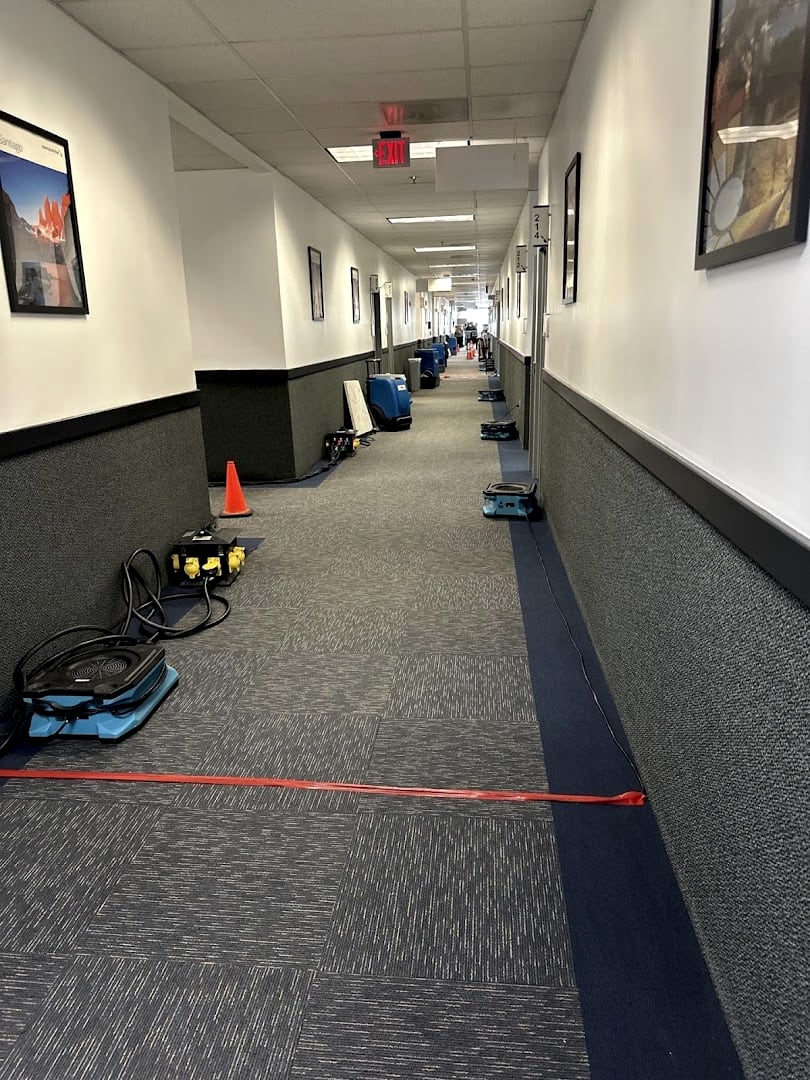
Affected porous material is removed and disposed of, the surfaces underneath are cleaned and treated with an antimicrobial, and only then do the air movers and dehumidifiers go in.
Restoration & Repairs
Subfloor, drywall, insulation, trim, cabinetry and flooring go back in, and the room is finished to match what was there rather than patched at the bottom.
Documented at every step
Two things go on the record here and only one of them is moisture. The readings below show the structure came back dry, which is the end of the job. The other half is an itemized account of what was removed and why, because on a sewage loss much of the work is material leaving the building rather than material being dried:
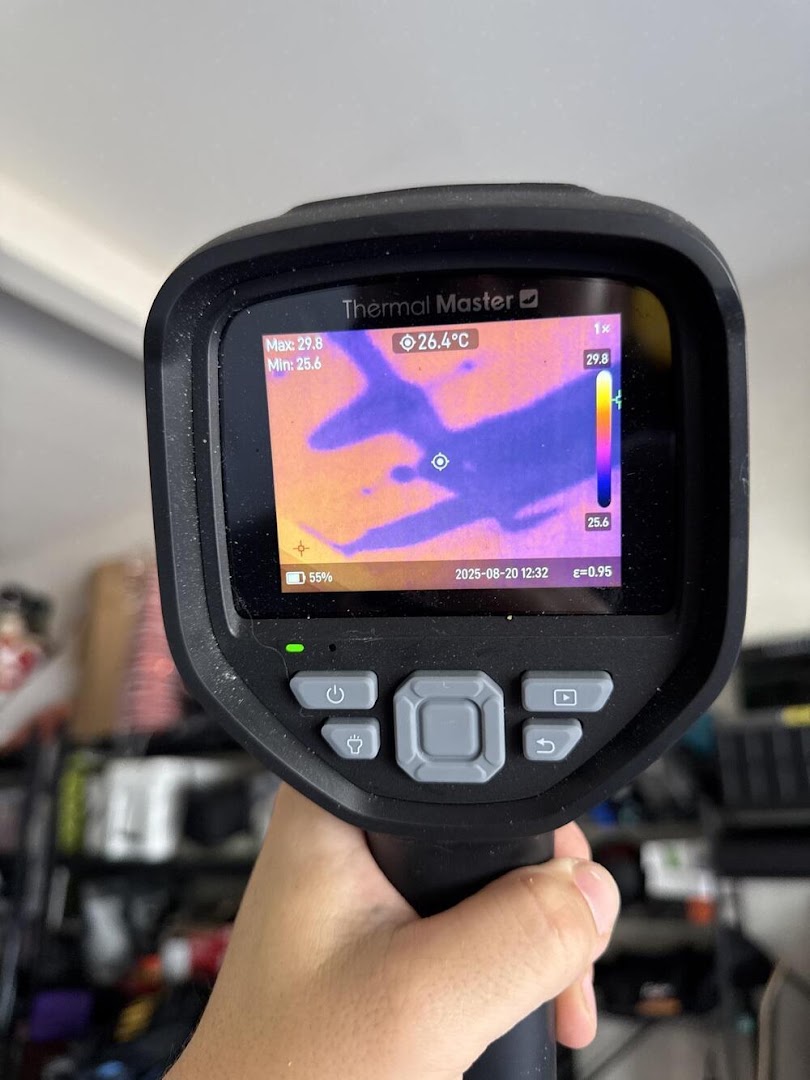
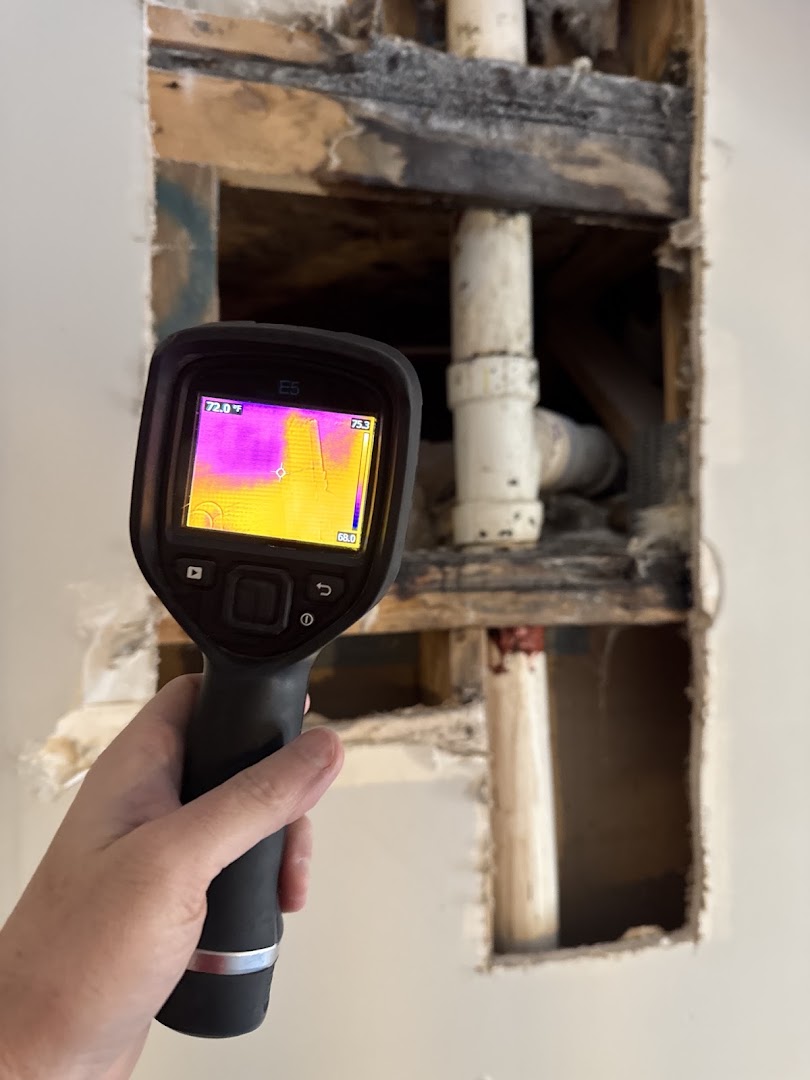
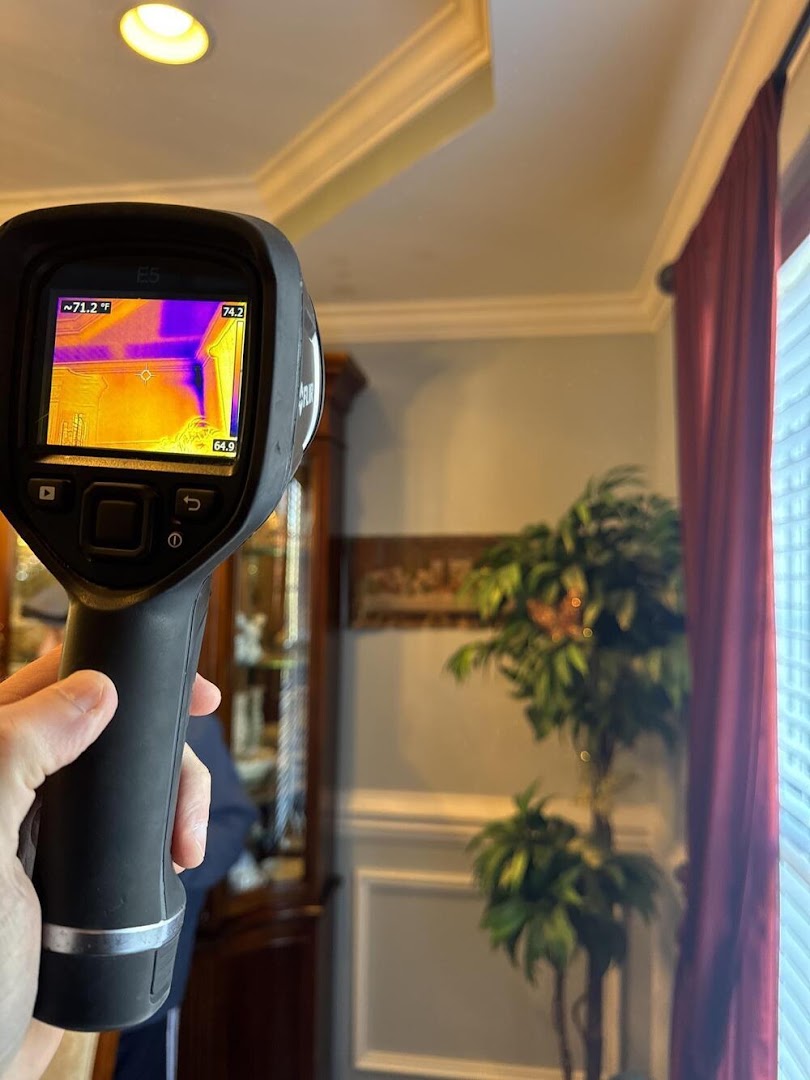
- Thermal imaging
- Moisture graphs
- Moisture mapping
- Daily drying logs
- Video documentation
- Xactimate estimates
- Equipment monitoring
- RH and GPP monitoring
- Moisture content readings
- Before, during and after photos
- Category and Class documentation
- Insurance documentation packages
Line cleared? The building is the next call.
Service areas
Sewage cleanup across the Charlotte metro and into South Carolina
25 cities, three offices, one number.
A crew can be on the road at any hour.


Our team
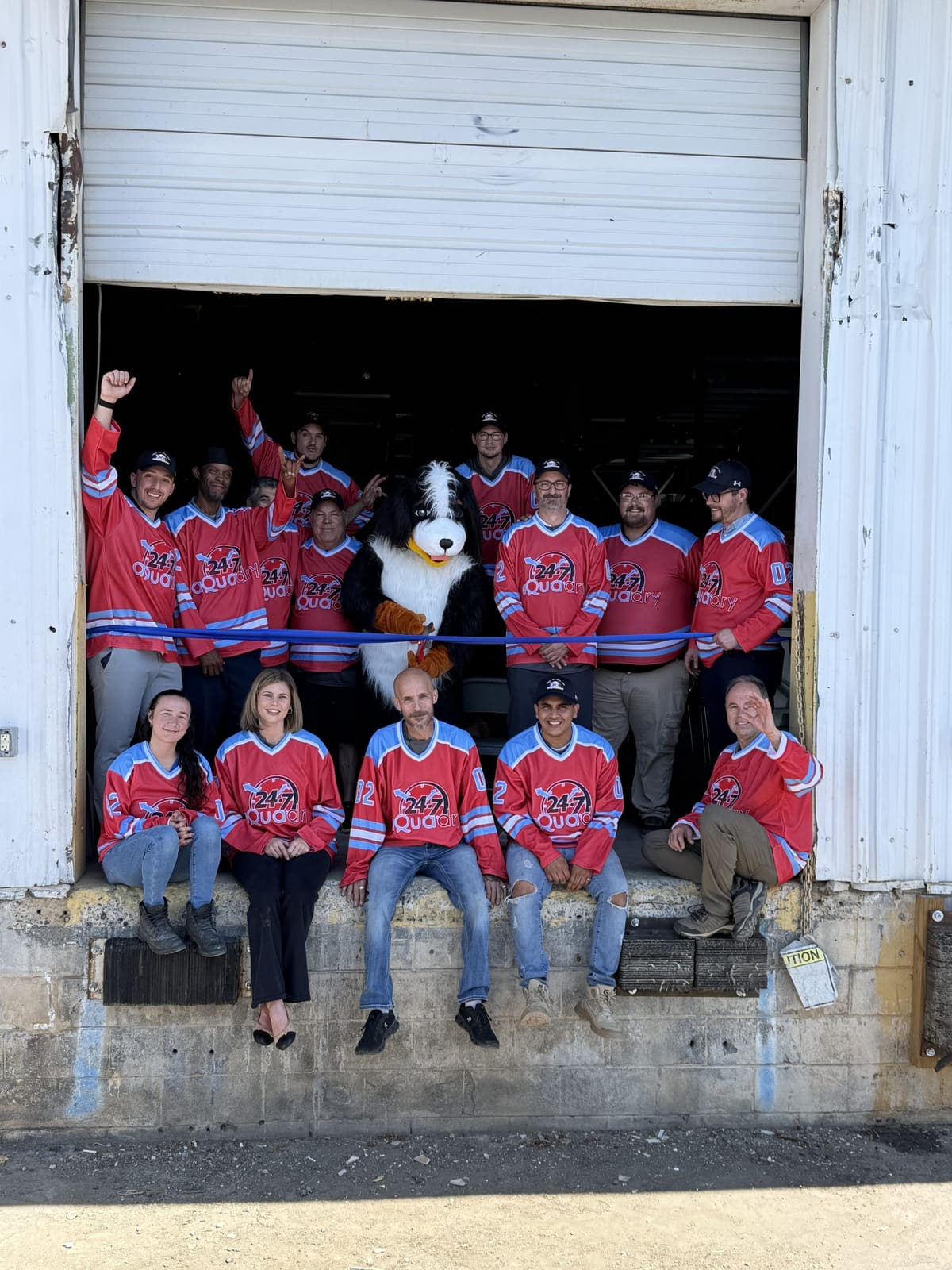
The team behind our sewage cleanup work
Owned by Dan DiPrima and Dan Friedman
The owners are reachable, and decisions about your job are made by people you can get hold of.
You get us, not a national call center
The number you call reaches the people who do the work.
An IICRC Certified Firm, #56517068
The certification is held by the firm and the number is public, so you can look it up rather than take our word for it. It is the industry standard for cleaning and restoration work.
Three offices across the Carolinas
Waxhaw, Fort Mill and Charlotte.
The names customers actually remember
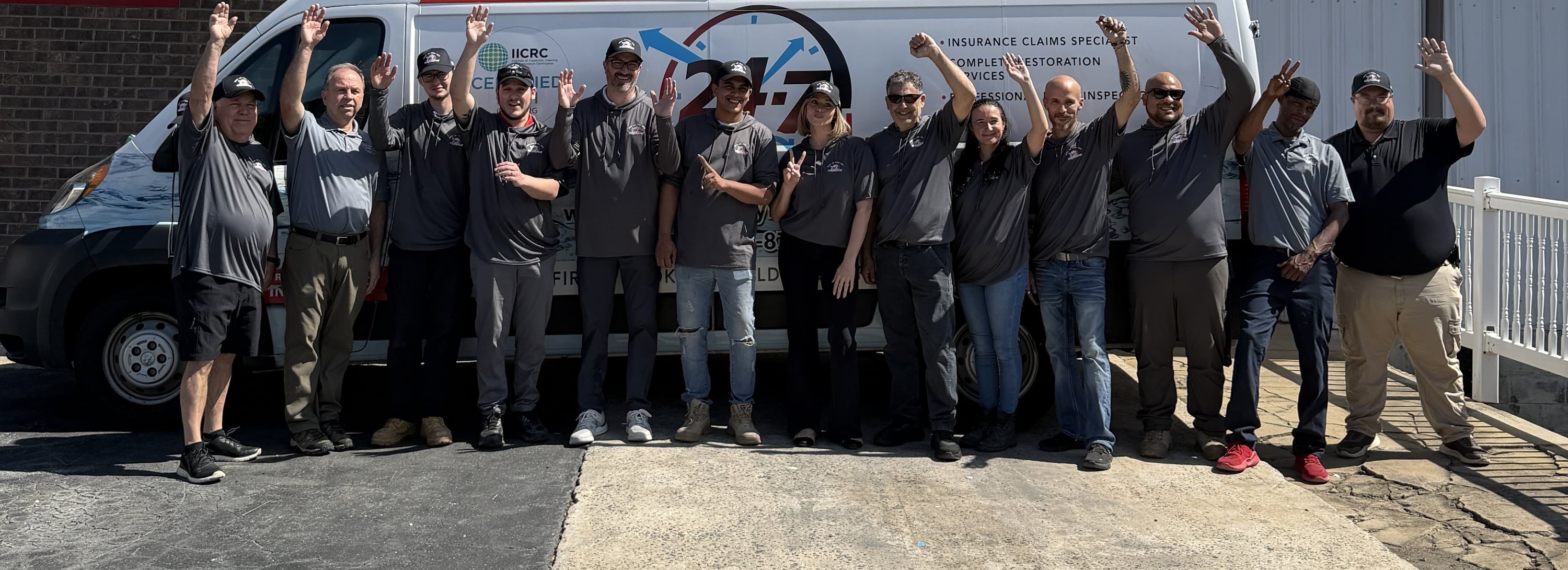
Dan, Taylor, Zac and Johnathan all get named in our reviews.
Free estimate
Get a free estimate for
sewage cleanup
Send us the details and we will call you back. This works at 2am when you would rather not talk on the phone.
- On site in 60 minutesFrom your call to our arrival.
- Available 24/7Someone answers, any hour.
- Free estimateNo obligation, no pressure.
In an emergency, calling is faster.Call (704) 912-4001
FAQ
Sewage cleanup questions we get asked
Do I need a plumber or a restoration company for a sewage backup?
Both, and in that order. Clearing and repairing the line is plumbing work. That is a plumber, or the municipality if the blockage is in the public main, and it is not something we take on. Until the line runs, anything cleaned inside fills again. Everything after that is ours: extraction, removing what absorbed it, cleaning, drying and putting the building back.
Can I clean up a sewage backup myself?
The part you can reach is the part that matters least. Mopping moves it around, and the water has already gone under the flooring, into the wall cavity and up the drywall by capillary action, none of which a wet vac reaches. Porous material that absorbed it cannot be cleaned in place at all. What does help before anyone arrives: stop running water anywhere in the building, keep traffic out of the affected rooms so nothing is walked through the rest of the house, and leave the HVAC off so nothing is drawn through the ductwork.
What has to be thrown out after a sewage backup?
Broadly, whatever is porous and absorbed it: carpet and pad, particleboard and some engineered flooring, insulation, the lower band of drywall, the toe kicks and bases of cabinets, and upholstered items that sat in the water. Hard non-porous surfaces such as tile, sealed concrete, metal and sound solid timber are usually cleanable. The line is not how dirty something looks; it is whether the material can be cleaned all the way through.
What does containment actually involve on a sewage job?
The affected area is sealed with sheeting and held under negative air, so pressure inside the work zone is lower than the air around it and nothing migrates into the rest of the building. Crews wear protective equipment and change at the boundary, and the route out is covered. On a category 3 loss this is not a precaution bolted onto the job. It is a condition of doing the job at all.
Is a sewage backup covered by my homeowners policy?
That is a question for your insurer and we will not answer it for them. Cover for this particular cause varies by policy and by what was added to it, and your terms stay between you and your carrier. What we can do is make it easy to evaluate: photographs before anything moves, moisture readings through the drying, and an itemized record of what was removed and why. We bill most carriers directly for the work.
What causes sewage to back up into a building?
Most often a clog in the main line, which sends waste back through the lowest drain in the building instead of out to the sewer. Tree roots working into an aging lateral outside do the same thing more slowly. In multi-unit buildings a shared stack can push back through a fixture on a lower floor. Heavy rain can arrive faster than the system carries it, and a septic tank or drain field that has stopped accepting flow will back up on its own.
Why is a sewage loss cleaned before it is dried?
Because drying moves air, and moving air through contaminated material spreads what is in it. The standard the industry works to is explicit on the point: category 2 and 3 water require remediation before restorative drying, together with contamination controls and worker protection. So the affected material comes out and the surfaces are cleaned and treated first, and the drying equipment goes in after that. Reversing the order dries the building and distributes the contamination through it.
Is it safe to stay in the house during sewage cleanup?
The affected rooms are off limits until cleanup and disinfection are done, and that is not caution theater: the standard classes sewage as grossly contaminated, and the area is contained before work starts precisely so the rest of the house stays usable. Children and pets stay out of the work area entirely. Whether staying is practical usually comes down to how far the backup spread and which bathrooms sit inside the contained zone. We say it plainly, room by room, at the assessment.
Is the estimate really free?
Yes. We come out, tell you what we find and what the job involves, at no cost and with nothing owed if you decide not to go ahead. Nothing starts until you say so.
Are you licensed and certified?
Yes, and the numbers are public. North Carolina general contractor #83926, South Carolina #CLG-123544, and IICRC certified firm #56517068 for the cleaning and restoration work.
Which areas do you cover?
We cover 25 cities across the Charlotte metro and into South Carolina, worked out of offices in Waxhaw, Fort Mill and Charlotte. If your address sits near the edge of that, call and ask rather than guess, on (704) 912-4001.