Do You Need Flood Insurance in Charlotte Outside a Flood Zone?
On this page
If your Charlotte home sits outside FEMA’s high-risk flood zone, federal law does not make you buy flood insurance. You may still want it, though. The City of Charlotte tells residents on its flood page, “Everyone lives in a floodzone.”
Our storm and flood damage work starts after the water gets in. This post covers what comes before. It explains the two floodplains on Charlotte’s maps and when a lender requires a policy. It also covers why floods reach homes outside the maps, how long a new policy takes to start and what it may pay for.
What Do the Two Floodplain Maps Mean for Flood Insurance in Charlotte?
Charlotte’s official maps show two floodplains, and each one answers a different question. The City’s Flooding and Maps page says the FEMA Floodplain “shows where flooding is likely to occur now.” The same page says the Community Floodplain “shows where flooding is likely to occur in the future, based on expected development upstream.”
So one floodplain shows today’s risk, and the other looks ahead. Both are worth checking for your address before you decide anything about a policy.
For example, say the City’s map shows your lot outside the FEMA Floodplain but inside the Community Floodplain. The FEMA line does not mark it as likely to flood now. The Community line marks it as likely to flood in the future, as land upstream is developed. That is the City’s forecast, and it is worth knowing before you decide.
FEMA’s map uses zone letters. FEMA’s glossary says its Flood Insurance Rate Map marks the high-risk Special Flood Hazard Area with zones that start with A or V. In FEMA’s definition, that is the land a flood with a 1% chance each year would cover, often called the 100-year flood. On the same map, Zone B or shaded Zone X marks moderate risk, and Zone C or unshaded Zone X marks minimal risk. If your address shows an A zone, read the lender section below closely.
To check your own address, the City’s page says to type it into the 3D Interactive Floodzone Map or call 704-432-RAIN. Write down what the map shows for your lot. It will help when you talk to an agent or your lender.
Whichever floodplain your home falls in, or neither, the North Carolina Department of Insurance says homeowners insurance policies do not cover flood damage. Our post on getting a home ready for severe weather flooding goes further into that gap.
Flood insurance is a separate policy. FEMA says it is available to anyone in a participating NFIP community, and its Community Status Book lists the City of Charlotte as one. So neither floodplain line decides whether you can buy a policy.
When Does a Mortgage Lender Require Flood Insurance in Charlotte?
FEMA’s flood risk page for lending and real estate professionals lays out the federal rule. FEMA says Congress mandates that federally regulated or insured lenders require flood insurance when two things are true:
- The building sits in a Special Flood Hazard Area, one of the A or V zones above.
- The building has a federally backed loan.
Take away either one, and this federal rule does not apply. The rule runs through the loan, so a home with no mortgage has no lender to require a policy. That includes a house you have paid off.
If the rule applies to your home, FEMA tells lenders they must inform loan applicants of any flood insurance requirement. The federal law behind the rule, 42 U.S.C. 4012a, applies it when a loan is made, increased, extended or renewed. It also reaches a federally backed loan you already have. Say a new FEMA map puts your home in a high-risk area, and you have no policy. Your lender or loan servicer must then tell you to get one.
Outside the high-risk area, this federal rule does not require a policy. Your loan papers, or a call to your lender, will show whether your own loan asks for anything more. If your home sits in the Community Floodplain, ask your lender directly whether that changes anything for your loan.
For example, say two houses on the same street both have federally backed mortgages from federally regulated lenders. One sits low beside a creek, in a Zone AE area on FEMA’s map. The other sits uphill, in unshaded Zone X. Only the first house falls under the federal rule, so its lender must require a flood policy. The second house’s loan papers show whether its lender asks for more. The next section covers why an owner might buy a policy anyway.
Keep in mind what the rule measures. It tells you when a lender must require flood insurance. It does not tell you how likely water is to reach your floors.
Is Flood Damage Outside the Mapped Floodplain Covered in Charlotte?
Only if you carry flood coverage. Being outside the floodplain lowers the odds of a flood, but it does not change which policy a flood claim goes to. As covered above, a homeowners policy will not step in for flood damage.
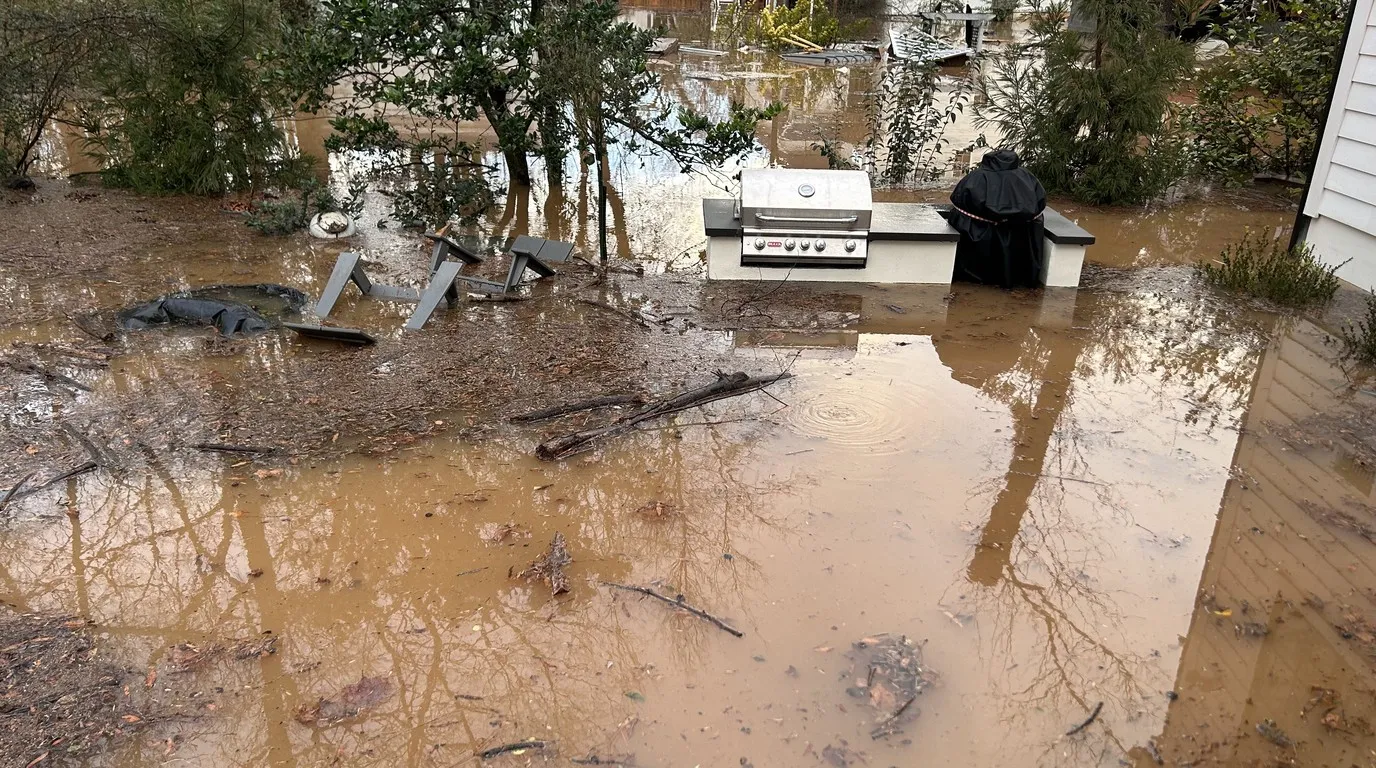
And floods do reach homes outside the lines. The City’s Flooding and Maps page says flooding “can occur both inside and outside of the designated floodplains.” Its answer to “Who should buy flood insurance?” is “Anyone at even low to moderate risk of flooding.” The City adds that living on a hill may reduce your risk, but it does not remove it.
The City’s page also says that each year, 28% of flood insurance claims come from outside high-risk areas, meaning regulated, mapped floodplains.
What counts as a flood matters, too, and the NFIP’s Standard Flood Insurance Policy spells it out. Under the policy, a flood includes a general and temporary condition of water covering two or more acres of normally dry land. The policy’s definition also counts water covering two or more properties, one of them yours. That water can come from overflowing inland or tidal waters, unusual and rapid runoff of surface water from any source, or mudflow.
For example, say a storm sends runoff down your street, across two neighbors’ yards and under your door. That is the kind of event the definition describes, and nothing in it depends on a floodplain line. Whether your loss counts is your insurance company’s call, not ours. A pipe that bursts inside your house is different, because that water stays in one home.
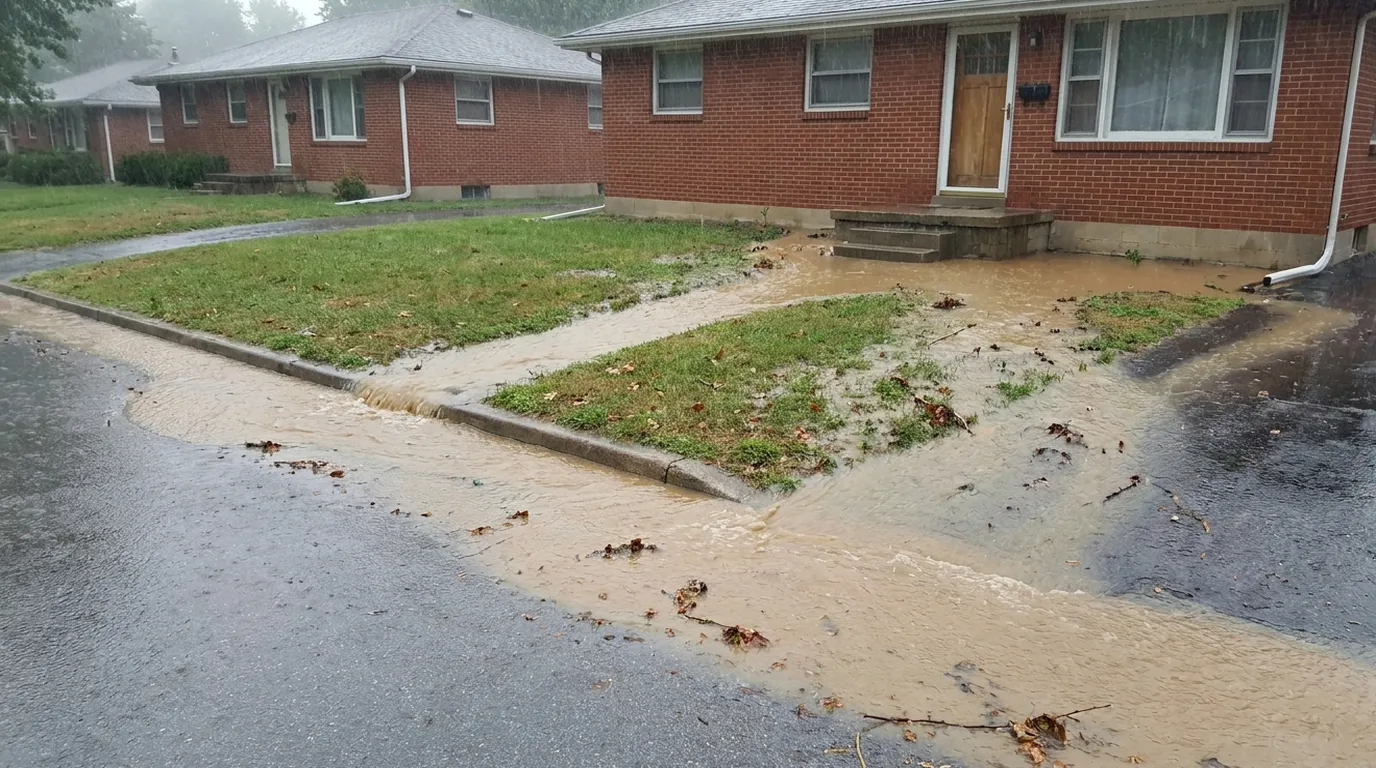
If flood water gets in and there is no flood policy, the drying and the repairs are the same job as with one. What changes is whether a policy may pay toward them, and that is up to your insurance company, not us. Our estimate is free either way, and nothing starts until you say so.
How Long Does a New Flood Policy Take to Kick In for a Charlotte Home?
Usually about a month. FEMA’s flood insurance page says there is typically a 30-day waiting period before a new NFIP policy goes into effect. FEMA names two exceptions: coverage bought because a government-backed lender requires it, and coverage tied to a community flood map change.
For example, say you apply and pay for a policy, and a storm floods your street before the waiting period ends. In the typical case, that policy has not started yet, so it will not cover that flood.
A second rule matters most if you buy late. The Standard Flood Insurance Policy will not pay for a flood already under way on or before the day you applied and paid in full. The date that counts is the day both are done, not the day you first called. So if a creek behind your house is over its banks when you apply, that flood stays excluded, even after the waiting period ends. A policy that starts at a loan closing skips the wait, but the same idea holds. It will not pay for a flood that began before the coverage did.
So plan ahead. Both rules work against a policy bought at the last minute. In practice, that means calling an agent in a quiet month, not when a storm is in the forecast. If a new flood map changes your home’s zone, ask your agent how the map-change exception applies to you.
FEMA says you can buy a policy through an agent, including the one who sells your home or auto insurance. Ask that agent for a quote for your address. If you are buying a home, also ask whether a policy bought with the loan can start at closing. If you are offered a private flood policy instead, ask how long its waiting period is, because the rules above are the NFIP’s.
What Does a Flood Policy Cover After Water Gets Into a Charlotte Home?
The Standard Flood Insurance Policy pays only for direct physical loss by or from flood, up to its limits. FEMA says a policy can cover the building, its contents, or both, and that contents coverage is optional and bought separately. FEMA also says the NFIP insures renters, so a tenant can cover belongings.
FEMA’s NFIP regulations (44 CFR 61.6) cap a single-family home’s policy at $250,000 for the building and $100,000 for contents. If rebuilding your home would cost more than that, raise it with your agent. The standard policy also excludes additional living expenses, like a hotel stay, while the house is being repaired.
Basements and crawl spaces need a close look. FEMA’s fact sheet on basement coverage says coverage there is limited. The NFIP counts any area with a floor below ground level on all sides as a basement. FEMA says a crawl space may still count as one when its floor is below ground on all sides. In a basement, FEMA lists what building coverage can include:
- Equipment such as a furnace, water heater, sump pump or central air conditioner, when it is connected to power or installed where it works.
- Drywall that is unfinished and untaped.
- Cleanup, which can include pumping out trapped floodwater and labor to remove spent cleaning solutions. It can also include mold and mildew treatment and structural drying of salvageable interior foundation elements.
The same fact sheet lists what is not covered in a basement:
- Finished walls, finished flooring, bathroom fixtures and other built-ins.
- Belongings such as couches, computers and TVs.
- Removing items the policy does not cover, such as basement carpet, even when that helps the cleanup.
For example, say flood water fills the crawl space under a ranch house. If that space counts as a basement, only the listed items and cleanup are in play down there. Your insurance company decides how that applies to your house.
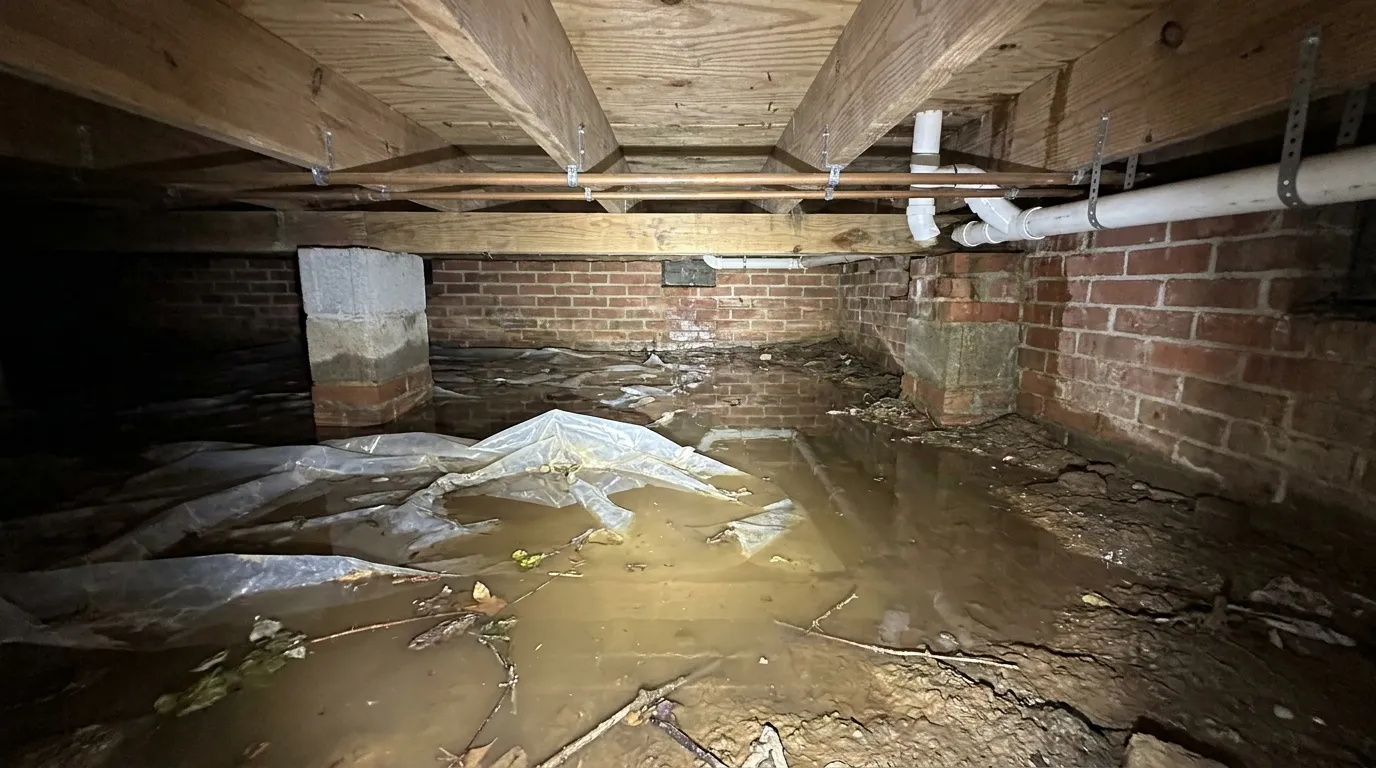
The policy also looks at what happens after the water goes down. The standard policy excludes mold damage that comes mainly from failing to inspect and maintain the property after a flood recedes. Drying is where our part starts. We dry to a measured moisture target and take readings every day. We record the damage with photos, thermal imaging, moisture readings and daily drying logs, and you get a copy of every one.
When the adjuster inspects, we meet them at the property and walk them through what we found. Our page on how we document a loss for the adjuster shows what that file holds. What the policy pays is your insurance company’s decision, not ours. Our North Carolina general contractor license, #83926, lets the same company dry the house and rebuild it. If your coverage is a private flood policy instead, it is its own contract, so ask your agent about its terms.
The Bottom Line on Flood Insurance in Charlotte
Outside FEMA’s high-risk flood zone, federal law does not make you buy flood insurance. Inside it, a federally regulated or insured lender must require it when the building has a federally backed loan. The City of Charlotte’s answer to who should buy flood insurance is anyone at even low to moderate risk of flooding. The North Carolina Department of Insurance says homeowners policies do not cover flood damage.
FEMA says a new NFIP policy typically has a 30-day waiting period. The Standard Flood Insurance Policy will not pay for a flood already under way on or before the day you apply and pay in full. So talk to an insurance agent while the weather is calm, and check your address on the City’s map.
If water does get in, call us. We will dry the house, record what we find and rebuild what the water damaged. What the policy pays stays your insurance company’s call. Our estimate is free, and nothing starts until you say so. For homes elsewhere in the county, start at our Mecklenburg County page.