- Google5.0 Rating400+ reviews
- Yelp4.8 Rating16 reviews
- Facebook100% Recommend16 reviews
24/7 Water Damage Restoration
Emergency water extraction, structural drying and the repairs afterwards, for homes across the Charlotte metro. Appliance leaks, failed water heaters, ceiling leaks and storm intrusion, from the first extraction through the repairs.
- Free estimates, no upfront costs
- We answer 24/7, on site within 60 minutes
- We work with all insurance companies


Why us
Why homeowners call us for water damage restoration
Putting a flooded house right takes two different jobs, and most homeowners only ever hear about the first. Mitigation is the emergency half: getting there fast, extracting the water, opening the wet walls and drying what is behind them. None of that needs a general contractor license. The rebuild is the other half, and that is drywall, trim, flooring, cabinets and paint. That half does need one. We hold general contractor licenses in both North Carolina and South Carolina, so the same company does both and there is no seam in the middle for a claim to stall in.
It is also a job where the first day sets the size of the last one. What gets found, read and recorded in the first hours is the difference between a room that dries where it stands and a floor that has to come up. The three below are what that takes.
We work for you, not the insurance
Scope is where a water claim is decided: how far the water tracked under the flooring, whether a wall cavity can be dried in place or has to come open, and how much of the room comes back to studs. We are on no carrier vendor list, so that judgment belongs to the crew holding the moisture meter. We bill your carrier directly for the restoration work, so you are not fronting the cost while a claim is processed.
We dry it and we rebuild it
We handle the water and the repairs. First we stop the leak, dry the building out and pull anything that cannot be saved. Then we put the rooms back together: drywall, trim, flooring, cabinetry and paint. We hold general contractor licenses in North Carolina and South Carolina, so one company does all of it and you only have one number to call.
Free estimate, any hour of any day
The assessment costs nothing: we walk the affected rooms and the spaces under and above them, take readings, and tell you what is wet, what has to come out and what putting it back involves. Nothing starts until you say so, and our commitment is to be at your door within 60 minutes.
- 60 minutesFrom your call to our arrivalAt your door within 60 minutes.
- Since 2014Family-owned, not a franchise
- 5.0 ★Google-rated
How water damage usually starts in a house
Most of these calls are not a dramatic failure. They are an ordinary fixture doing something slightly wrong, either for an hour while nobody was home or for months while nobody looked.
A toilet that overflowed and kept running
The bowl is the visible part and rarely the expensive part. A running fill valve puts clean water onto the floor for as long as it runs, and the flooring seams, the base of the vanity and the subfloor take most of it. Upstairs, it is in the ceiling below before anyone downstairs notices a stain.
A bath or a sink left running
It is the most ordinary loss there is and it is regularly the largest, because the volume is limited only by how long the tap stayed open. Water leaves the room along the floor, gets under the threshold and travels the joist bays, so the wet area an hour later has very little to do with the room it started in.
A condensate drain that blocked in summer
An air handler pulls a surprising amount of water out of Carolina air, and all of it leaves through one small drain line. Let that line block with algae or debris and the pan overflows into whatever the unit sits above, which is usually an attic or a closet. It drips through a ceiling for weeks before it stains.
A supply line weeping rather than bursting
The braided line to a toilet or a faucet, or the valve behind it, often fails slowly first. A weep at a compression fitting is a few drops an hour, held entirely inside the cabinet, and the cabinet floor and the wall behind it absorb every one of them. Nothing is found until the base swells or the smell changes.
A water heater that gave way at the tank
A tank corrodes from the inside and fails at the bottom, which means it empties its full capacity onto the floor and then keeps refilling. Most are in a garage, a closet or an attic, sharing a wall with finished rooms. The clue is usually the neighboring room getting wet rather than anything visible at the heater.
A leak that ran behind a cabinet for months
This is the one that changes the conversation with an insurer. A slow leak under a sink or behind a dishwasher does its damage to the cabinet base, the subfloor and the wall cavity long before anything shows in the room, and by then the question is no longer only what it cost but how long it ran.
Is all water damage treated the same way?
No. The industry standard sorts water into three categories. The category decides what can be dried in place and what has to come out. Working out which one you have is the first thing we do on site.
Category 1, clean water
Water from a sanitary source, such as a supply line or a bathtub left running. The standard says it carries no substantial risk from touching it, drinking it or breathing it in. A restorer may dry the building without contamination controls. Most burst pipes and overflows start here.
Category 2, significant contamination
Water carrying significant contamination. The standard says it has the potential to cause discomfort or sickness if someone touches it or drinks it. It has to be cleaned up before any drying begins. That means contamination controls, and protection for the crew doing the work.
Category 3, grossly contaminated
Grossly contaminated water that can carry harmful agents. Sewage sits here, so do waste line backflows from beyond a trap, seawater flooding, and rising water from rivers or streams. Cleanup comes first and drying second, the same order as Category 2.
How much of the building got wet
Category is about how dirty the water is. Class is about how much of the building soaked it up, which sets how much drying equipment the job needs. The two are separate. Clean water can still be a big job.
Class 1, the smallest job
Less than about 5 percent of the porous material in the space is wet. There is little for the equipment to pull out, so these dry fastest when we get to them early.
Class 2, about a room
Roughly 5 to 40 percent of the porous material is wet. In practice that is usually a whole room, and it needs a drying plan sized for the room rather than the puddle.
Class 3, water from above
More than about 40 percent of the area is wet, and the water has often come from overhead. Ceilings, walls and insulation are all holding it, so more of the structure has to be opened up.
Class 4, deeply held water
Water absorbed deep into materials that give it up slowly, such as plaster, hardwood, concrete or masonry. It also covers built-up assemblies like double subfloors. These need special methods and longer drying times.
Our customer reviews
Customer reviews from our restoration work, water damage restoration jobs included
Real reviews from real jobs, in the reviewer's own words, including homeowners in Pineville and Matthews.
Restoration work is a stressful thing to hire for, so see what people say about how fast we answered, and how the job actually went.
 Donald Crenshaw
Came in 30min for a freak accident with a water cooler. Explained everything and put my mind at ease. Very informative, 10/10.
 Taylor Maxwell
When we noticed a water stain on the ceiling, we called Dan and he was at our house within the hour. He made an assessment and had his team out same day. They were polite, professional, and efficient. Highly recommend!!
247 Aquadry recently helped with the water damage at my home in Pineville after a refrigerator leak caused damage to our floors and cabinets. They were responsive, professional, and quickly diagnosed and remediated the water damage with minimal impact to the surrounding areas.
What can I say about Dan and his team at 24/7 AquaDry other than they are ABSOLUTELY AMAZING! From our very first call, as water was pouring between our first and second levels in our home, Dan and his team were responsive, compassionate, supportive, knowledgeable, and effective.
Dan and his team were responsive, timely, friendly, and resourceful. They arrived when they said they would, provided a bid when they said they would, and completed the job within their estimated timeframe. Their professionalism and care stand out. I felt well taken care of throughout the process. I highly recommend 24/7 AquaDry!
 Ernesto Rodriguez
Dan was extremely helpful throughout the whole process helping us with water damage concerns at our property in Matthews. He was very knowledgeable, easy to work with, and took the time to explain everything clearly instead of just trying to rush through the job. You can tell he genuinely cares about helping people and doing things the right way.
Insurance billing
We bill your insurer directly for water damage restoration










You hire us for the restoration. We document the damage, coordinate with your adjuster, and keep you informed based on your policy and coverage. Where your policy and carrier allow it, we bill your carrier directly.
Direct billing subject to your policy and carrier approval.
What happens when you call
Our water damage restoration process
The order is not arbitrary. Dry the wet materials within 24 to 48 hours and in most cases mold will not grow, so the whole sequence is built to get air moving on wet structure as early as the job allows.
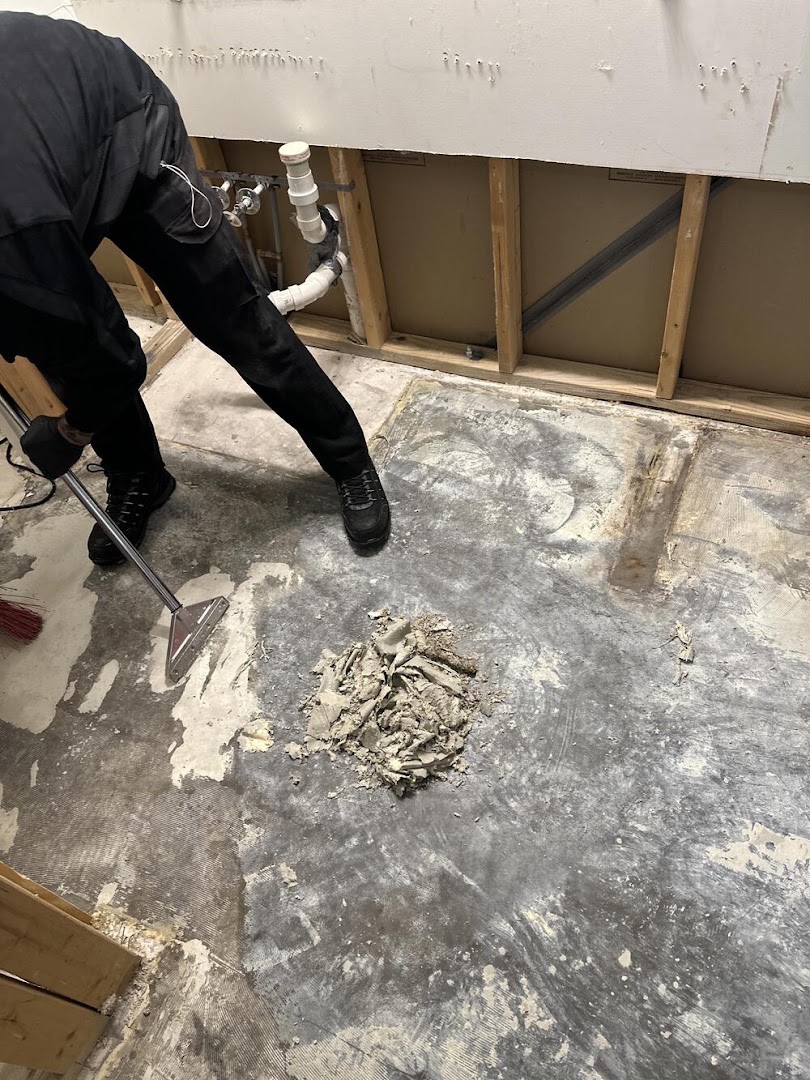
What that looks like varies more than most people expect. Clean water from a supply line, caught early, can often be dried in place. Water that has sat under a floating floor or run into a wall cavity usually means opening the structure up before anything can dry.
What the plan cannot do is guess. Materials give up moisture at different rates, so a floor that reads dry at the surface can still be holding water in the subfloor beneath it. That is why the readings are taken at the same points on every visit, and why the equipment stays until the numbers say the structure is dry rather than until the room feels dry.
Response
Someone answers and a crew is assigned. Any hour, any day.
Assessment
Moisture meters and thermal imaging, room by room. Clean supply-line water can be dried in place; water from waste lines or a river is contaminated and has to come out first.
Mitigation & Containment
Standing water extracted, the affected area contained, and contaminated material removed before any drying starts.
Cleaning & Drying
Air movers and dehumidifiers on the structure, antimicrobial treatment where the category calls for it, readings logged daily until the structure is dry.
Restoration & Repairs
Drywall, flooring, trim and paint put back, so you are not hiring a second contractor to finish the job.
Documented at every step
A water claim turns on what was wet, how wet it was, and whether it actually dried. That is a record built over days rather than a single photograph: the same points measured on the first visit and again on every visit after, so the drying is evidenced rather than asserted. All of it goes in the file:
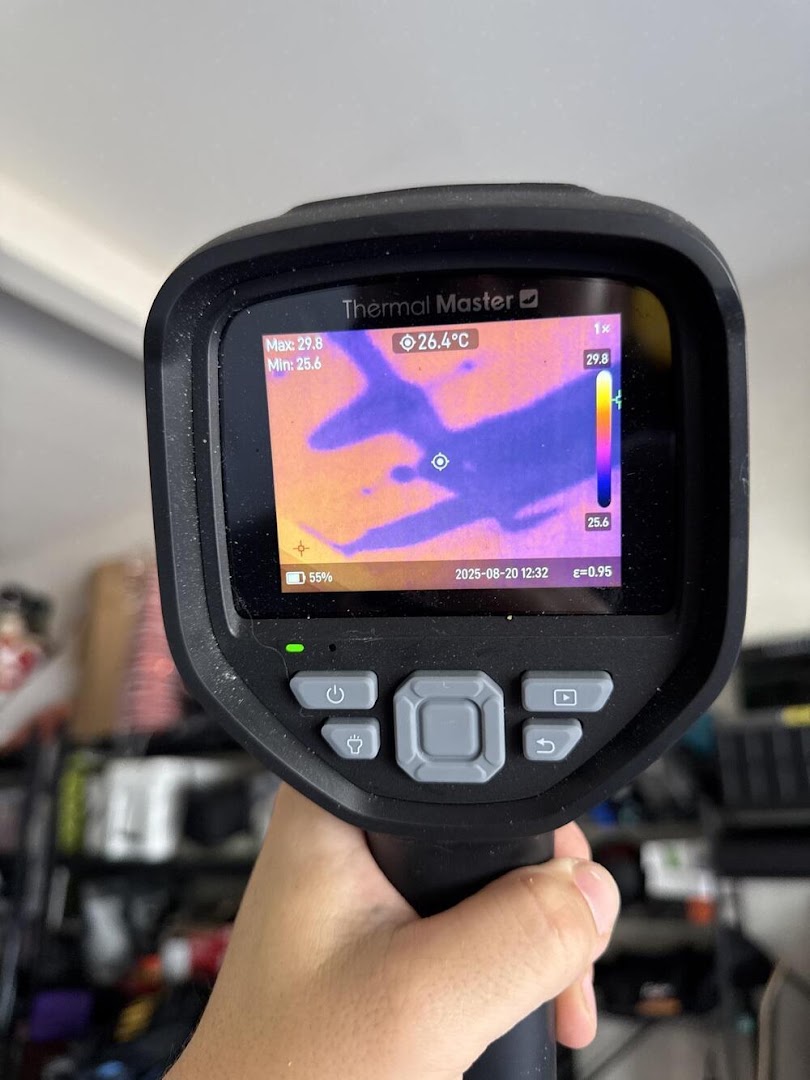
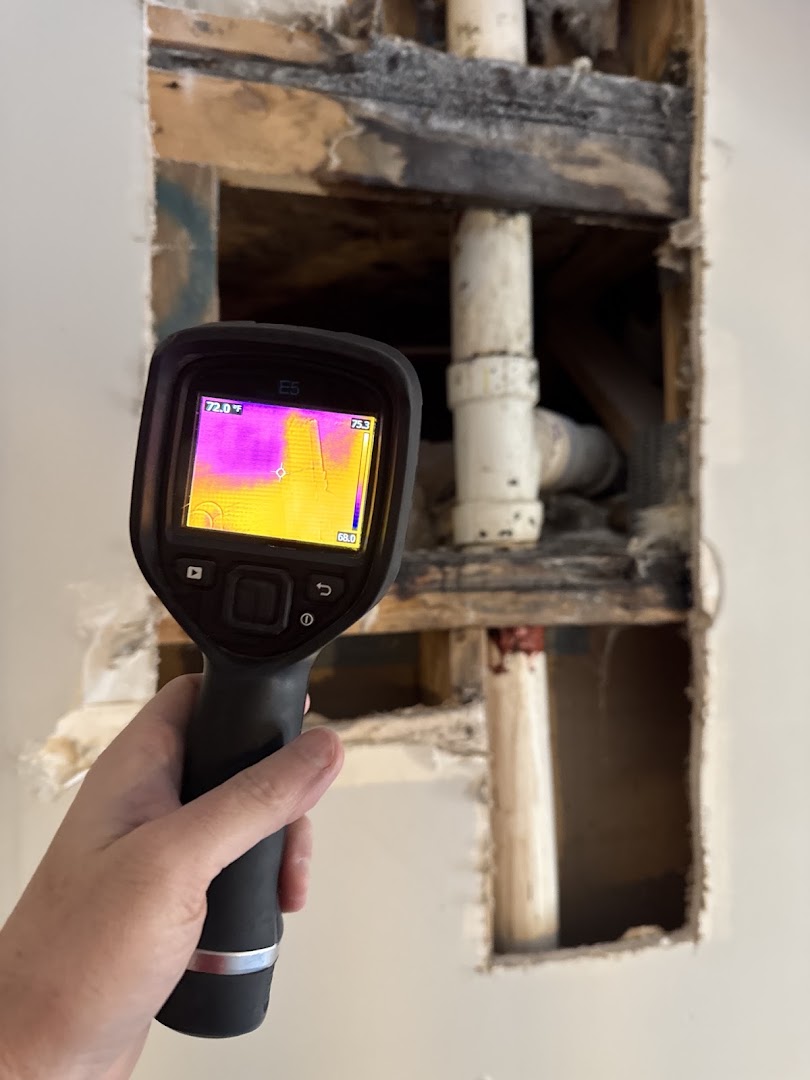
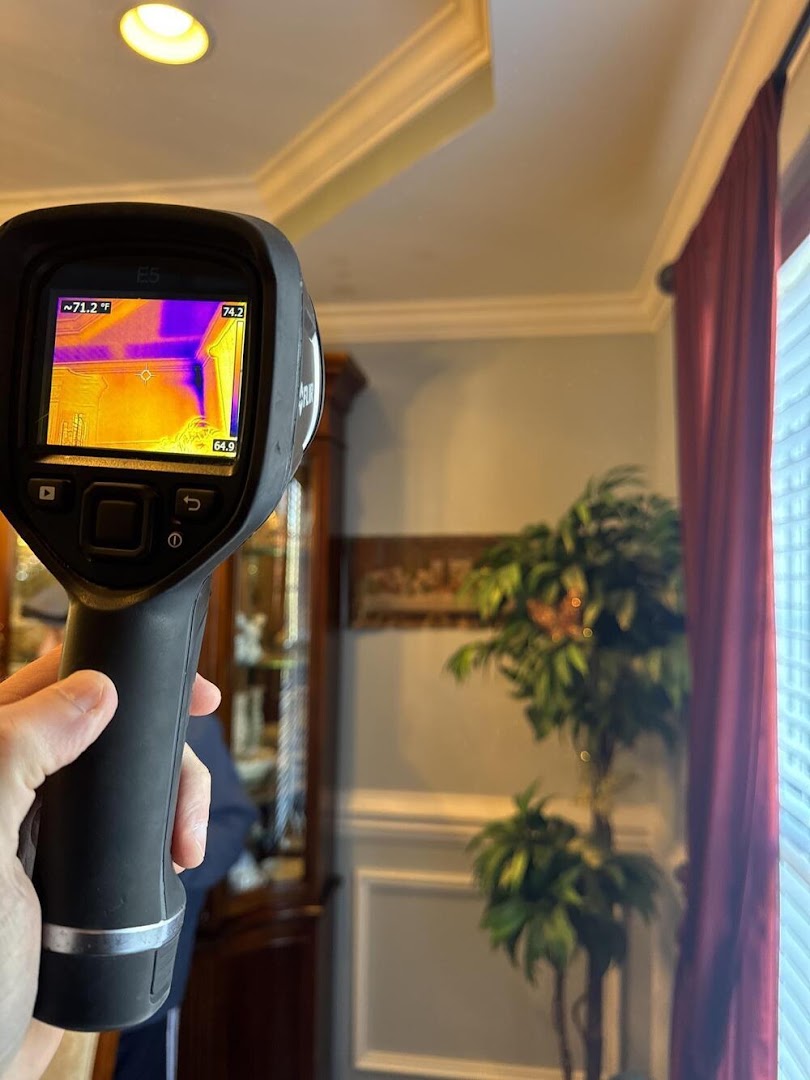
- Thermal imaging
- Moisture graphs
- Moisture mapping
- Daily drying logs
- Video documentation
- Xactimate estimates
- Equipment monitoring
- RH and GPP monitoring
- Moisture content readings
- Before, during and after photos
- Category and Class documentation
- Insurance documentation packages
Service areas
Water damage restoration across the Charlotte metro and into South Carolina
25 cities, three offices, one number.
A crew can be on the road at any hour.


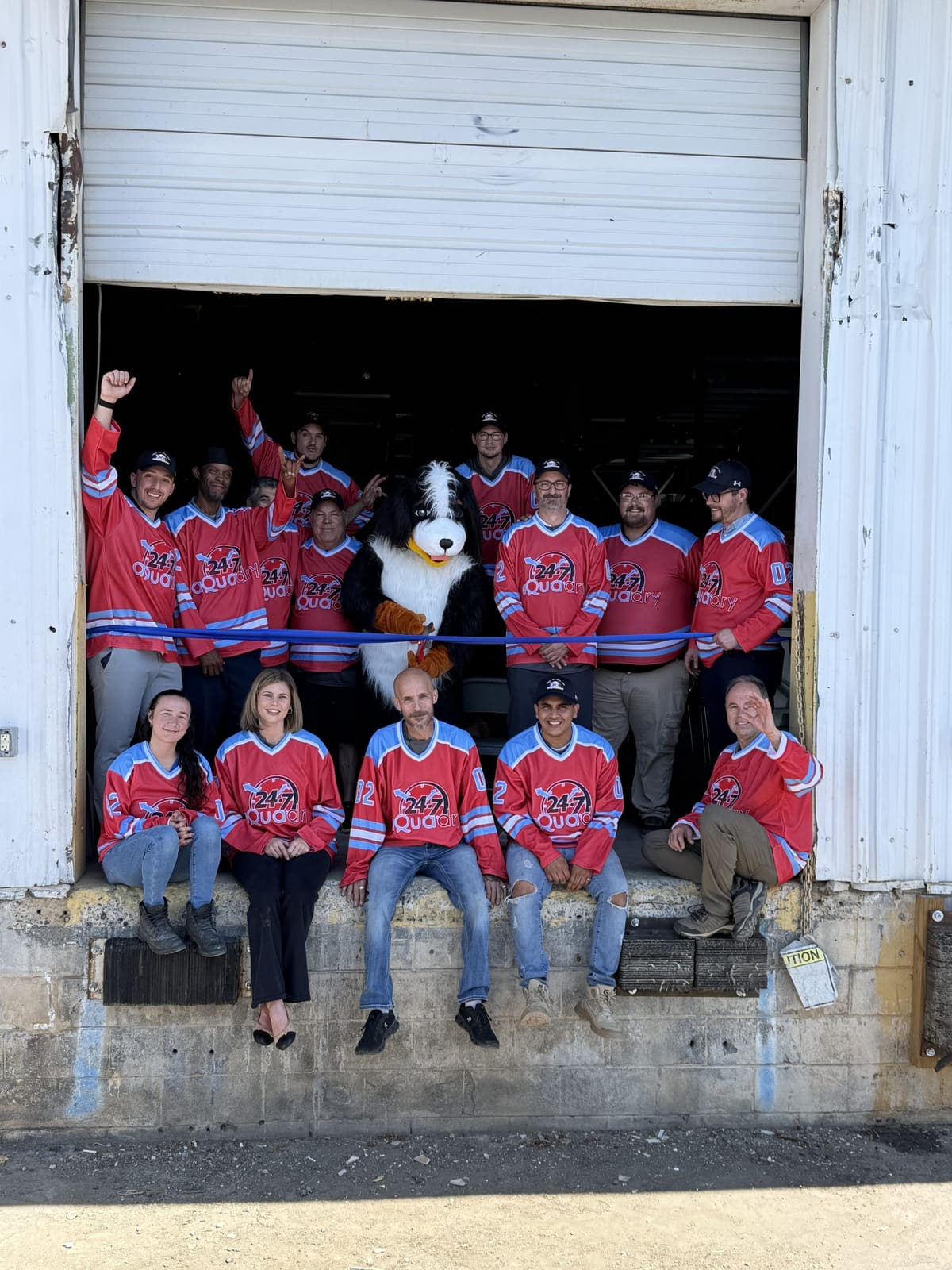
Our team
The team behind our water damage restoration work
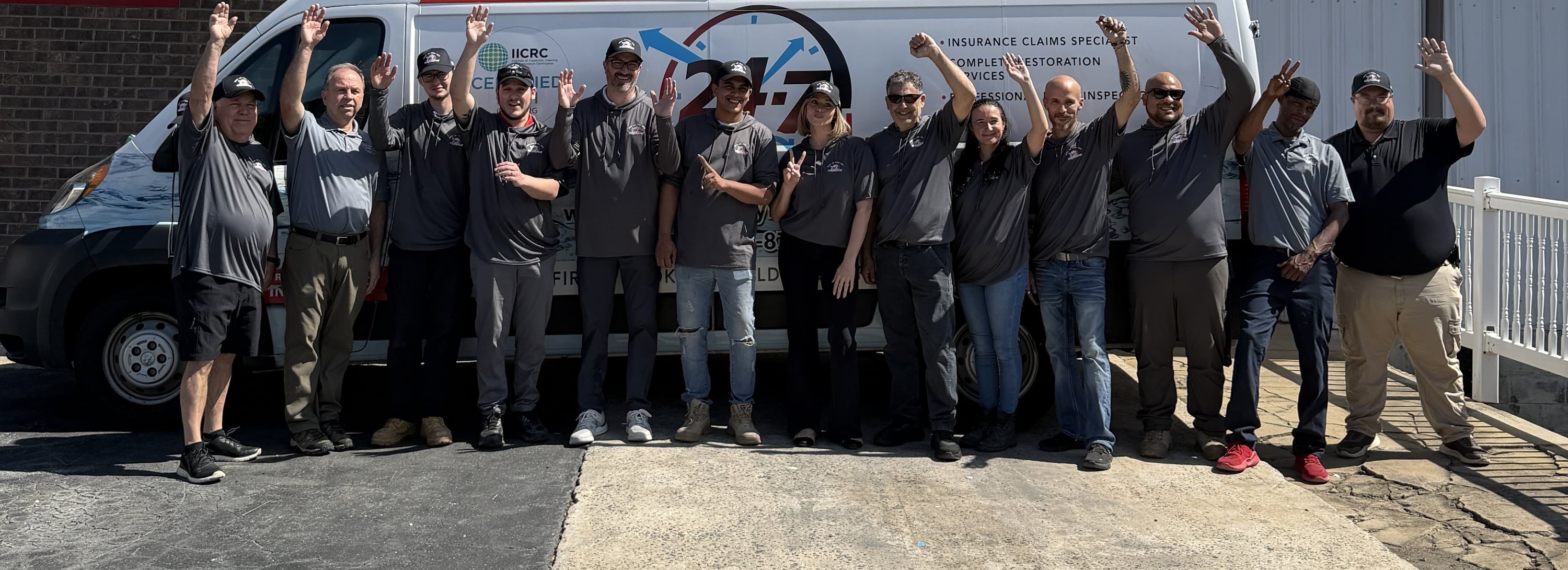
Owned by Dan DiPrima and Dan Friedman
The owners are reachable, and decisions about your job are made by people you can get hold of.
You get us, not a national call center
The number you call reaches the people who do the work.
An IICRC Certified Firm, #56517068
The certification is held by the firm and the number is public, so you can look it up rather than take our word for it. It is the industry standard for cleaning and restoration work.
Three offices across the Carolinas
Waxhaw, Fort Mill and Charlotte.
The names customers actually remember
Dan, Taylor, Zac and Johnathan all get named in our reviews.
Free estimate
Get a free estimate for
water damage restoration
Send us the details and we will call you back. This works at 2am when you would rather not talk on the phone.
- On site in 60 minutesFrom your call to our arrival.
- Available 24/7Someone answers, any hour.
- Free estimateNo obligation, no pressure.
In an emergency, calling is faster.Call (704) 912-4001
FAQ
Water damage restoration questions we get asked
How quickly do I need to act?
Quickly. Water-damaged materials that are dried within 24 to 48 hours will in most cases not grow mold, and that window starts the moment the water arrives, not the moment you notice it. If the drying has not started by then the honest answer is that the job gets bigger. Call as soon as you know, even if you have not worked out what is wet yet.
Is it safe to stay in the house while it dries?
With clean supply-line water, usually yes. The industry standard treats water from a sanitary source as workable without contamination controls, so for most families the real disruption is the equipment: air movers and dehumidifiers run around the clock, they are not quiet, and they make rooms warm on purpose. Contaminated water is a different answer, and so is water that spread broadly through the living areas. We walk the house and say it plainly, room by room.
Is all water damage treated the same way?
No, and the difference is the first thing we establish, because it decides what the crew does before anything is switched on. Clean water from a sanitary supply line is category one and can be dried without contamination controls. Category two water contains significant contamination and has the potential to cause discomfort or sickness if someone contacts or consumes it, so what it soaked is remediated before any drying starts. Category three is grossly contaminated and can contain pathogenic or toxigenic agents, and it covers a waste line backing up from beyond a trap and rising water from a river or stream. Two floods that look identical on the floor can be completely different jobs underneath.
Will my insurance cover it?
Most homeowners policies cover sudden and accidental water damage, a burst pipe or a failed appliance being the usual examples, and exclude damage that comes from a lack of proper maintenance. Flooding is usually excluded from a standard homeowner policy and covered by separate flood insurance, but the wording that matters is the wording in your policy and your carrier is who confirms it. We bill most carriers directly for the restoration work, which means you are not fronting the cost while that happens.
Do the wet materials have to come out, or can you dry them in place?
It depends on what kind of water it was and how long it sat. Clean water caught early is often a drying job. Contaminated water, or clean water left long enough to become one, means the affected material comes out before anything is dried, because drying contamination in place just leaves it there. You get that answer at the estimate, with the moisture readings behind it, and not as a guess over the phone.
Do you handle the repairs, or only the drying?
Both. We are licensed general contractors in North Carolina and South Carolina, so we do the water work and the rebuild that follows it: drywall, flooring, paint and cabinets. That is one company and one number for the whole job.
Is the estimate really free?
Yes. We come out, find how far the water has traveled and tell you what the job involves, at no cost and with nothing owed if you decide not to go ahead. Nothing starts until you say so.
Are you licensed and certified?
Yes, and the numbers are public. North Carolina general contractor #83926, South Carolina #CLG-123544, and IICRC certified firm #56517068 for the cleaning and restoration work.