Does Homeowners Insurance Cover Water Damage?
· Updated August 23, 2026

On this page
Are you trying to find out whether homeowners insurance covers water damage? You are in the right place. It is usually the first question people ask once the water stops.
In this article we cover the rule insurers really use, which losses are usually paid, and which are not. We also cover the four cases people get wrong most: burst pipes, roof leaks, basements and mold.
Keep reading, because the deciding factor is almost never how bad the damage looks. It is where the water came from and how fast it happened.
When Does Homeowners Insurance Cover Water Damage?
Most policies are built around one idea. They cover damage that is sudden and accidental.
The Insurance Information Institute puts it this way. Most policies may cover water damage that is “sudden and accidental,” like an overflowing washing machine or a burst pipe.
So the test is not how much water there is. It is whether the water arrived fast and whether you could have stopped it.
A pipe splitting inside a wall at two in the morning passes that test. Nobody could have seen it coming, and nobody could have stopped it.
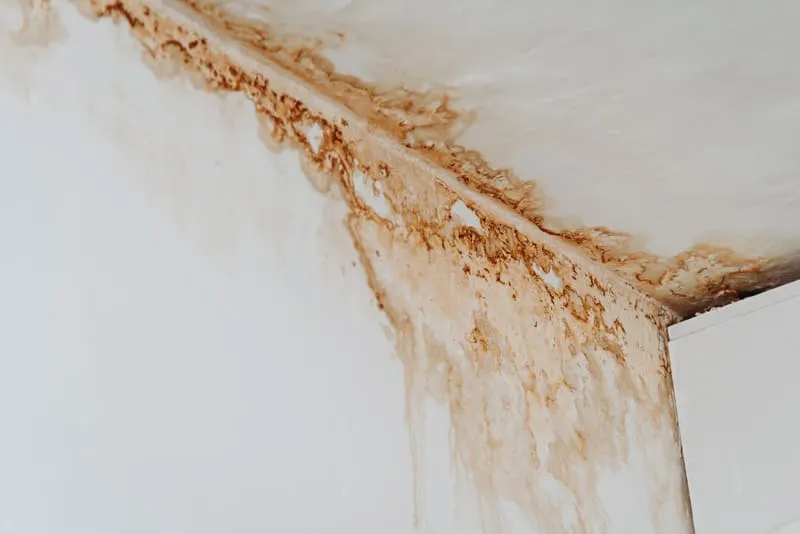
A drip under a sink that ran for eight months does not. The insurer will call that maintenance, and in most cases they will be right.
There is a second rule that surprises people. Coverage usually applies to the damage the water caused, not to the part that failed.
If a dishwasher line bursts, your policy may pay for drying, flooring and drywall. It usually will not buy you a new dishwasher.
Think of it as paying for the mess, not the retirement of the part that made it. That single distinction accounts for a lot of disappointed phone calls.
The word “may” is doing real work in all of this. Every policy has its own limits, its own deductible, and its own add-ons.
Your policy is the authority here, not this article. What follows is the shape of the rule, so you know what to look for and what to ask.
What Types of Water Damage Are Usually Covered by Homeowners Insurance?
The phrase you will see in most policies is close to “sudden and accidental discharge or overflow of water.”
That sounds technical. In plain terms it means water escaped fast and caused damage before anyone had a fair chance to stop it.
Losses that are often covered, depending on the policy, include:
- Burst or frozen pipes
- Overflow from plumbing fixtures
- Accidental appliance leaks from washing machines, refrigerators or dishwashers
- Water heater failures
- Some HVAC or air conditioning water discharge
- Rain that enters through storm damage, such as a roof opening made by wind
Picture the classic version. A pipe splits behind a bathroom wall overnight and runs for six hours.
By morning the drywall is soaked, the vanity is swelling, and the flooring outside the bathroom has started to buckle. That is the shape of a covered loss.
Even then, limits apply. There may be caps on certain repairs, a deductible to meet, and separate rules for mold and personal property.
Contents are often handled differently from the building itself. Furniture, rugs and electronics may fall under a different limit than drywall and flooring.
It is worth knowing which is which before you need it. Your declarations page lists both.
What Water Damage Is Not Covered by Homeowners Insurance?
This is where people get caught out. Many people assume that if water hurt the house, insurance just pays.
Insurers draw a hard line between sudden accidents and slow problems. The Insurance Information Institute is blunt about it. Damage from a lack of upkeep is the homeowner’s job to pay for.
Water damage is commonly not covered when it comes from:
- Long-term leaks
- Poor maintenance
- Wear and tear
- Repeated seepage
- Groundwater coming through a foundation
- Flooding from rising water
- Sewer backup, unless you bought that coverage separately
The slow sink leak is the classic denial. If a pipe has been dripping for months and the cabinet floor is black and soft, the insurer will argue the damage was preventable.
From their side, that is not a surprise. It is deferred maintenance that finally got expensive.
The same logic applies to roof leaks that developed over time. Old shingles and failing flashing are maintenance items, not accidents.
Flooding is the other big exception, and it catches people every year. The Institute notes that flood damage is left out of standard policies, and that flood cover is usually sold on its own.
That matters in the Carolinas, where a single storm can move a lot of water quickly. If storm and flood damage is a real risk where you live, a separate flood policy is the only thing that covers it.
Sewer backup is its own category too. Coverage for a sewage backup usually requires an endorsement you had to add in advance.
Does Homeowners Insurance Cover Water Damage From a Burst Pipe?
In many cases, yes. A burst pipe is one of the most straightforward covered losses there is.
The failure is sudden. It is accidental. It is exactly the event the policy language describes.
If a pipe bursts in a wall, ceiling, crawl space or under a sink, your policy may help pay for extraction, drying, and repairs to the drywall, flooring and cabinets it damaged.
Winter adds one condition. If the pipe froze, the insurer may ask whether you took reasonable steps to protect the property.
Keeping heat on in the house is the usual test. A home left unheated through a freeze is a harder claim than one where the furnace was running.
The same catch applies here as everywhere. Insurance often covers the resulting damage, not the failed section of pipe itself.
Speed matters more on this loss than on almost any other. Water from a pressurised line keeps arriving until someone shuts the valve.
Shut the water off first. Photograph the failure point before anyone repairs it.
Then call for burst pipe cleanup rather than waiting to see how bad it gets. The longer the water sits, the further it travels into subfloors, insulation and wall cavities.
That spread is what turns a simple claim into a complicated one. It also turns a three-day dry-out into a two-week rebuild.
Does Homeowners Insurance Cover Water Damage From a Roof Leak?
Sometimes. It depends entirely on why the roof leaked.
If a storm damages the roof and rain comes through the opening it made, the resulting damage may be covered. Wind tearing shingles away is an accident.
If the roof leaked because it was old, worn or poorly maintained, the claim may be denied. A neglected roof is not an accident in the insurer’s view.
This distinction gets tested often after a big storm. The insurer will look at whether the storm truly caused the leak or simply revealed a problem that had been building for years.
Two things help you here, and both are free. The first is documentation from before the storm.
Photos of a roof in good condition, or a recent inspection report, are hard to argue with. Most people do not have them, and the ones who do have an easier claim.
The second is speed after the storm. A fast inspection separates storm damage from age, because the evidence is still fresh.
Waiting weeks makes that harder for everyone. It also lets water keep moving into the attic, ceiling and walls.
If the ceiling is already stained or sagging, treat that as urgent. Water sitting above a ceiling has weight, and drywall gives way.
Does Homeowners Insurance Cover Basement Water Damage?
Basements are the most confusing category, because the answer changes with the source of the water.
If a pipe bursts in the basement or a water heater fails, that may be covered. The water came from a sudden internal failure.
Water that seeps through foundation walls is different. So is water that comes up through wet soil, or rises from outside in a storm.
Standard policies usually leave all three out. They fall under the flood and groundwater rules.
Homeowners tend to call all of it flooding. Insurers split those hairs very finely.
Water from a plumbing line inside the home is one thing. Water pressing in from outside the structure is another, and they are priced differently for a reason.
The same logic applies below the floor. A wet crawl space from a failed supply line is a different claim from one that filled with groundwater after three days of rain.
If you have a basement or crawl space that gets wet in heavy rain, that is worth acting on before the next storm. A pattern of seepage is a maintenance issue in insurance terms, however sudden it feels.
Ask your agent whether flood coverage or an endorsement makes sense for your property. It is a cheaper conversation than the claim it prevents.
Does Homeowners Insurance Cover Mold After Water Damage?
Sometimes, and the conditions are strict.
Mold cover usually depends on where the mold came from. The Insurance Information Institute describes cover for mold that came from a covered loss, up to the limits in your policy.
So the mold question is really a question about the water that caused it. If the underlying loss is covered and you acted quickly, mold removal tied to that event may be covered up to certain limits.
If mold grew because water damage sat untreated, coverage becomes much less likely. The same is true if it followed a long-term leak nobody reported.
This is the clearest example of why speed changes money, not just outcomes. The US EPA says to dry water-damaged areas within 24 to 48 hours, and that in most cases mold will not grow if you do.
That window is a restoration deadline and a coverage deadline at the same time. Meeting it is the difference between a drying bill and a remediation bill.
Report the loss promptly even if you are unsure about filing. Reporting and claiming are not the same step.
Start drying right away rather than waiting for permission. Most policies require you to take reasonable steps to prevent further damage.
Keep the record of when you found it and when work started. That timeline is what a mold decision turns on.
Will Insurance Pay for Water Damage Restoration Work?
If the loss is covered, insurance may pay for the work needed to return the property to its pre-loss condition.
That usually includes:
- Emergency water extraction
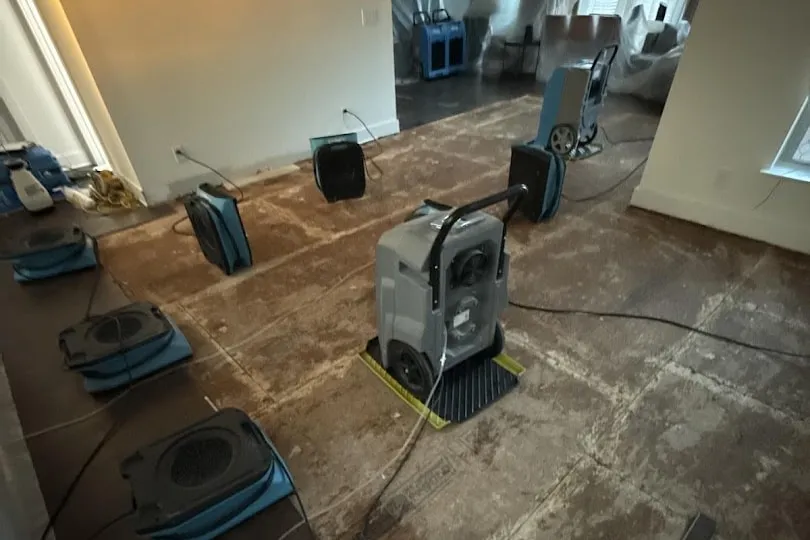
- Drying and dehumidification
- Removal of damaged materials
- Sanitizing affected areas
- Repairs to drywall, flooring, trim and cabinets
- Contents cleaning in some cases
- Mold remediation, where the policy covers it
This is where the restoration company earns its place in the claim. A crew can record moisture readings, what got wet, how long the fans ran, and how the damage moved.
That paper trail is what a claim is actually decided on. Claims are not won with a description like “the floor got wet.”
Readings taken on day one and day four are facts. Impressions are not.
At 24-7 AquaDry, documentation starts on the first visit rather than when someone asks for it. Reconstructing a scope after the drying is finished leaves gaps a carrier can question.
It protects you in the other direction too. A documented scope stops a job growing beyond what actually got wet.
Ask any company you call how they document. If the answer is vague, that tells you what the claim file will look like.
What Should You Do First If You Want Insurance to Cover Water Damage?
Your first few steps matter more than the phone calls that follow.
- Stop the water. Shut the main valve or isolate the fixture that failed.
- Call a restoration company. Drying fast keeps the damage from spreading.
- Document everything. Photos and video before cleanup starts, if it is safe.
- Report the loss to your insurer. Reporting is not the same as committing to a claim.
- Keep damaged items where practical. Do not bin everything unless it is a safety problem.
- Prevent further damage. Most policies require you to take reasonable steps.
Think of the first day as triage. You are not solving every repair decision now.
You are stopping the water, stabilising the building and creating a clear record. Those three things decide how the rest goes.
Photograph the source as well as the damage. An adjuster will ask what failed, and a picture answers it faster than a description.
Write down the time you found it. Small detail, and it anchors the whole timeline.
If someone in the house has asthma or a weak immune system, say so early. It changes which rooms get sealed off first.
What Should You Ask Your Insurer About Water Damage Coverage?
Do not settle for vague answers. Ask direct questions and write down what you are told.
Useful ones include:
- Is this type of water damage covered under my policy?
- What is my deductible?
- Are extraction and drying covered?
- Does my policy include mold remediation, and up to what limit?
- Are there separate limits for contents and flooring?
- Is sewer backup covered?
- Will you cover tear-out to reach damaged plumbing?
- Do I have to use an approved vendor, or can I choose my own company?
That last one matters more than people expect. In most states you choose who does the work.
Ask for the answers in writing where you can. A claim number and an email beat a remembered phone call.
If an answer does not make sense, ask again. Adjusters deal with this language daily and you do not.
Your state Department of Insurance can also help. Both North Carolina and South Carolina run consumer lines for exactly these questions.
How Can You Protect Your Water Damage Coverage Before You Need It?
Most of what decides a claim happens before the water arrives.
Photograph the house once a year. Roof, water heater, under the sinks, the crawl space.
That takes twenty minutes and it is the evidence that separates storm damage from wear. Nobody regrets having it.
Fix small leaks when you find them, and keep the receipt. A repaired leak is maintenance, and an ignored one becomes an exclusion.
Know where your main shutoff valve is, and check it turns. A valve that has not moved in fifteen years often will not move when you need it.
Read your declarations page once. You are looking for the deductible, the mold limit, and whether you have sewer backup and flood coverage.
If you do not have flood coverage and you live near water, get a quote. Knowing the number is not the same as buying it.
In cold snaps, keep the heat on even when you travel. Frozen pipe claims turn on whether the house was heated.
None of this is dramatic. It is the difference between a covered claim and an argument you lose on paper.
If water is already in the house, that is a different clock. Call us and we will start with measuring, and we handle water damage restoration in Charlotte and across the metro.