How Much Does Subfloor Replacement Cost in Rock Hill?
On this page
Replacing a subfloor costs about $2.20 to $4.75 per square foot installed for the subfloor itself. Priced across more materials, from OSB and plywood up to specialty panels and concrete, it runs $3.50 to $12 per square foot. These are national figures. They are not a Rock Hill quote, and they are not our prices.
What you pay depends on the wood, the room and what is under it. Below, we explain when a wet subfloor can stay and what the price per square foot covers. Then we look at joists, crawl space access and slow leaks.
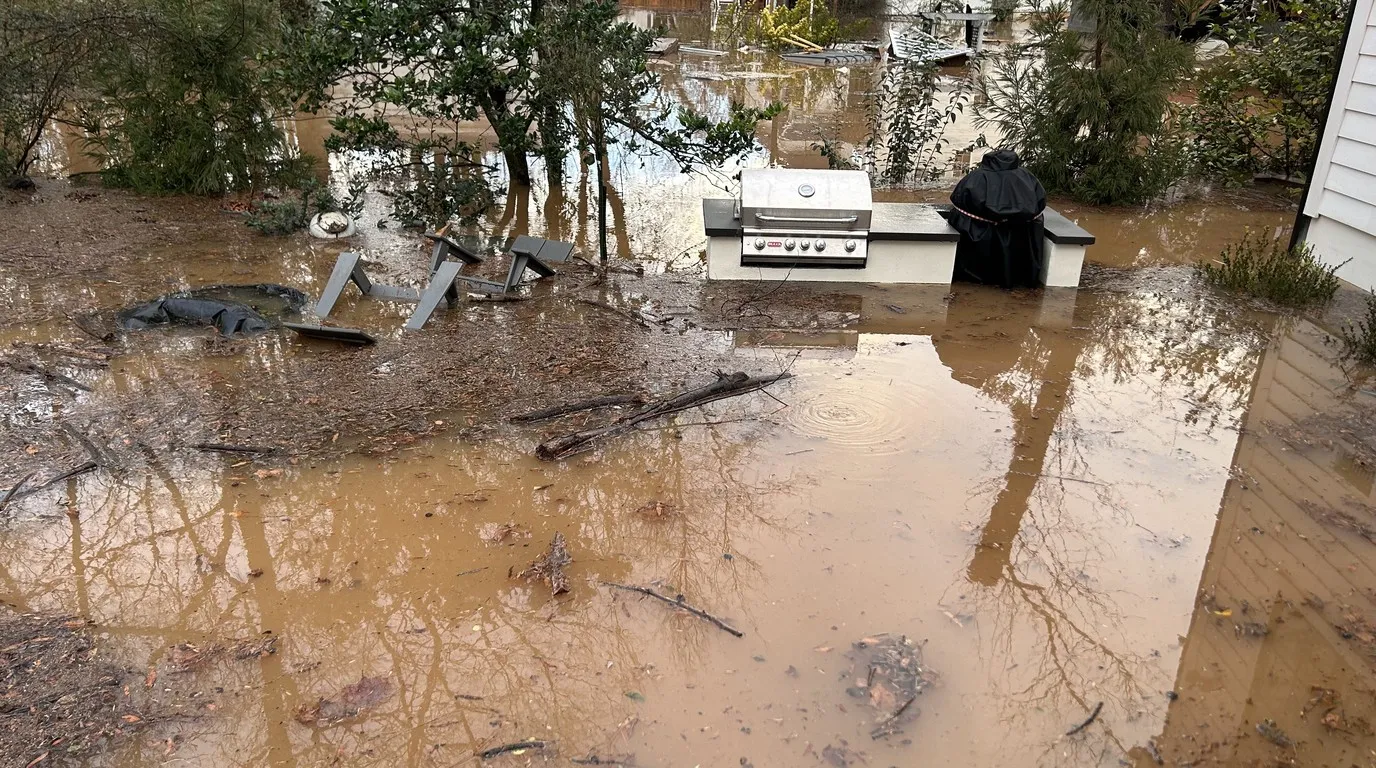
In a Rock Hill home built over a crawl space, water can reach the subfloor from above or from below. When it comes from below, we handle crawl space cleanup and drying before any new floor goes down.
Is a Wet Subfloor Worth Saving in Rock Hill, or Does It Need Replacing?
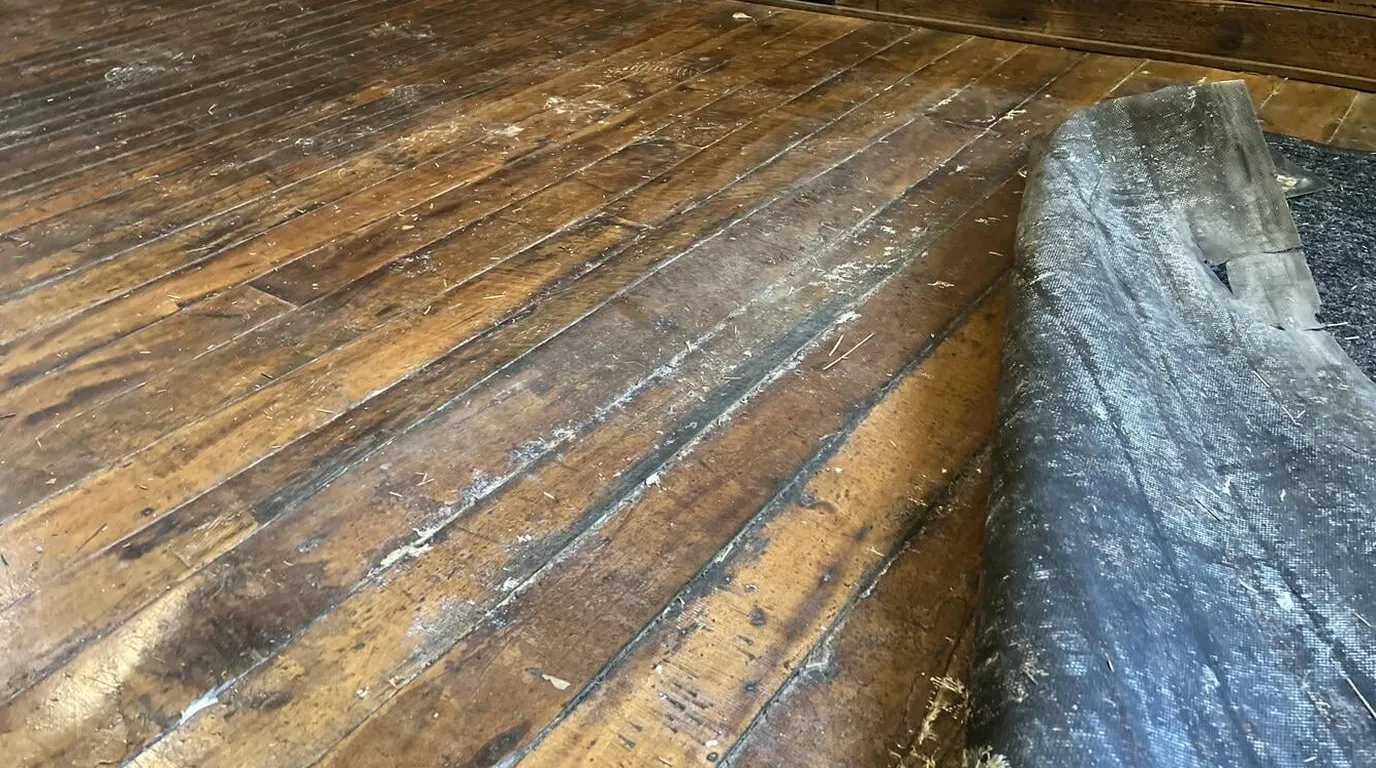
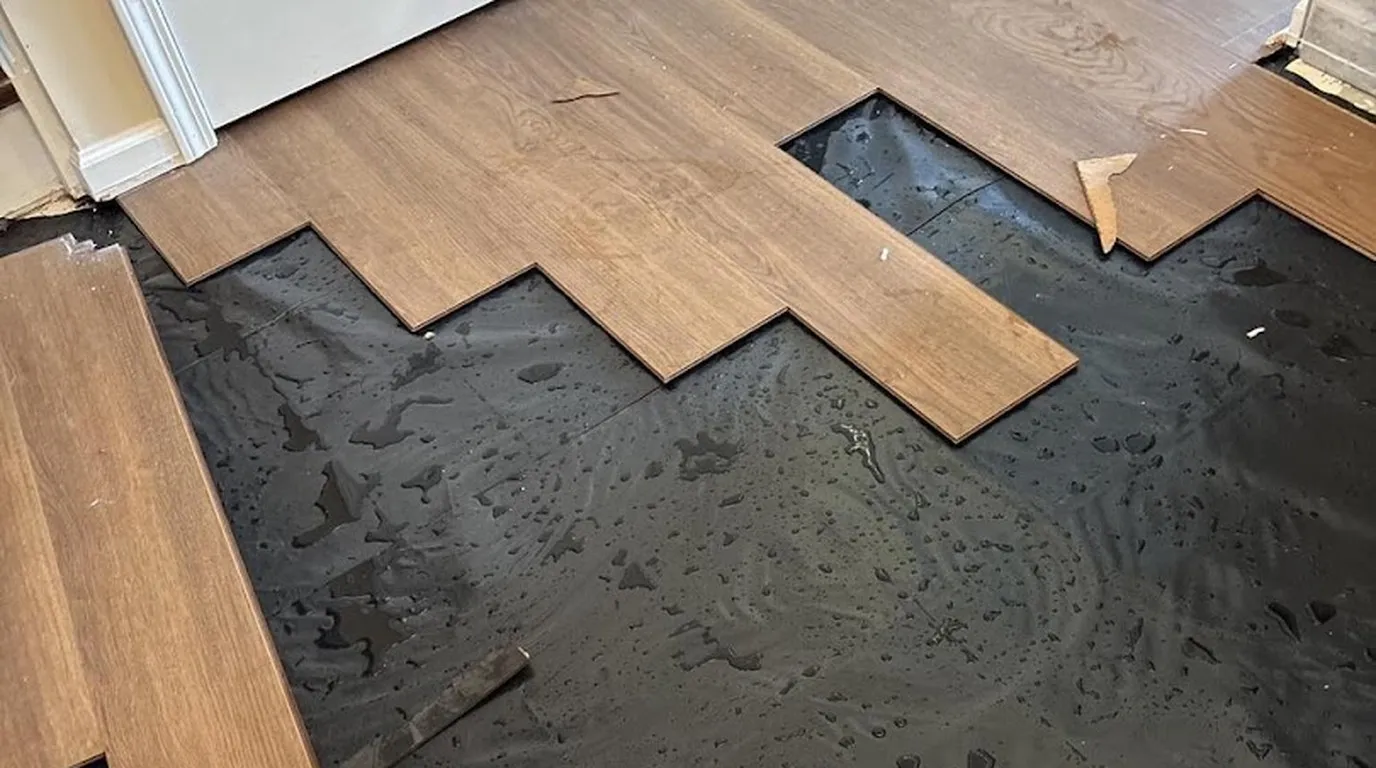
Not every wet subfloor has to come out. The subfloor is the layer of wood, usually plywood or OSB, that sits on the joists under your finished floor. Three questions help decide whether it stays: how long it was wet, what it is made of, and whether it is still solid.
Time comes first. The EPA’s home mold guide says that when wet materials are dried within 24 to 48 hours, in most cases mold will not grow. That is one reason a floor dried quickly has a better chance of staying than one that sat wet for weeks.
The material matters next. OSB tends to swell if it gets wet again. Plywood handles moisture better than OSB.
For example, say a dishwasher hose leaks overnight and you find the water in the morning. If the floor is dried quickly and the subfloor is still solid, it may not need to come out. If the same hose dripped behind the dishwasher for months, the wood has had far longer to swell or rot.
Then look at the floor itself. Signs of subfloor damage include:
- A floor that bounces when you walk
- Sunken or uneven areas in the floor
- Cupped hardwood above
- Cracked tile
- A toilet that rocks
- A musty smell in the room
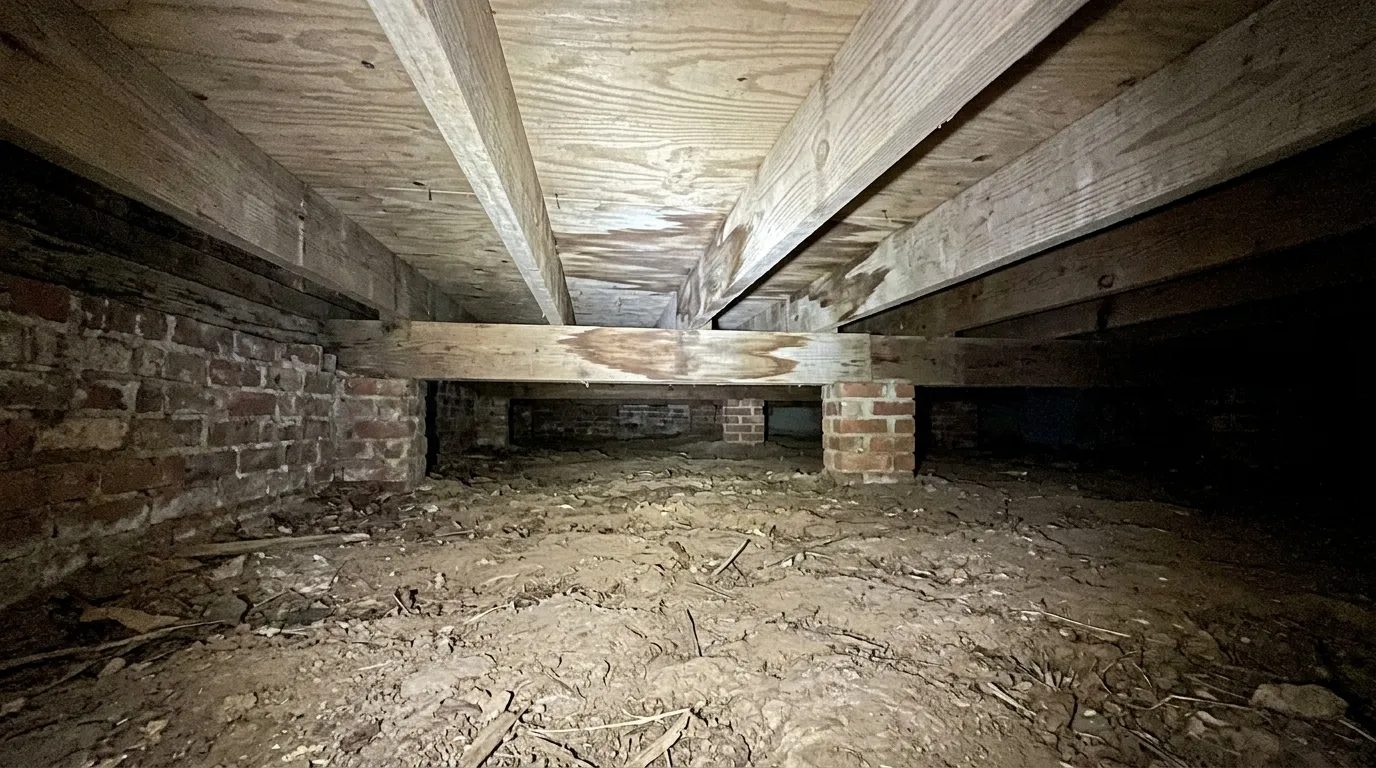
A Rock Hill home on a crawl space gives a second view. From below, a contractor can check the joists and the underside of the subfloor for stains and soft wood.
When we handle a wet floor, we document it with photos, thermal imaging and moisture readings. You get a copy of all of it. If the wood stays, we dry it to a measured moisture target, with readings taken daily, not to “looks dry.”
A floor that bounces or sags can also be a safety question. Our guide to the warning signs of a failing floor covers what those signs mean.
How Much Does Subfloor Replacement Cost per Square Foot in Rock Hill?
Nationally, a new subfloor costs about $2.20 to $4.75 per square foot for the subfloor itself, installed. With more materials in the mix, from OSB and plywood up to specialty panels and concrete, it runs $3.50 to $12 per square foot. Neither figure is a Rock Hill quote.
For a 200-square-foot room, the subfloor itself comes to about $440 to $950. Across the wider mix of materials, the same room runs $700 to $2,400, with a national average of $1,600 for that size in OSB.
Five things move the price:
- The material. Plywood costs a little more than OSB. OSB runs $2.20 to $2.80 a square foot installed, and plywood $2.50 to $3.00.
- The size of the job. Small jobs can cost more per square foot, because of minimum job fees.
- Labor. Labor runs about $25 to $45 an hour, depending on location and whether the old subfloor must come out completely.
- The finished floor. The $2.20 to $4.75 figure covers the subfloor only. Budget the finished floor on top as its own line.
- What sits under the floor. Joists and crawl space access can add the most, as the next section shows.
Is Rock Hill cheaper than the national figures? Possibly a little. Prices in the Southeast are estimated to run about 8% to 15% below the national average. That is a regional estimate, not a Rock Hill quote.
These figures give you a way to check a quote. Your own number depends on what turns up under the floor, starting with the joists.
How Do Joists and Crawl Space Access Change Subfloor Replacement Prices in Rock Hill?
Joists are where the bill jumps. Nationally, a new subfloor for a 200-square-foot living room runs $700 to $2,400. Replacing the joists in a 200-square-foot crawl space, plus the subfloor, comes to $2,700 to $7,400.
Not every damaged joist has to be replaced. Sistering means fastening new lumber alongside a damaged joist. Sistering typically runs $100 to $300 per joist. The choice depends on how deep the damage goes and how much of the joist is still sound.
On a house built over a crawl space, the work comes from two sides. Reaching the subfloor from above is standard, once the floor covering comes up. Working from a crawl space below adds labor time. Tight crawl spaces, with under 18 inches of clearance, slow the work and raise labor costs. If your Rock Hill home sits on a low crawl space, ask each contractor how they will reach the joists.
What sits on top matters too. Carpet is cheap to remove, while tile is expensive and slow. Saving hardwood boards to put back down costs more in labor.
Two quotes only compare when they cover the same work. Ask each contractor to put these in writing:
- How far past the soft area they will cut, and how they will find solid wood
- Whether the joists get checked once the subfloor is off, and how joist work is priced
- Which subfloor material and thickness they plan to use
- Taking up and putting back the floor covering
- Hauling away the old wood
- Any permit the job needs
- How they will confirm the leak is fixed and the wood is dry first
We write our estimates in Xactimate, with each part of the work on its own line. Our process ends with restoration and repairs, so the company that dries the floor is the one that puts it back.
Why Does a Slow Leak Make Subfloor Replacement Cost More in Rock Hill?
A slow leak can keep wood wet for weeks or months before it shows. Under a Rock Hill home on a crawl space, a dripping pipe can wet the joists and subfloor from below. Serious water damage can call for replacement over a repair, even in a small area.
Say a toilet seal has leaked a little at a time for months. The soft spot you feel by the toilet may not be where the damage ends. Rot often extends 12 to 18 inches beyond where you feel the floor give. A bathroom subfloor wet for months can mean replacing 100 square feet or more, sistering several joists and treating for mold.
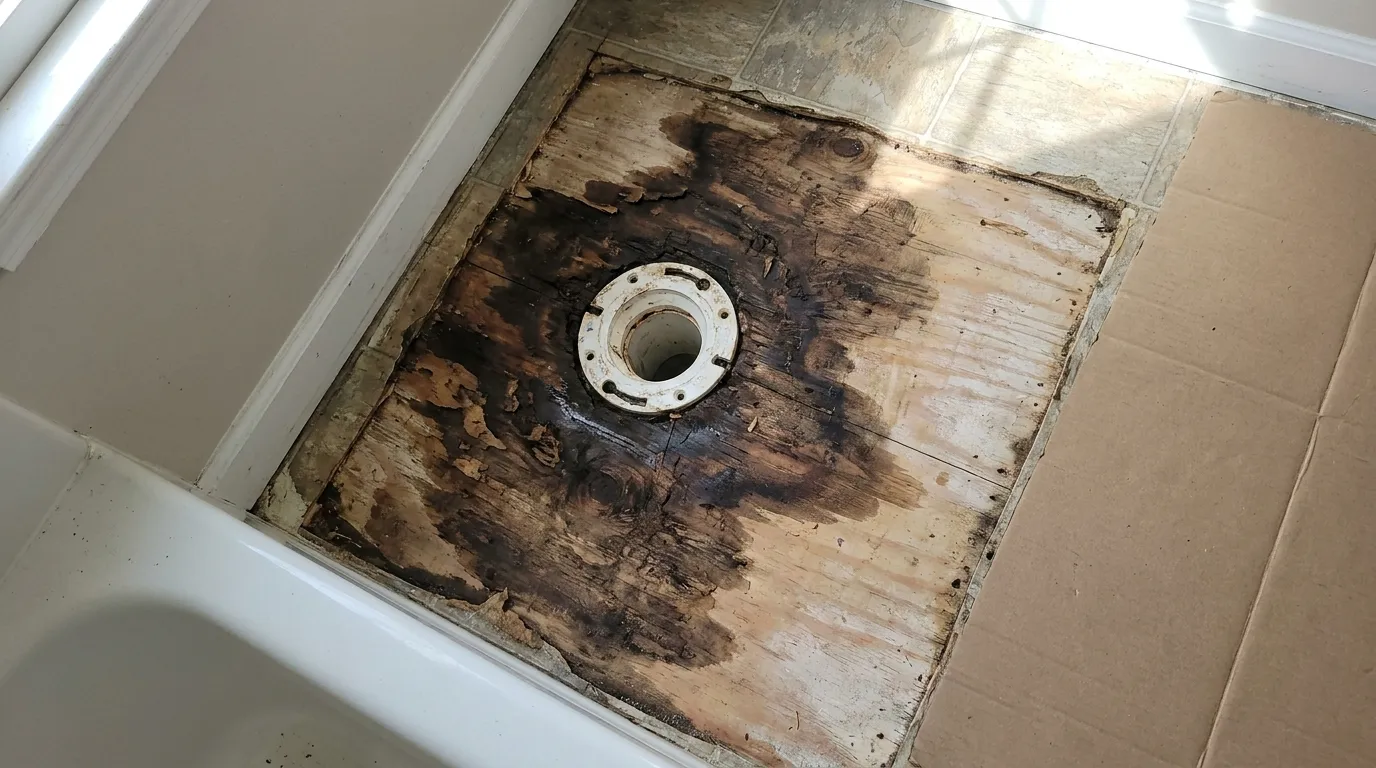
The joists take the same water. When subfloor rot is widespread, the joists are almost always damaged too.
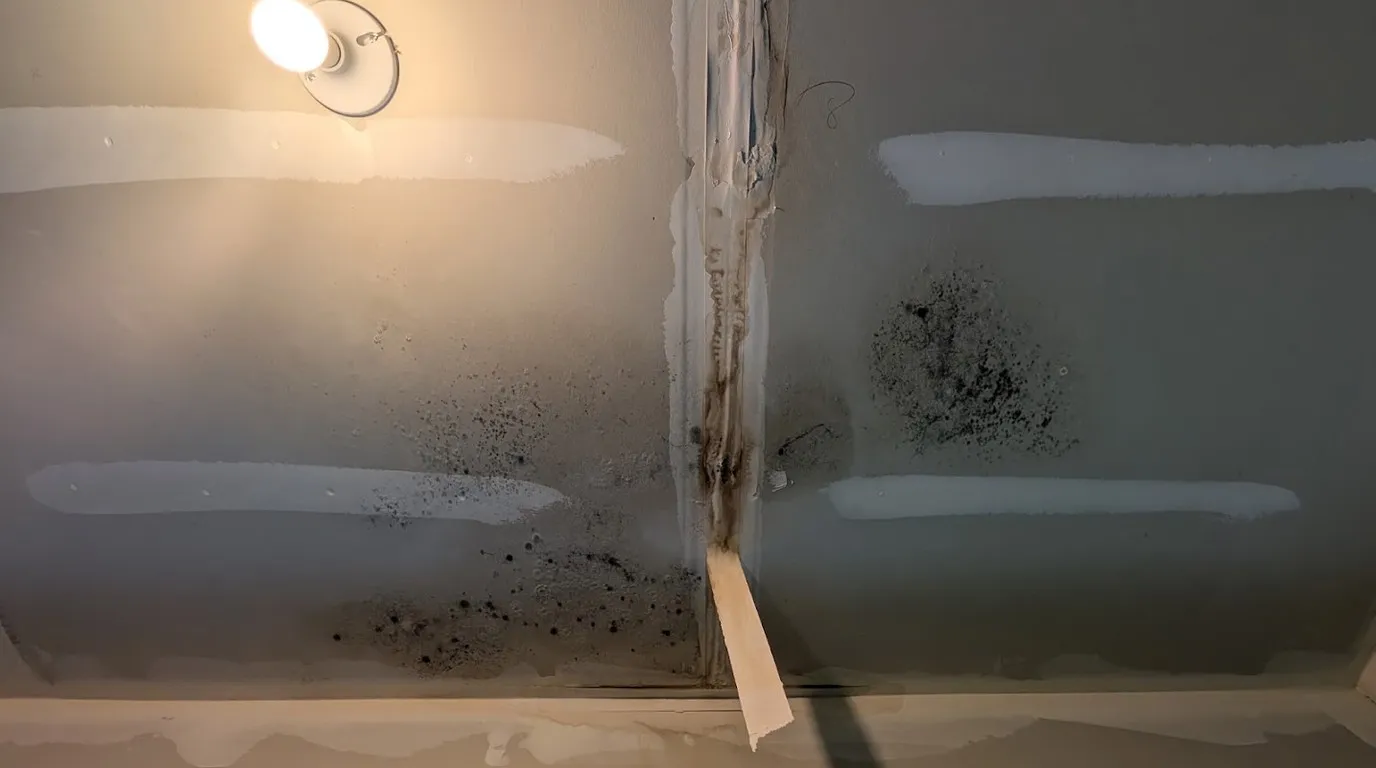
Mold can add to the bill as well. A leak that ran for weeks is well past the EPA drying window covered above.
The leak has to be fixed before any new wood goes down. An active leak will rot a new subfloor just as fast as the old one. A plumber fixes the pipe. We dry what can be saved and rebuild the rest.
A slow leak can also change the insurance answer. A standard homeowners policy does not cover damage caused by a lack of maintenance, as the Insurance Information Institute explains. Whether a long-running leak falls on that side depends on your policy and the facts. What your policy covers is decided by your insurance company, not by us. We explain how policies treat sudden and slow water damage in a separate guide.
The Bottom Line on Subfloor Replacement Cost in Rock Hill
A wet subfloor is not automatically a lost one. Wood that is dried quickly and is still solid may not need to come out.
Nationally, the subfloor itself runs about $2.20 to $4.75 per square foot installed. With more materials in the mix, it runs $3.50 to $12 per square foot. Those are not Rock Hill quotes, and they are not our prices.
Joists, a tight crawl space and the floor covering on top push the bill up. A slow leak can push it further, because rot often runs past the spot where the floor feels soft. Get the leak fixed first, get wet wood dried as fast as you can, and ask each contractor for the same written scope.
Our estimates are free, and nothing starts until you say so. You can also send us a video of the damage, and we will estimate from it. The page on restoration services across York County walks through how a job runs, from the first call to the repairs.