Why Does a Charlotte Home Smell Musty in Summer?
On this page
A Charlotte home smells musty in summer when it holds more moisture than it can get rid of. The air outside stays humid for months, and your AC cools that air without always drying it. The leftover dampness settles where air sits still: closets, carpet pads, cabinets and the back of drywall. Mold and mildew grow on damp material like that, and the gases they release are a common source of the musty odor.
So treat the smell as a moisture clue first. It does not always mean you need mold removal. It does mean it is time to find what is staying damp.
Why Does Summer Humidity Make a Charlotte Home Smell Musty?
Because humid outdoor air finds its way inside, and a Charlotte summer has plenty of it. NOAA’s Comparative Climatic Data for Charlotte, averaged over 1948 to 2018, puts outdoor relative humidity at 84 percent on July mornings. The same NOAA averages put July afternoons at 55 percent, and August and September mornings at 87 percent, the year’s peak.
That air gets in every time a door opens, and through gaps around windows, vents and pipes. Once it is inside, something has to pull the water back out, and in summer that is your AC’s job. An AC dries the air only while it runs long enough for water to condense on its cold coil and drain away.
A unit that is too big for the house cools the rooms fast and shuts off early, before much water has drained. Short cycles even let some water evaporate back into the air, an ENERGY STAR fact sheet on right-sized air conditioners explains. The rooms end up cool but damp.
If the smell comes and goes, the AC’s schedule may explain it. Say you turn the AC off for a long weekend in August. Nothing pulls water out of the air while you are away, so the house can greet you with a musty smell. Mild, muggy days can do the same, because an AC that runs in short bursts dries the air less. For a sudden smell, look at what changed: a muggy stretch, a clogged AC drain line or a new leak.
Damp air can be enough on its own. EPA notes that, at times, moisture in the air alone can let mold grow. So a smell that rises with muggy weather can start with no leak anywhere. The source can be damp air and the carpet, fabric, wood and drywall soaking it up.
What Causes a Musty Smell in a Charlotte House?
Moisture, plus something for mold or mildew to feed on, like wood, paper, fabric or drywall. Check for the moisture in this order, quick looks first and hidden spots last.
Damp Air the AC Is Not Drying
Start with the air itself. Set an inexpensive humidity meter in the room that smells. EPA’s guide to mold and moisture in the home advises keeping indoor humidity under 60 percent, and ideally from 30 to 50 percent. If the room reads higher with the AC running, the AC is not drying the house enough by itself. A dehumidifier can take up the slack; empty and clean it often.
Opening windows to air the house out can make it worse. NC State Extension’s guide to preventing mold advises opening windows for air only when outdoor humidity is below 50 percent. On NOAA’s averages, Charlotte’s July and August afternoons sit above that line, and the mornings sit far above it. Keep the windows shut on muggy days. Set the AC fan to “auto,” too, since a fan left running puts moisture back into the house.
Daily life adds water too. Showers, cooking, the dishwasher and laundry all put moisture into the air. Run the bath and kitchen fans, and make sure they and the dryer vent outdoors, not into the attic or garage.
Water From the AC Itself
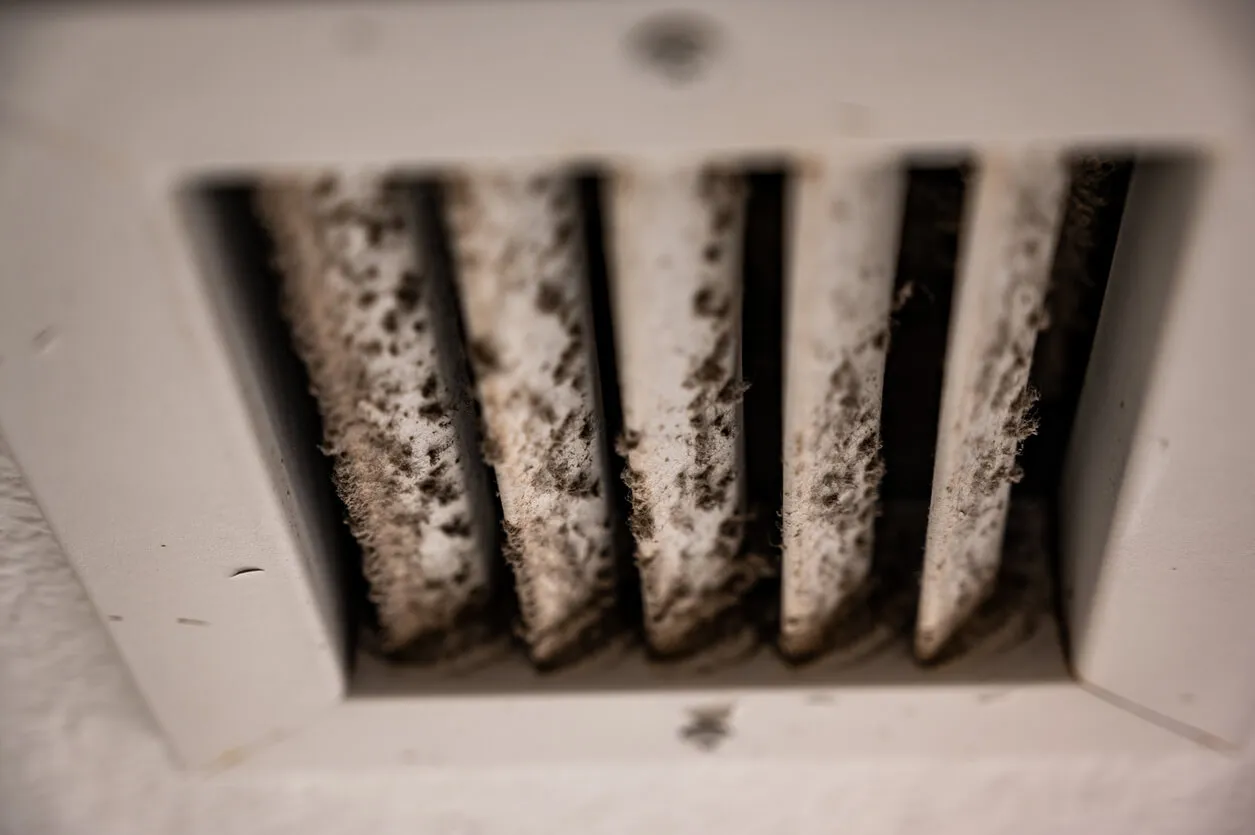
Your AC pulls water out of the air, and that water has to drain away. Where you can reach it safely, look at the drain pan under the indoor unit and the line that carries the water off. Standing water in the pan, or a line that stopped draining, leaves a wet spot where the house’s air moves through. Ducts can sweat too, where a cold duct runs through a hot attic or crawl space without enough insulation. If you suspect mold inside the equipment or ducts, our guide to mold in an HVAC system covers what to do.
Closets, Cabinets and Closed Rooms
Next, check the places where air sits still. A packed closet with the door shut, a cabinet that rarely opens or a closed spare room can trap damp air. Unaired spaces like these can hold a strong musty odor. For example, a hall closet full of winter coats can smell musty while the rooms around it smell fine. Leave interior doors open, thin out a crowded closet and keep supply vents clear so the air keeps moving.
Slow Leaks and Sweating Pipes
Then look where water runs. Check under sinks, around toilets and tubs, behind the refrigerator and dishwasher, and along the water heater and washer lines. In summer, cold-water pipes can sweat in humid air even when they do not leak.
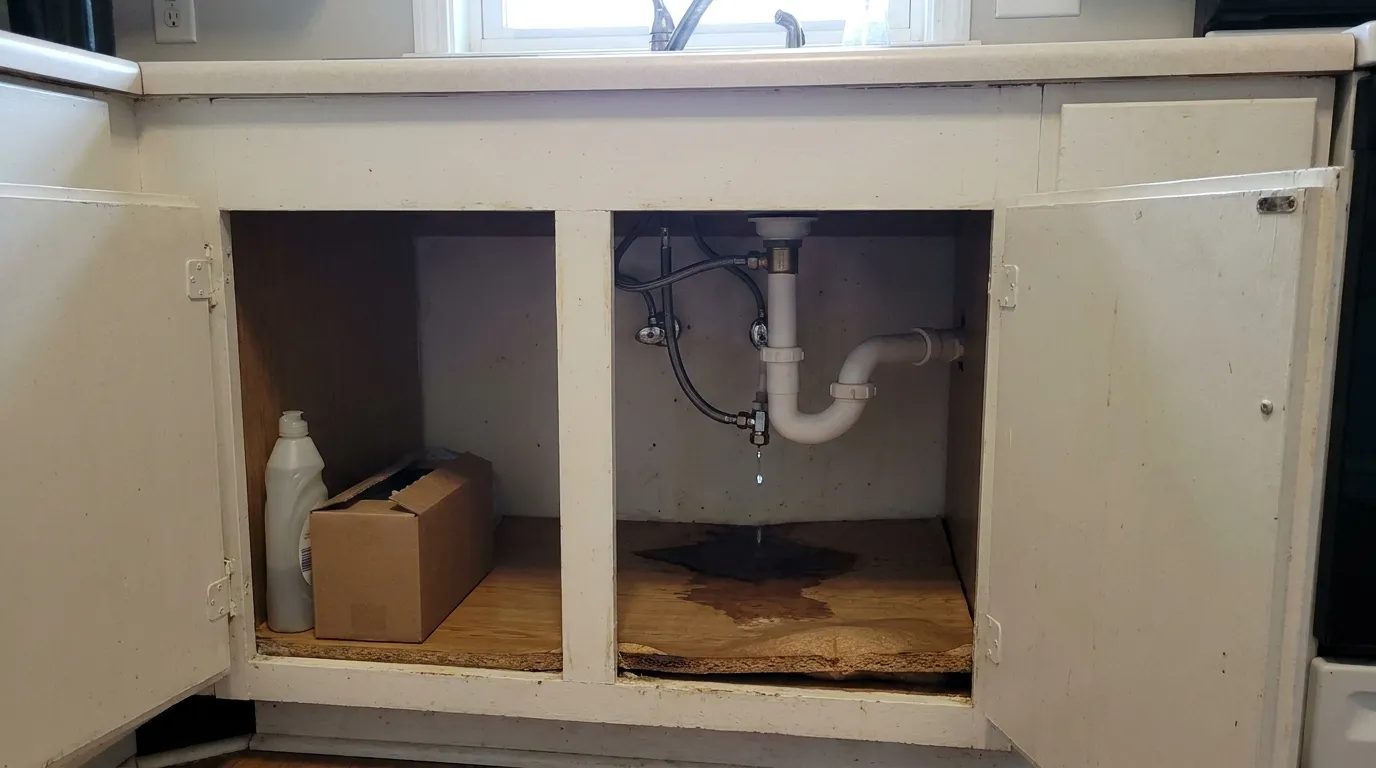
Once the leak is fixed, look at what the water soaked, like a cabinet floor or drywall. That material needs water damage drying or removal, or it can keep feeding mold.
Damp Laundry, Towels and Carpet
Fabric holds water. Clothes left wet in the washer and damp towels piled in a hamper can turn musty. So can a rug or carpet pad that soaked up a spill. Laundry hung indoors to dry adds moisture to the air as well. Move what you can out of the room and see if the smell leaves with it.
The Roof and Attic
Roof leaks are a common source of indoor water. After a hard rain, check the attic insulation and wood for damp spots, stains or the same musty smell. If you are not steady on the attic ladder or the joists, leave that check to a professional.
The Crawl Space, If You Have One
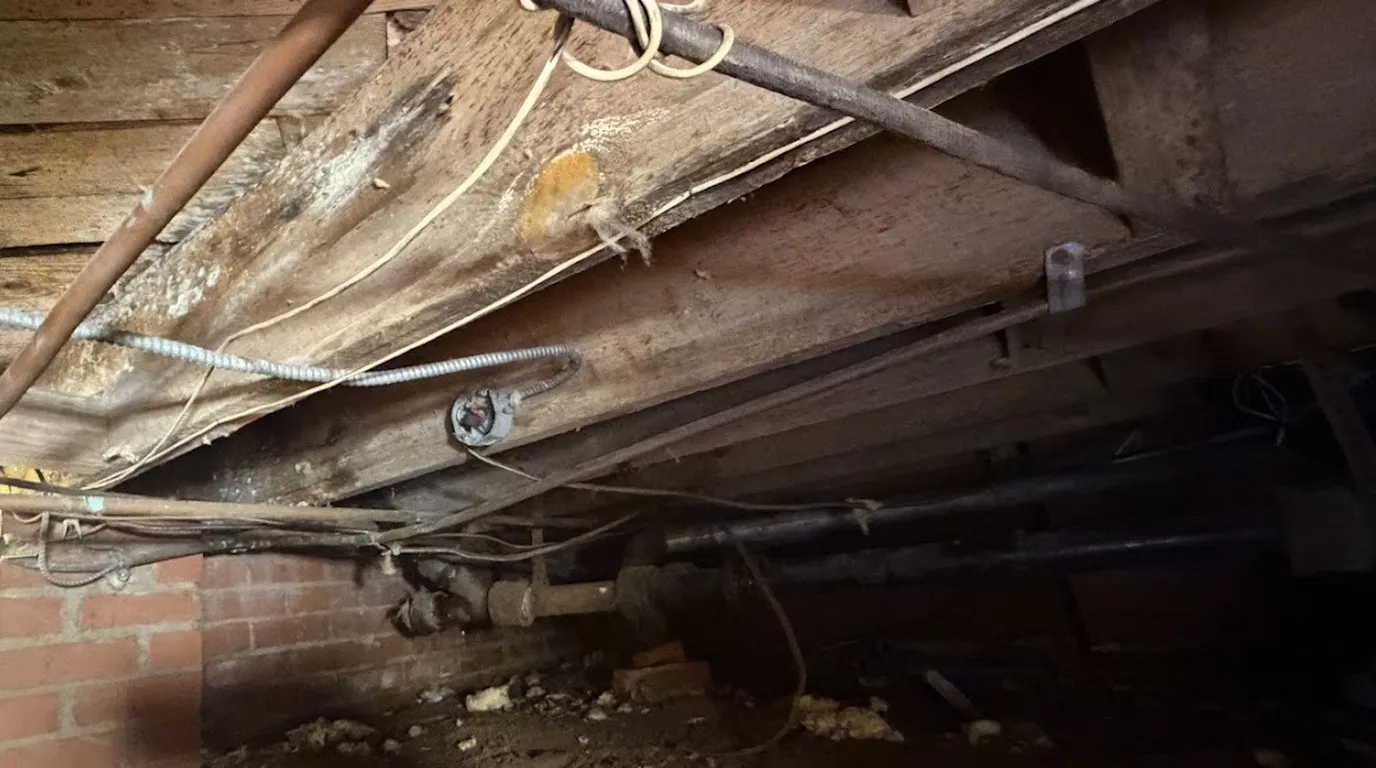
If your house sits over a crawl space, damp air down there can work its way up through gaps in the floor. Our guide to crawl space humidity levels covers which readings mean trouble under the house.
Is a Musty Smell in Your Charlotte Home a Sign of Mold?
It is a strong hint, not proof. The smell “suggests that mold is growing” and “should be investigated,” in the words of EPA’s mold course. Mold also damages whatever it grows on, and the damage spreads the longer it is left. So do not wait for cooler weather to see if the smell fades.
What the smell cannot tell you is which mold it is or how much is there. “Black mold” is not one species, so there is no single smell to sniff for. No one can tell by looking whether a mold is making toxins, either. You do not need to know: the CDC says to remove mold you see or smell, whatever the type.
And a damp smell is not always mold. Damp houses can also hold bacteria, dust mites, cockroaches and chemicals given off by wet materials and furniture. Each of those traces back to moisture, so the next step does not change: find the water.
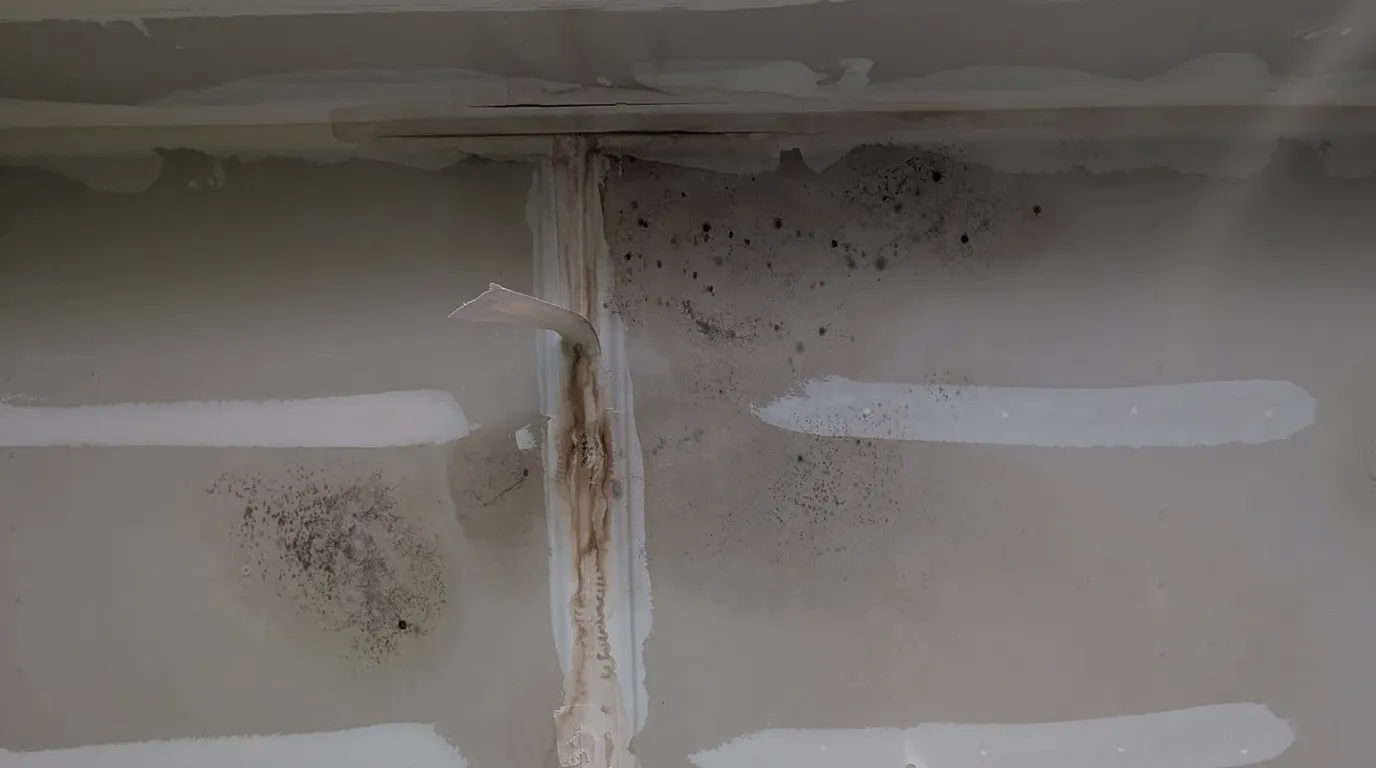
When the smell is there but nothing is visible, suspect hidden mold. EPA’s list of places it hides includes:
- the back side of drywall, paneling or wallpaper
- the underside of carpet and its pad
- inside walls, around pipes that leak or sweat
- inside ductwork
- the wall behind furniture, where condensation forms
- the top of ceiling tiles, and roof materials above the ceiling
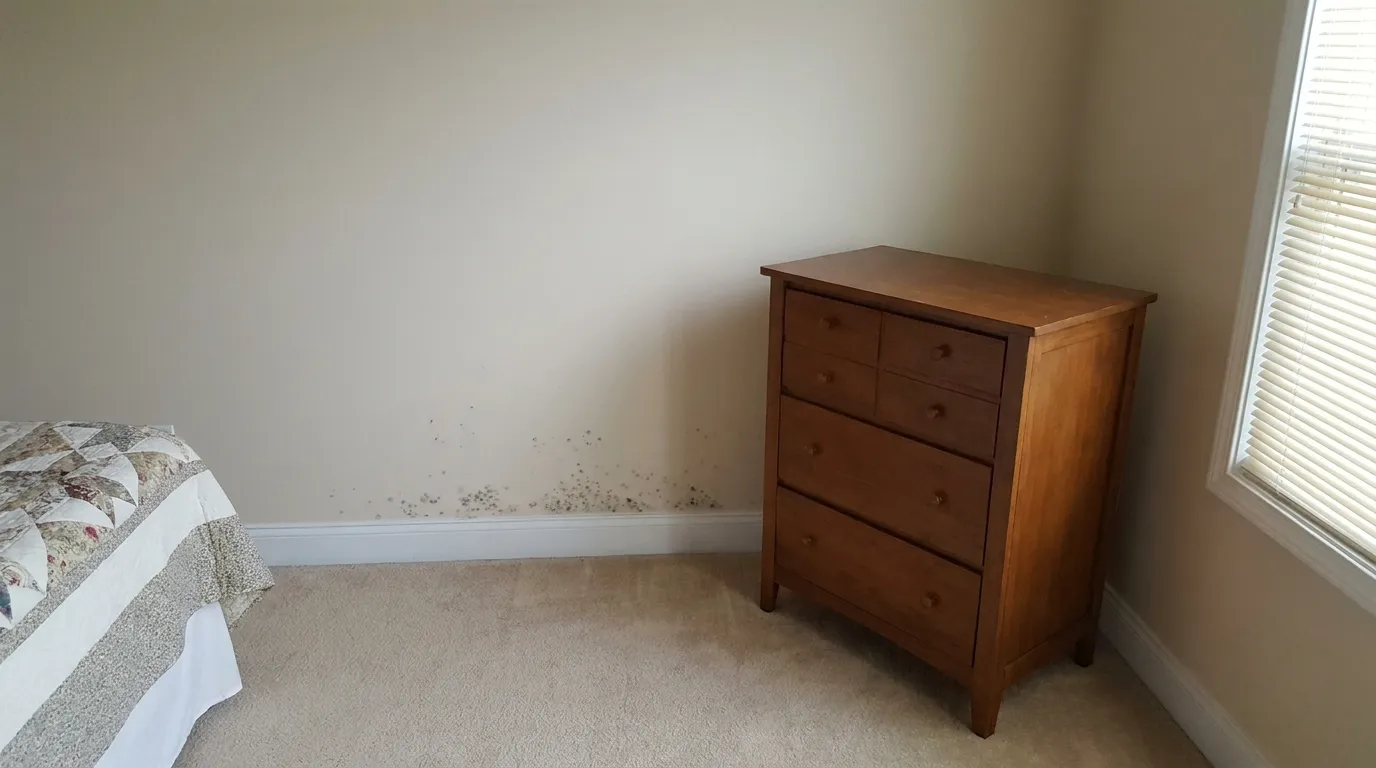
Two of those get their water from summer itself: pipes sweating in humid air, and ducts carrying cold air through warm spaces. For example, a sweating cold-water pipe inside a bathroom wall can wet the back of the drywall while the room side looks clean.
Do not tear into walls or peel wallpaper to find it. Pulling wallpaper off a moldy wall can release a burst of spores. Opening up any moldy spot can spread it to other rooms. For hidden mold, the safer move is an experienced professional who can find the moisture with a meter before opening anything.
Can it make you sick? It can, though not everyone reacts. The CDC says damp, moldy homes may cause a range of health effects, or none at all. Some people get a stuffy nose, sore throat, cough or wheezing, burning eyes or a skin rash. People with asthma or a mold allergy may react severely. People with weakened immune systems or chronic lung disease may get lung infections.
For other early signs and a routine that keeps mold from starting, see our guide to preventing mold growth at home.
When Should Mecklenburg County Homeowners Call About a Musty Smell?
Call once the smell outlasts your own checks, or once what you find is bigger than a small cleanup.
- You cannot find the source. The humidity is in range and the usual places check out, but the smell stays. That points to hidden moisture inside a wall, floor or ceiling.
- The smell started after a leak, an overflow or a storm. The wet materials come first: drying out a water-damaged Mecklenburg County home is its own job, before any mold work.
- You find more mold than a small patch. EPA says that in most cases you can handle a moldy area under about 10 square feet yourself, following its guidelines. Beyond that, or after heavy water damage, it points to its remediation guide for bigger jobs or a contractor experienced with mold. Our mold inspection and removal page covers when doing it yourself makes sense and what to wear.
- The smell blows out of the vents when the AC starts. EPA advises against running an HVAC system you know or suspect has mold in it, since it could spread mold through the house. Have an HVAC technician check the equipment.
- Someone at home has asthma, allergies or a weakened immune system. If you have health concerns, talk to a health professional before any cleanup starts.
We answer the phone 24 hours a day, every day. Estimates are free, and nothing starts until you say so. We record what we find in photos, thermal images and moisture readings, and you get a copy of all of it. Where pre- and post-testing is agreed at the start, an independent lab clears the job, not us.
If a pipe, the roof or the AC caused the problem, a plumber, roofer or HVAC technician fixes that part. Our part is the wet materials and the mold, from removal to repairs. We are an IICRC Certified Firm (#56517068). We are also a licensed general contractor in North Carolina (#83926), so the same company dries the building and does the repairs.
The Bottom Line on a Musty Smell in a Charlotte Home
Dry the air first, then watch the smell. If it fades as the house dries out, damp air was the cause, and a drier house is the fix. If it hangs on, work down the causes above until something turns up wet. If nothing does, that is the point to call us.