How to Prevent Mold Growth in Your Home: Best Practices
· Updated August 23, 2026
On this page
Are you looking for how to prevent mold growth in your home? You are in the right place, and the good news is that prevention is mostly one variable.
In this article we cover what mold actually needs to grow, the humidity number the CDC names, the room-by-room checks that matter, the 48-hour rule after any leak, and what to do when prevention has already failed. Keep reading, because almost everything on this list is cheap. The expensive version is the one you do after mold has already started.
What Does Mold Need to Grow in a Home?
Three things, and you only control one of them.
Spores are the first, and they are already in your house. The CDC notes that mold can enter through open doorways, windows, vents and HVAC systems, and that outdoor mold can arrive on clothing, shoes and pets.
Food is the second, and most of a house qualifies. The CDC lists paper, cardboard, ceiling tiles and wood, plus dust, paint, wallpaper, insulation, drywall, carpet, fabric and upholstery.
You are not going to remove either of those. Spores are everywhere and your house is made of food.
Water is the third, and it is the only one you can do anything about. That is why every real prevention tip is a moisture tip.
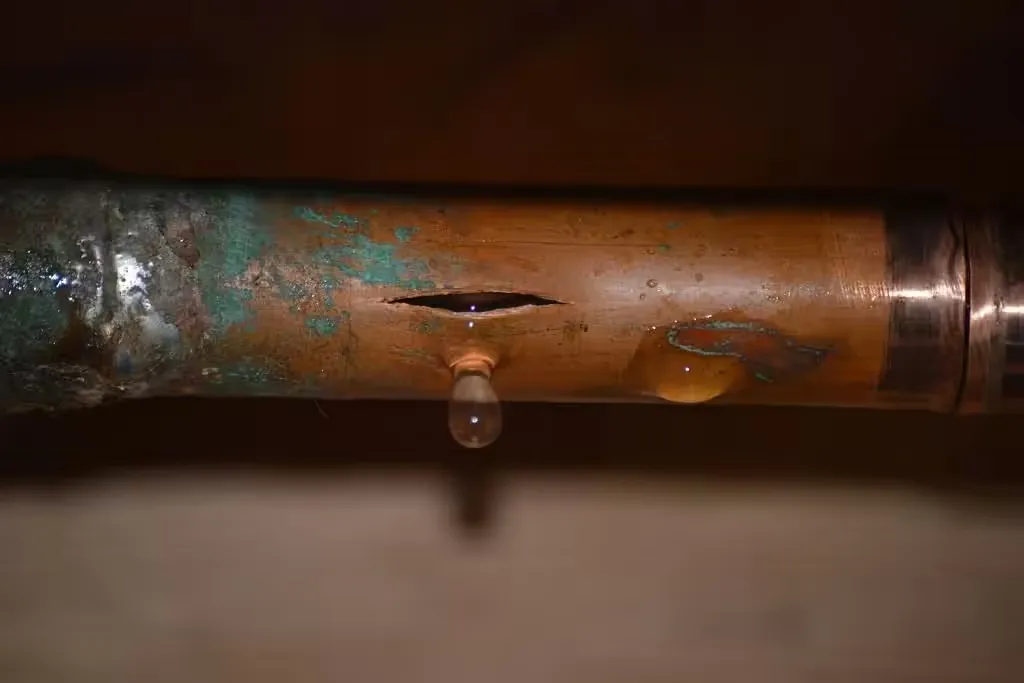
The CDC puts it simply. “Mold will grow where there is moisture, such as around leaks in roofs, windows, or pipes, or where there has been a flood.”
So the whole strategy is controlling water. Keep the house dry and the other two ingredients do not matter.
That is genuinely all of it. Everything below is a way of finding water before it finds a wall cavity.
What Humidity Level Prevents Mold Growth?
There is a number, and it is worth knowing.
The CDC says to keep humidity levels in your home as low as you can, “no higher than 50%,” all day long.
All day long is the part people skip. Humidity that spikes every evening still counts.
A cheap hygrometer tells you where you actually are. Most people guess high or low by a wide margin.
An air conditioner or dehumidifier is how you get there. In a Carolina summer, one or both will be running.
Basements and crawl spaces usually need their own dehumidifier. They run cooler and hold more moisture than the rooms above them.
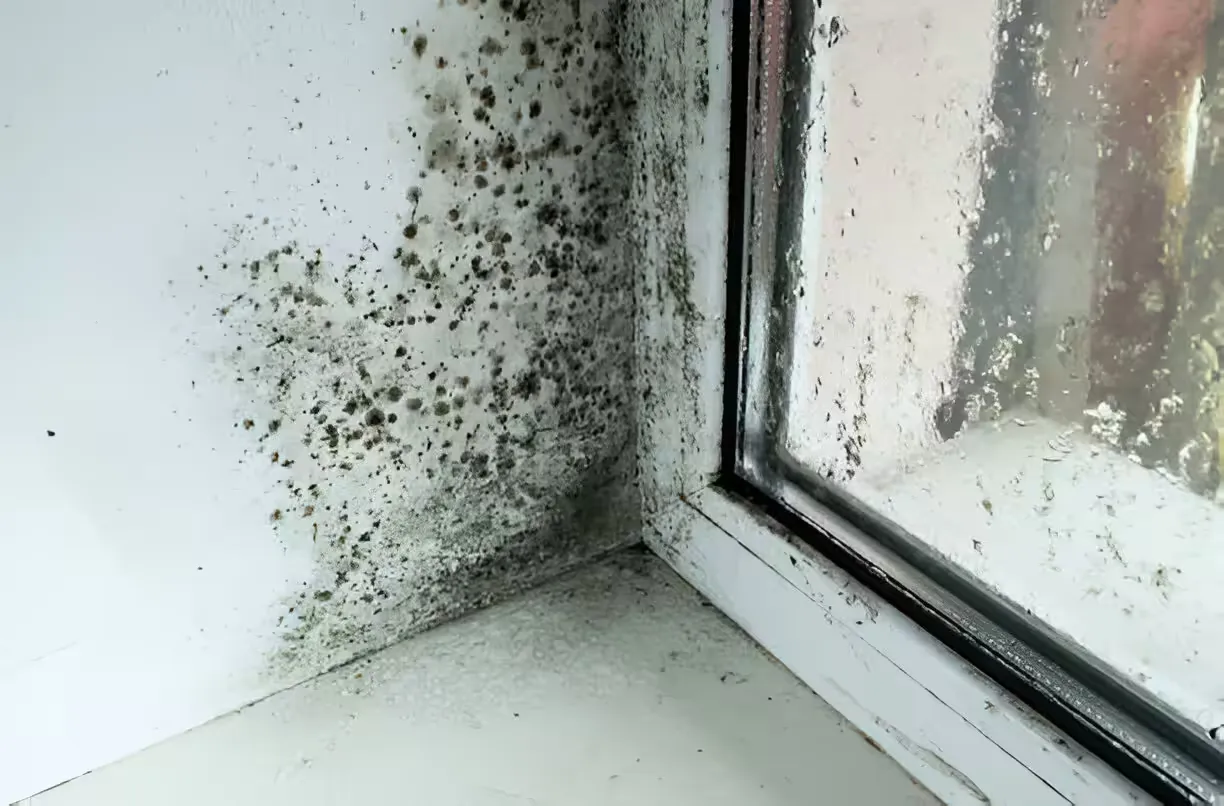
Watch the windows on cold mornings. Condensation on the glass means the air in that room is carrying more water than it can hold.
That is a free humidity reading. If the windows are wet, the walls are getting damp too.
Keep it under 50 percent and most household mold problems never start.
Which Rooms Cause Most Mold Problems?
Bathrooms first. Steam, poor ventilation and porous surfaces in one place.
Run the extractor fan during every shower and for a while after. Fifteen or twenty minutes after is when it does the most good.
Check that the fan vents outside. A surprising number vent into the attic, which moves the problem rather than solving it.
Kitchens are second. Cooking puts a lot of water into the air, and so does a dishwasher that vents into the room.
Use the range hood, and check that one vents outside too.
Laundry rooms are third, and the dryer is the reason. The CDC specifically says to make sure your clothes dryer vents outside your home.
A disconnected dryer vent is one of the fastest ways to soak a wall from the inside. It is also one of the easiest things to check.
Basements and crawl spaces are fourth. Cool surfaces plus damp air equals condensation, even with no leak at all.
Bedrooms and closets on exterior walls are the quiet fifth. Cold wall, still air, and furniture pushed up against it.
How Do You Stop Mold After a Leak or Flood?
Speed, and there is a deadline.
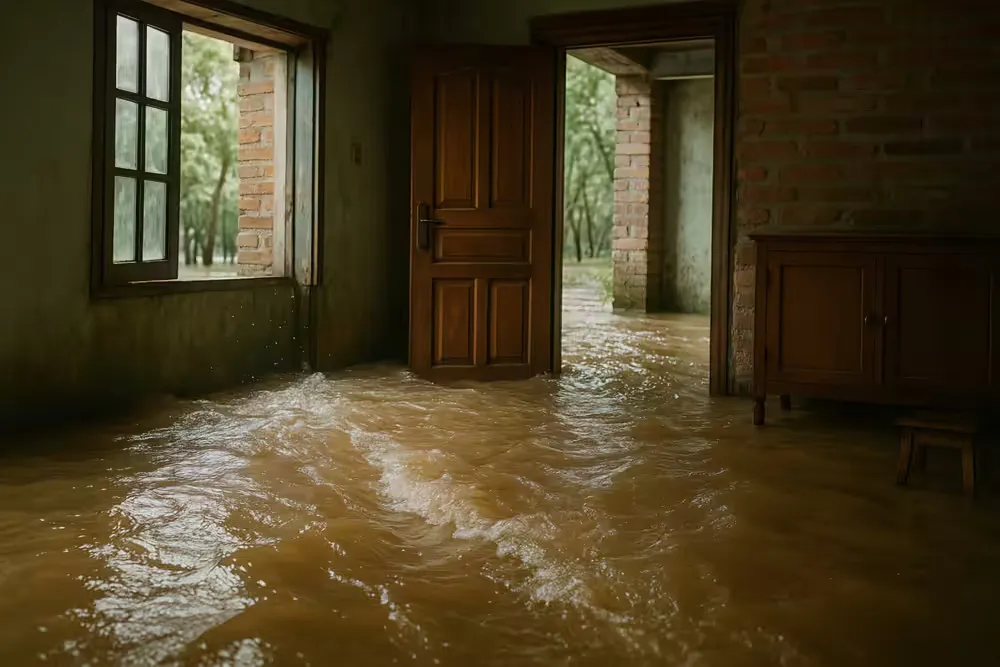
The CDC’s guidance is to clean up and dry out your home “fully and quickly (within 24-48 hours) after a flood.”
The US EPA gives the same window with the reason attached. Dry water-damaged areas and items within 24 to 48 hours, and “in most cases mold will not grow.”
That is the single most useful fact in mold prevention. Beat the window and there is usually nothing to remediate.
So the response to any leak is the same. Stop the water, get it out, and start drying immediately.
Do not wait to see whether it dries on its own. Surfaces dry first and cavities dry last, so appearance tells you nothing.
Get real air movement in there. A box fan and an open window is not the same as equipment sized for the room.
Pull up wet carpet rather than hoping. The pad underneath holds water long after the carpet feels dry.
If drywall, insulation or subfloor got wet, get someone to take readings. That is what water damage restoration is for, and it is much cheaper than remediation.
After a burst pipe the same clock applies, even if the visible mess was small.
What Maintenance Prevents Mold Growth?
Most of it is unglamorous and quick.
Fix leaks in the roof, walls and plumbing as soon as you find them. The CDC’s own list starts here, and it is the highest-value item on it.
Check under every sink twice a year. Run your hand along the trap and the supply lines, and look for a stained or soft cabinet floor.
Look at the water heater. They fail eventually, and they usually give warning in the form of rust or a damp pan.
Check the condensate drain on your HVAC system every year. A clogged line backs water into places nobody looks.
Clean gutters and check that downspouts discharge away from the house. Water pooling at the foundation ends up in the crawl space.
Look at the crawl space once a year with a torch. You are looking for standing water, damp insulation hanging down, and a torn vapor barrier.
If that space is wet more often than not, crawl space water damage is a standing supply of moisture for the whole floor above it.
Add mold inhibitors to paint before painting, which the CDC lists. They are available at any paint store.
Clean bathrooms with mold-killing products, which is also on the CDC’s list. It costs nothing extra.
What Should You Do About Materials That Got Wet?
Some things dry. Some things do not, and knowing which saves you a second job.
The CDC is blunt about the hardest case. Remove or replace carpets and upholstery that have been soaked and cannot be dried right away.
It also advises against carpet in rooms with a lot of moisture, like bathrooms and basements. That is a design decision worth remembering during a renovation.
Carpet pad is almost never worth saving after anything but a small clean-water spill. It is cheap and it holds water for a long time.
Wet insulation inside a wall is the one people miss. It may never dry on its own, and nobody can see it.
Hard surfaces are the easy case. The CDC says mold can be removed from hard surfaces with household products, soap and water, or a bleach solution of no more than one cup of household bleach in one gallon of water.
If you use bleach, never mix it with ammonia or other cleaners, which produces a poisonous gas. Open windows and doors, and wear gloves and eye protection.
Do not paint over a damp surface. Paint traps the moisture and the problem continues underneath it.
Cardboard boxes on a basement or garage floor are worth moving onto shelves. Cardboard wicks water upward and it is ideal food.
Can You Tell If Mold Is Growing Before You See It?
Often, yes, and smell is the most reliable early sign.
Musty air is the classic. Earthy, stale, or like a damp basement.
Trust that smell even when the room looks fine. It usually arrives before anything is visible.
A room that feels clammy or cooler than the rest of the house is another sign. So is one where the air feels heavy.
Look for bubbling paint, warped baseboard and soft drywall. All three mean water got behind the surface.
Staining that keeps coming back after painting is a sign of an active source. You are painting over the symptom.
Watch for a pattern in how people feel. The CDC says exposure “may cause a variety of health effects, or none at all,” with stronger reactions among people who have asthma, a mold allergy, a weak immune system or chronic lung disease.
If someone in one of those groups feels better away from the house, that is worth investigating as a moisture question.
The CDC does not recommend testing your home for mold. If you can see it or smell it, you have enough to act.
When Is Mold Too Big to Handle Yourself?
There is a line, and it is mostly about where the mold is rather than how it looks.
Surface mold on tile, glass or sealed hard surfaces is a cleaning job. The CDC’s household guidance covers it.
Anything inside the structure is not. Drywall, insulation, subfloor and framing cannot be cleaned from the surface.
A large area is the second trigger. So is mold appearing in more than one room, which usually means a shared source.
Repeat growth in the same place is the third. If you have cleaned it twice, nobody has found the water.
The water source is the fourth. Mold following a sewage backup or flood water is a different job from mold following condensation.
Who lives there is the fifth. The four CDC risk groups are a reason to be less casual, not more.
Professional mold removal follows an order: find the moisture, map the extent, seal the area, remove what cannot be saved, clean, then correct the source.
The sealing matters as much as the cleaning. Disturbing growth without containment spreads spores into rooms that were fine.
What Is the Simplest Mold Prevention Routine?
If you do nothing else, do these.
Keep indoor humidity under 50 percent, all day, measured rather than guessed.
Run bathroom and kitchen fans, and confirm they vent outside.
Dry anything wet within 24 to 48 hours, every time, without exception.
Check under sinks, at the water heater and in the crawl space twice a year.
Fix small leaks the week you find them rather than the season you find them.
Do not carpet rooms that get damp, and do not store cardboard on a basement floor.
Check that the dryer vent is still connected once a year. It takes two minutes and it is a common cause of a soaked wall.
That list costs almost nothing and prevents most of what we get called about. Prevention is unglamorous, and remediation is expensive.
If water has already been somewhere it should not, the 48-hour clock is running now. Call us, and we handle mold and water damage in Charlotte and across the metro.