How Humid Is Too Humid for a Charlotte Crawl Space?
On this page
In a Charlotte crawl space, air above 70% relative humidity is too humid. Wood is the second test: framing above 18% moisture is generally too wet. Those are the lines in a crawl space checklist from Pacific Northwest National Laboratory, a U.S. Department of Energy lab.
Here is the catch. Charlotte’s July air carries so much water that outside air alone can push a vented crawl space past 70%, with nothing leaking. So a high air reading in July does not prove damage by itself. Wet wood, water on the ducts and a moldy smell upstairs are signs that the humidity is doing damage.
We dry wet crawl spaces, and removing mold from crawl space framing is part of our work once humidity has gone that far. Below, we cover why Charlotte crawl spaces get so humid, which readings mean trouble, why open vents backfire and what damage looks like.
Why Do Crawl Spaces Get So Humid Every Summer in Charlotte?
Charlotte’s summer air holds a lot of water, and the space under your house runs cooler than the air outside. The soil and the shade under the floor keep it cool. When warm, damp air cools, its relative humidity climbs. If it touches a surface colder than its dew point, some of that water turns back into liquid.
Two terms explain the whole thing. Relative humidity is a percentage: the water in the air compared with the most that air could hold at its temperature. Cool the same air and the percentage rises, even though no water was added. Dew point is the temperature at which that air would be holding all the water it can. It tells you how much water the air actually carries.
NOAA’s 1991 to 2020 climate normals for Charlotte Douglas airport put the July dew point at about 66 to 69°F, hour by hour. The normal dew point climbs through spring and peaks in July and August. In January it is near 30°F, which is why crawl space readings fall back in winter.
For example, say July air at a 68°F dew point drifts in through a foundation vent and cools to 72°F under your floor. That air now sits at about 87% relative humidity, with no leak anywhere. That number is our own math from the dew point, not a reading from any house. Let the same air touch a duct colder than 68°F, and it reaches 100% right at the metal.
Plenty of things under a house run colder than that dew point. Air conditioning ducts carry chilled air all summer, and cold-water pipes stay cool. When humid air meets one of those surfaces, water beads on it. Think of a glass of iced tea sweating on the porch. That is condensation, and it is how humid air turns into wet insulation and wet wood.
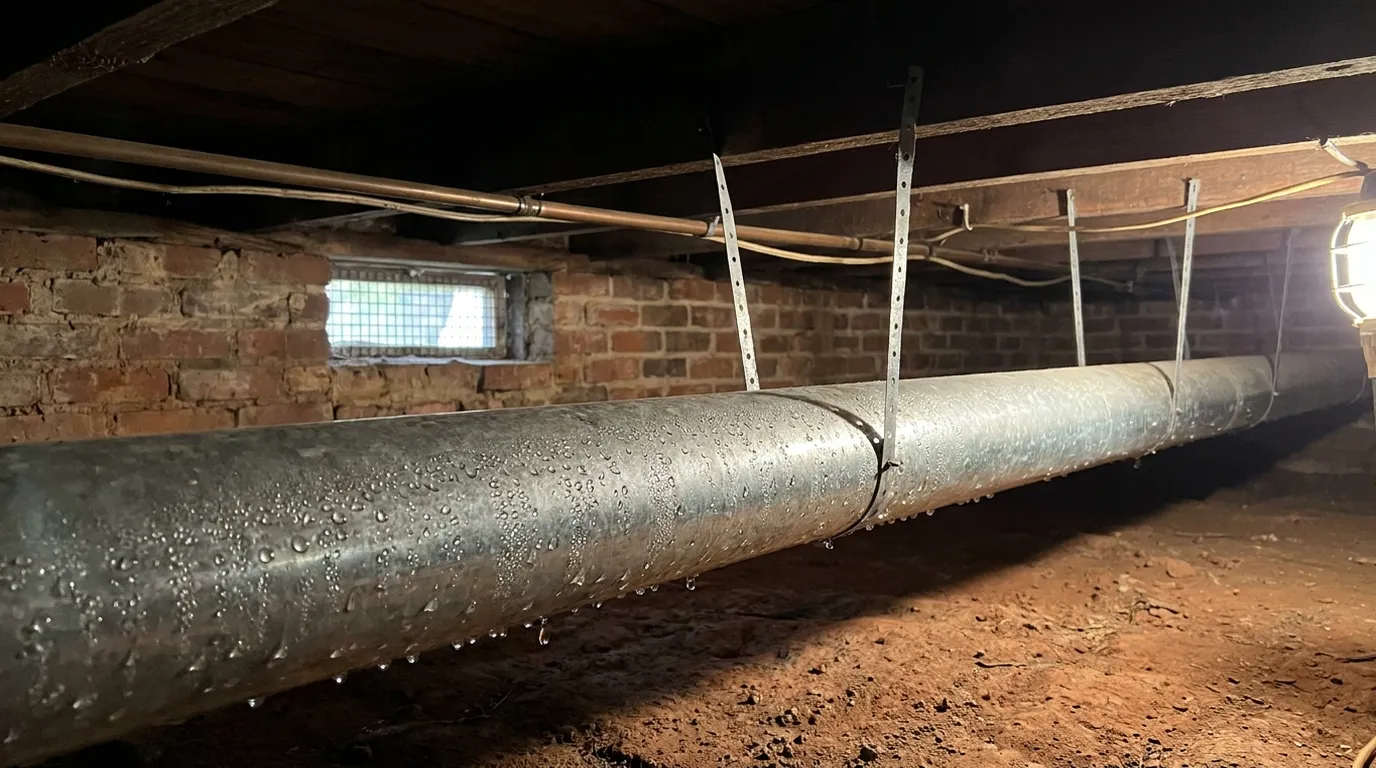
A bare dirt floor adds more. The soil wicks up ground moisture, and the crawl space’s warmth evaporates it into the air, the EPA notes. Is it normal for a crawl space to be this humid? In a Charlotte summer, for a vented one, yes. Whether that humidity is hurting anything is a separate question, and the readings below answer it.
Which Crawl Space Humidity Readings Mean Trouble in Charlotte?
Under a Charlotte house, air above 70% means trouble, and framing above 18% generally does too. In July the air number can run high from the weather alone, so the wood number tells you more. Here is what each figure means, and whose it is:
- Your living space: below 60%. Keep indoor humidity below 60%, ideally 30 to 50%, if possible, the EPA advises. That advice is written for the air inside your home.
- Crawl space air: above 70% is bad. That is the checklist line from the top of this post. A vented crawl space can cross it on a July day with no leak at all.
- Framing: above 18% is generally bad. A pin-type moisture meter reads it.
- Mold and stain on wood: below 20%. Wood dried below 20% moisture keeps mold and stain in check, per the USDA Forest Products Laboratory.
- Rot: about 25 to 30% and up. Decay usually needs liquid water, like condensation, rain or wet ground, to push wood that wet.
Between 60% and 70%, the crawl space is above the indoor advice but under the crawl space line. Treat that range as a reason to watch the wood, not as proof of a problem.
Read together, 18% works as an early warning. Above it, wood is close to the 20% mark where mold and stain can take hold. That also answers whether a crawl space has to be bone dry. It does not. Air-dried wood usually holds no more than 20% moisture, and decay generally does not start in wood that dry.
So what counts as high moisture in wood? Over 18% deserves a closer look. At 25 to 30% or more, with liquid water present, rot can set in.
There is no exact humidity where mold switches on. Mold needs moisture that lasts, on something it can feed on, like wood, paper or insulation. That is why the wood reading matters more than any single air reading.
For example, take the 87% from our July example above. It is over the 70% line, and the weather alone put it there. Now suppose a pin meter on the joists reads under 18%. The wood is holding up for now. A reading over 18% means the damp air is getting into the wood, and that is the number to act on.
Put the two readings side by side and the answer gets clearer. High air with wood under 18% means the humidity has not reached the framing yet. High air with wood over 18% means it has. Wet wood with water you can see means the problem is past humidity.
For the rooms above the crawl space, our guide to preventing mold around the house covers the living space.
Why Can Opening Crawl Space Vents Make Humidity Worse in Charlotte?
In summer, outside air in Charlotte is warm and full of water. Under your house it cools, so its relative humidity rises instead of falling. Opening the vents brings in more of that air, and more water with it.
Moving air feels like it should dry things out. Under a house in July it does the opposite. The incoming air cools, its humidity climbs, and the coldest surfaces collect its water.
In an Advanced Energy field project in Princeville, North Carolina, vented crawl spaces stayed above 70% humidity almost all the time in summer 2003. The project compared vented and closed crawl spaces on houses of the same size and plan. In warm weather there, outside air held more moisture than the air in the vented crawl spaces. Venting added water instead of drying them. Princeville is not Charlotte, and 2003 was the wettest year on record in most of North Carolina.
Plastic on the ground did not fix it. Those vented crawl spaces had a ground cover over all of the soil, and the air still stayed that humid.
Charlotte’s normal July dew point, in the upper 60s, is lower than the 73°F average Princeville saw that summer. It is still above the temperature of a working air conditioning duct. Supply ducts and cold-water pipes can run 55 to 65°F in summer, so they sweat. Condensation is more likely when the house is cooled below 72°F.
For example, say you prop the vents open on a July afternoon to air the crawl space out. The air coming in carries a dew point near 68°F. It reaches a supply duct in that 55 to 65°F range. Water beads on the duct and can drip onto the insulation below.
Keeping summer air out of a crawl space is a moisture-control contractor’s work, not ours. The closed crawl spaces in that project had their vents sealed. A sealed plastic liner covered the ground and ran up the walls, and a small feed of air-conditioned air dried them. A moisture-control contractor can tell you whether a setup like that, a dehumidifier or both would suit your house. Moisture problems have to be fixed before a crawl space is sealed, so any standing water or leak comes first.
How Can You Tell Crawl Space Humidity Is Doing Damage in a Charlotte Home?
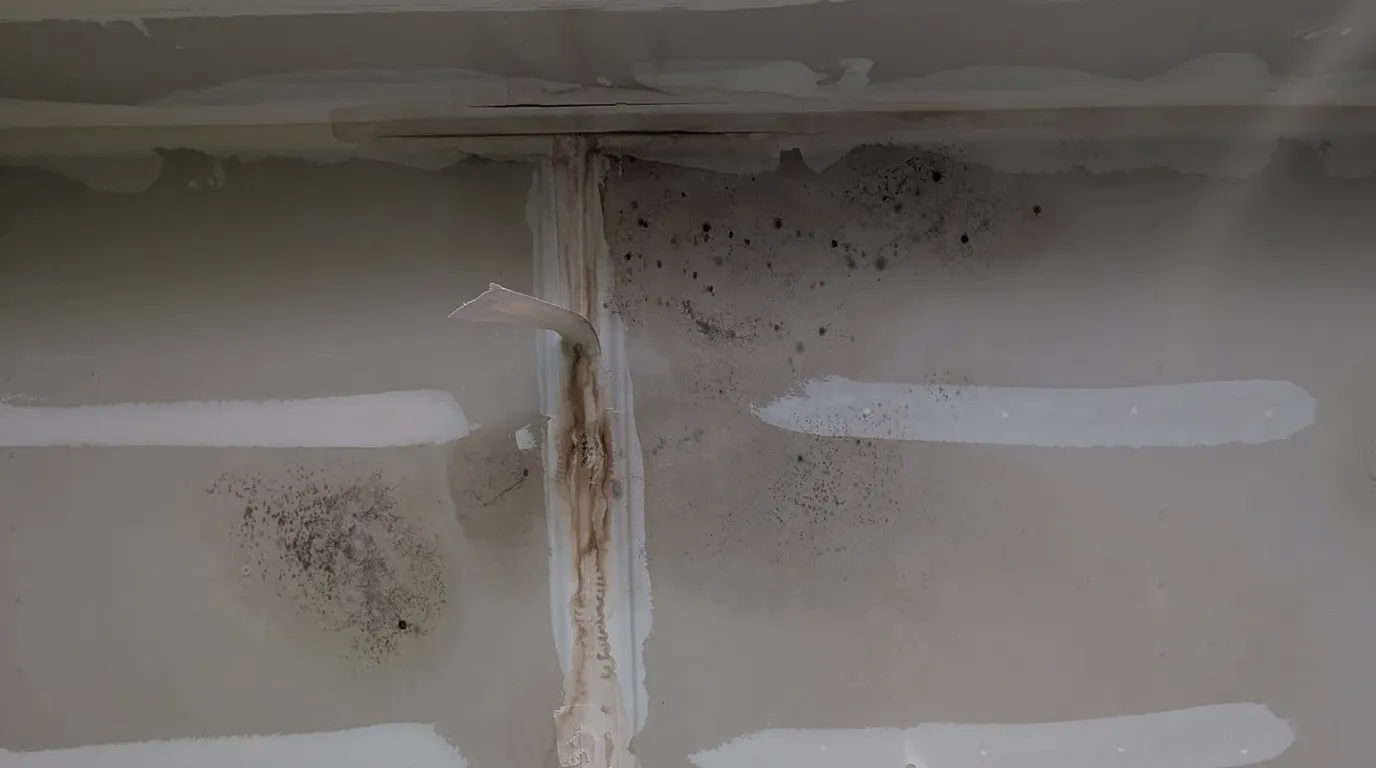
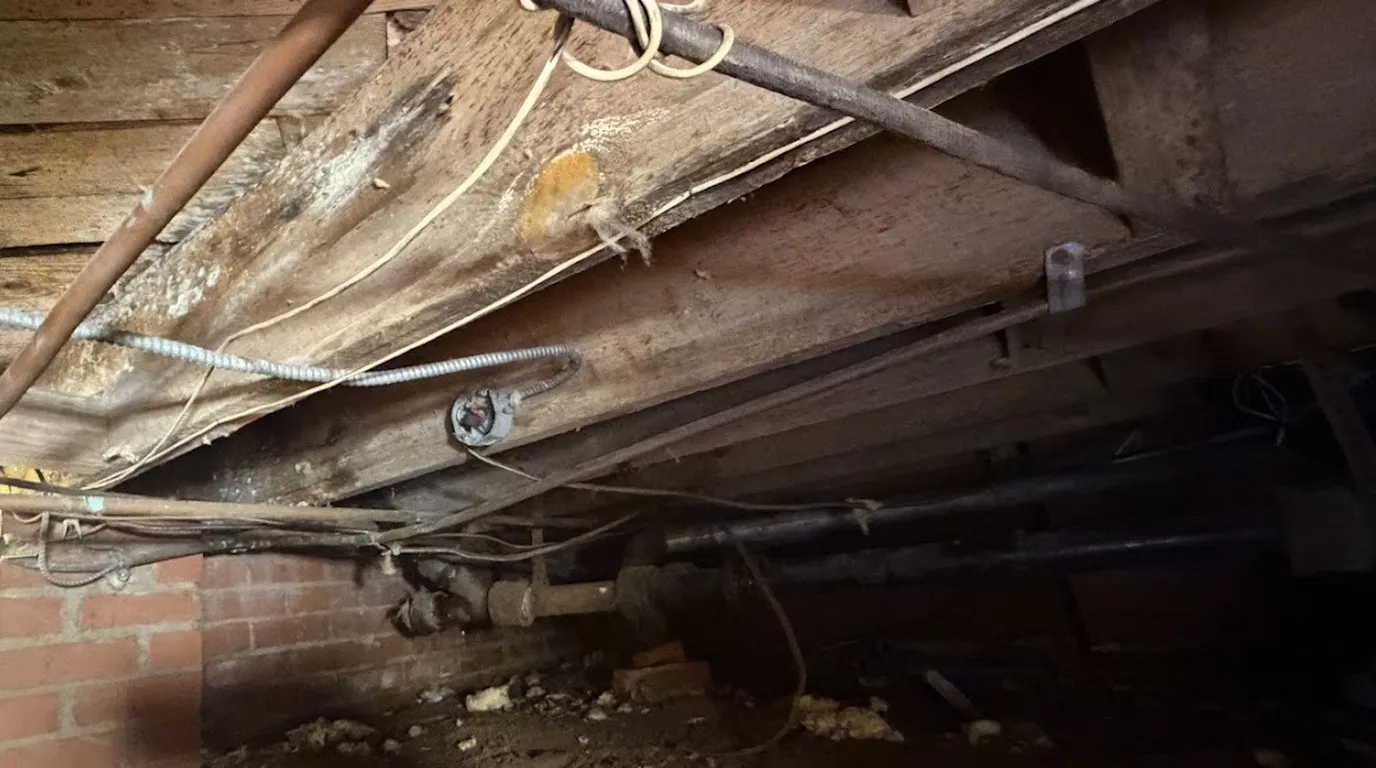
You can tell when the damp air starts leaving water behind. Under the house, look for water beading on ducts or pipes, rusty pipes and nails, water stains, and damp, discolored or sagging insulation. Rust means water has been sitting on the metal. Mold or mildew on the wood and sagging joists are warning signs too. If you plan to go under yourself, this crawl space checklist covers the protective gear and safety steps first.
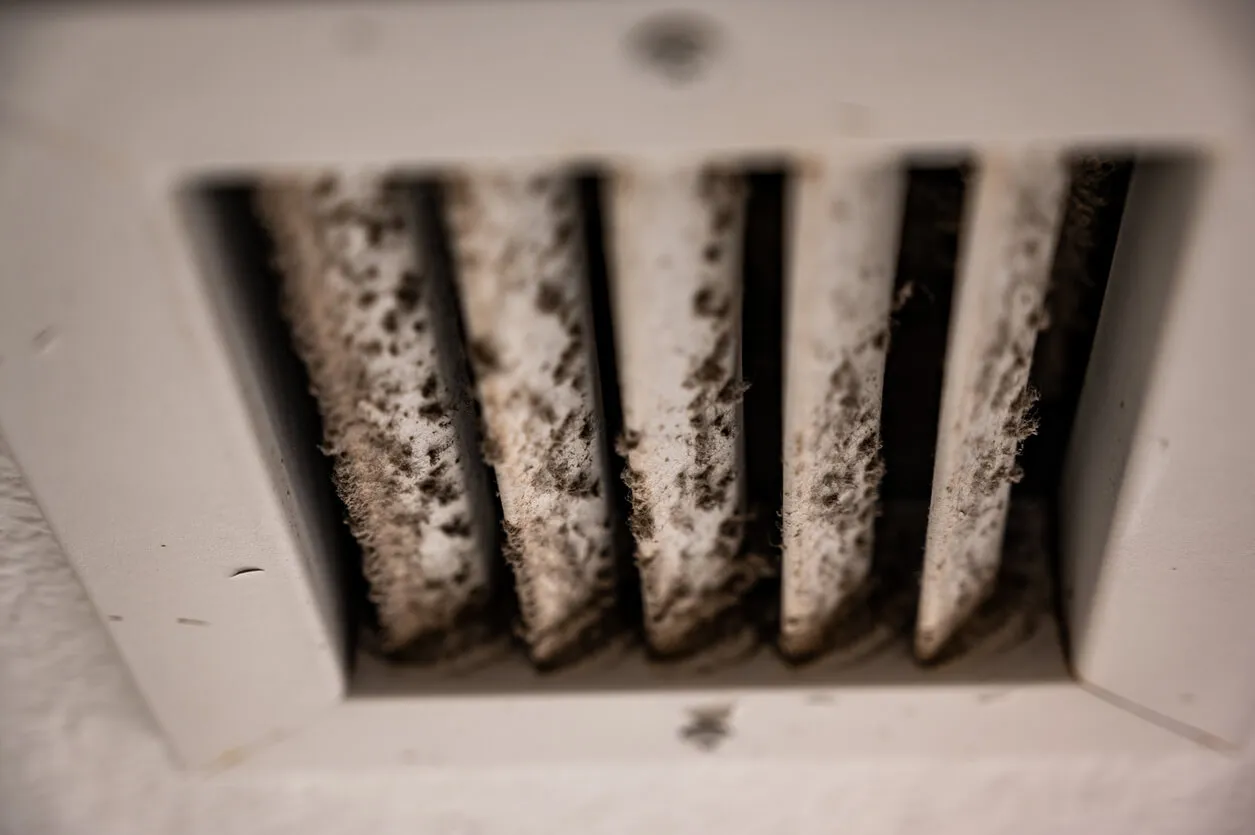
Upstairs, a moldy smell with no mold in sight is a reason to suspect hidden mold. Humid crawl spaces are common places for it to grow, the EPA notes. Crawl space moisture can also rise into the house through cracks in floors and walls.
Two readings confirm what you see. A digital hygrometer reads the air. A data logger records it for days, so you can tell steady dampness from a spike after rain. A pin-type moisture meter reads the wood, and that is the number to compare with 18%.
For example, picture a hallway that smells musty every August, with no stain anywhere upstairs. Under the floor, water beads on the ducts and the insulation below them hangs damp. That is humidity doing damage, and the pin meter on the joists tells you how far it has gone.
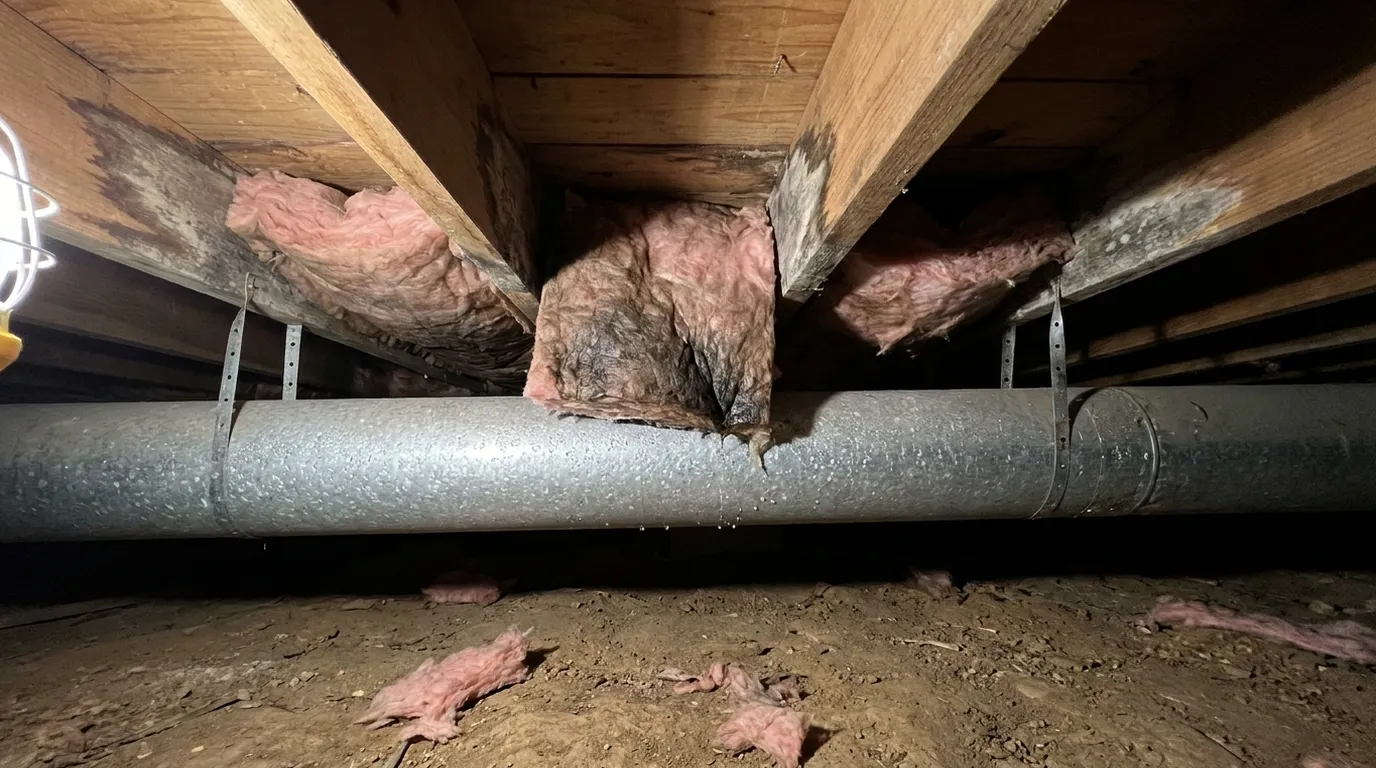
Left long enough, a mold and moisture problem is likely to cause structural damage, the EPA warns, because mold feeds on wet wood.
Some findings mean the problem has moved past humidity. Standing water or a dripping pipe is liquid water, not humidity. Our page on drying out a wet crawl space covers that work.
Visible mold on the framing, or insulation that is wet and falling, is where our crawl space mold work comes in. Every job runs the same five steps: response, assessment, mitigation and containment, cleaning and drying, and restoration and repairs. We document what we find with photos, thermal imaging and moisture readings, and you get a copy. We dry to a measured moisture target, with readings taken daily. We also hold a North Carolina general contractor license (#83926), so the same company dries the crawl space and repairs it.
If the only problem is high air over dry wood, a moisture-control contractor is the one to call instead. Whether a homeowners policy pays for mold that humidity caused is decided by your insurance company, not by us. We answer the phone 24 hours a day. You can also send us a video of the damage, and we will estimate from it.
The Bottom Line on Crawl Space Humidity in Charlotte
For a Charlotte crawl space, air above 70% relative humidity is too humid, and framing above 18% moisture is generally too wet. The EPA’s below-60% advice is for the air in your living space. With July dew points in the upper 60s, a vented crawl space can read high with nothing leaking. That is why the wood reading tells you more than the air reading.
Opening vents in summer lets in more moisture, not less. In the Princeville project, plastic on the ground alone did not stop it. Sweating ducts, damp or sagging insulation and mold on the wood mean the humidity is doing damage. A moldy smell upstairs is a reason to look.
Controlling the humidity itself is a moisture-control contractor’s work. When it has turned into standing water, wet insulation or mold, call us any hour. Charlotte is part of our Mecklenburg County water damage service area.