Mold in HVAC Systems: How It Spreads and What to Do About It
· Updated August 23, 2026
On this page
Are you trying to work out whether you have mold in your HVAC system? You are in the right place. That musty smell when the air kicks on is worth taking seriously.
In this article we cover why mold grows inside HVAC equipment, how the system spreads it through the whole house, the signs worth acting on, where it hides, and what real removal involves. Keep reading, because this is the one mold problem that does not stay in one room. The air handler moves it everywhere, which is why a can of spray never fixes it.
Why Does Mold Grow Inside an HVAC System?
An HVAC system makes moisture on purpose. That is the part people miss.
Warm air moves across cold evaporator coils and water forms on them. In a healthy system that water drains away and nobody thinks about it.
When the drain line clogs, the pan cracks, or the slope is wrong, the water stays. Now you have standing water inside a dark metal box.
Dust and pollen collect on coils and duct surfaces too. That gives mold something to feed on.
Put food and water in a dark warm space and you have described a growing chamber. The system is not faulty. It is doing its job in the wrong conditions.
Poor airflow makes it worse. If part of the duct run is not moving air, moisture settles there and sits.
Duct insulation is another weak point. Once it gets damp it holds moisture for a long time.
Charlotte summers add to all of it. The system runs for long stretches, which means more condensation and more chances for a drain problem to matter.
The CDC says to keep indoor humidity as low as you can, and no higher than 50 percent, all day. That number is a useful target for a house with an HVAC mold history.
How Does Mold in an HVAC System Spread Through a House?
This is what makes HVAC mold different from mold under a sink.
Mold under a sink mostly stays under the sink. Mold in an air handler gets distributed.
Every time the system starts, air moves across the growth and out through the vents. Spores travel with it.
That reaches every room the ductwork serves. A problem that started in one metal cabinet is now in the whole house.
Spores settle on furniture, carpet, curtains, clothes and walls. You clean those surfaces and the system puts more back.
That is the loop people get stuck in. It feels like the mold keeps coming back because it does.
It is also why spraying a vent does nothing useful. That is mopping the floor while the pipe is still leaking behind the wall.
The vent is where you see it. The vent is almost never where it lives.
Until the moisture source is fixed and the growth removed, cleaning the house is temporary. The engine is still running.
What Are the Signs of Mold in an HVAC System?
Smell is the most common first sign. If the air smells musty or stale when the system starts, pay attention.
People describe it as damp basement, wet cardboard, or old gym bag. It usually fades once the system has run a while, which is why it gets dismissed.
That fading is a clue rather than an all-clear. The smell is strongest when air first moves across the growth.
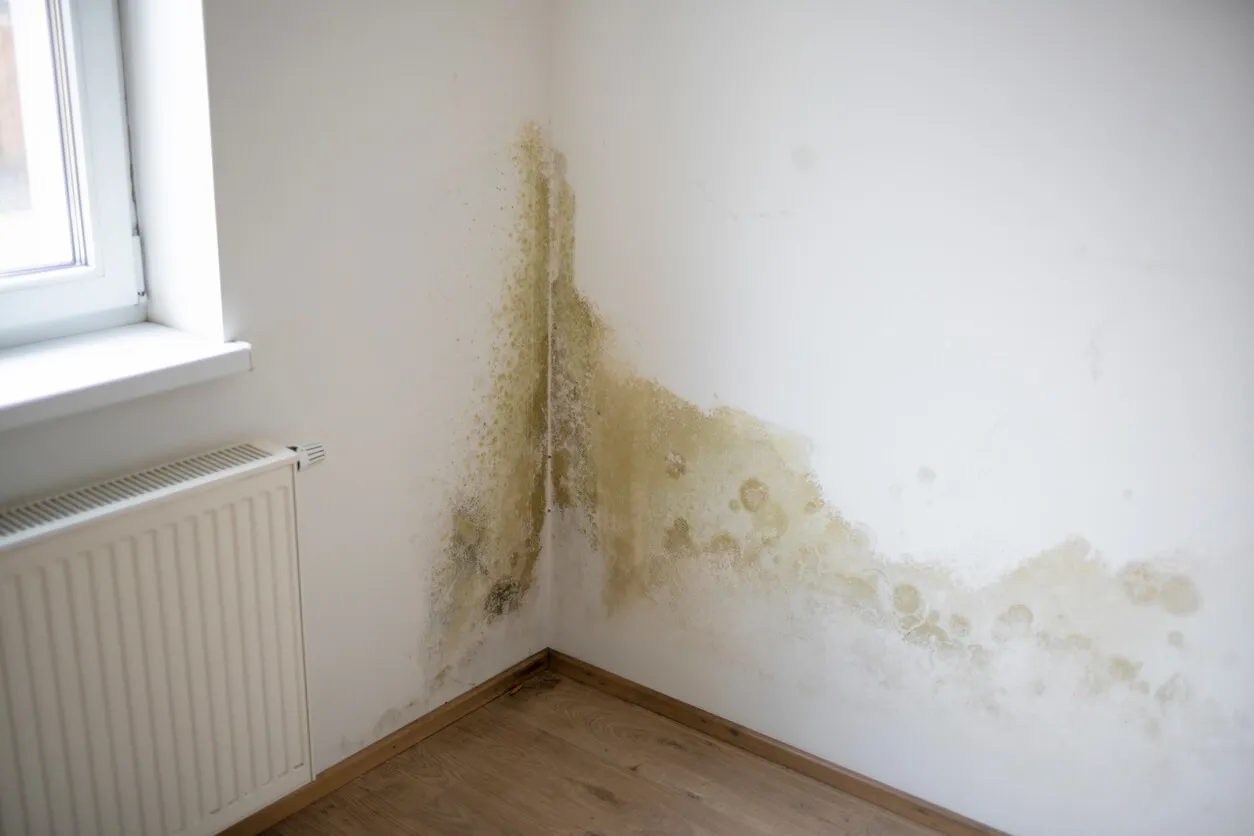
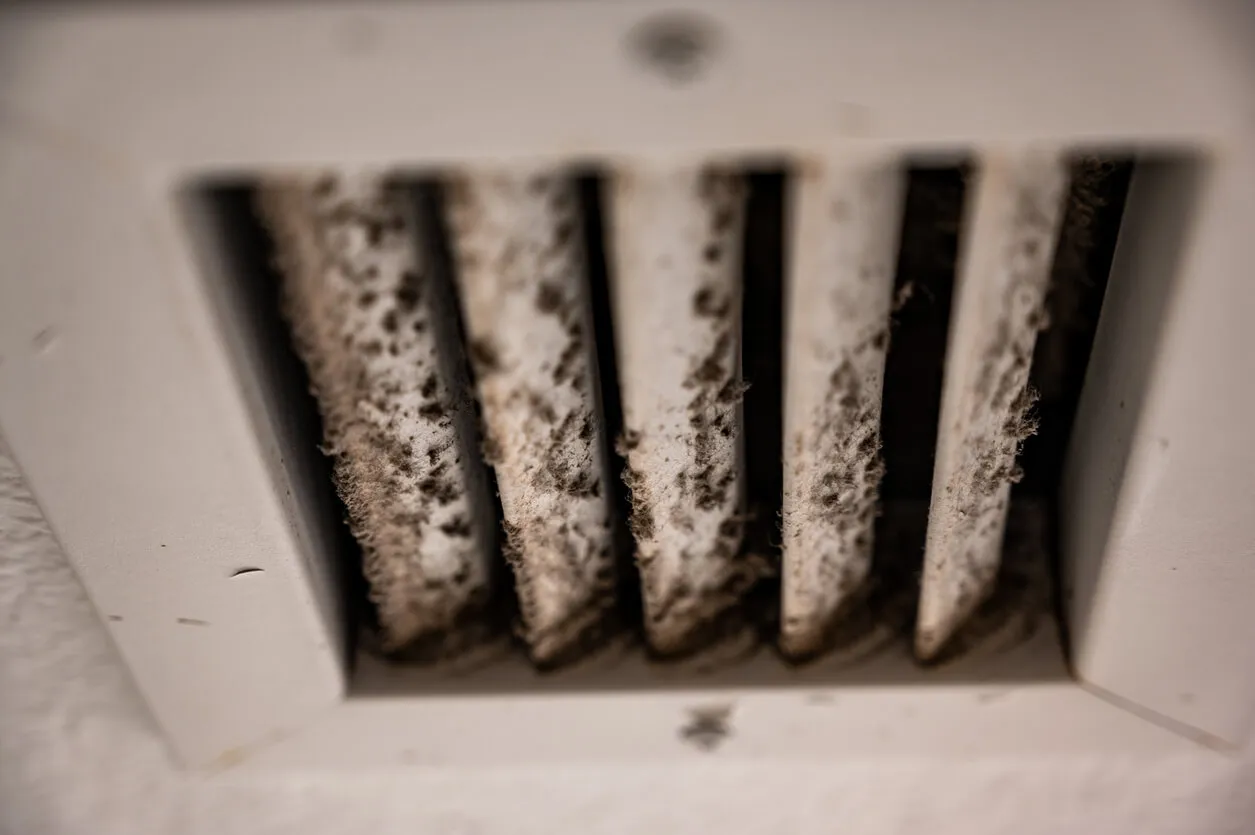
Visible discoloration is the second sign. Look around vents, registers, and inside the air handler.
Mold can be black, green, brown, white or orange. Color tells you very little, which is a point we come back to.
Some people notice symptoms before they notice growth. Sneezing, coughing, itchy eyes or congestion that improves when you leave the house is worth noting.
The CDC is careful here, and so are we. Exposure “may cause a variety of health effects, or none at all,” and reactions are stronger for people with asthma, a mold allergy, a weak immune system or chronic lung disease.
Timing is the last clue. Check the system after any water event.
A roof leak, a burst pipe, an overflowing drain pan or a flooded room all create the conditions. If the water was near the equipment, include the equipment in the inspection.
Where Does Mold Hide in HVAC Equipment?
The evaporator coil is the usual suspect. It makes condensation every cycle by design.
If the coil is dirty, moisture clings to the buildup instead of draining. That is the most common starting point of all.
The drain pan and condensate line come next. A clogged line backs water up into a pan that was never meant to hold it.
Air ducts are the second area, especially lined or flexible ones. Internally insulated duct holds moisture in a way bare metal does not.
The air handler cabinet and blower compartment are the third. So is the insulation around them.
Location matters a lot here. A unit in a damp crawl space, attic or basement is working against the space it sits in.
If that is your setup, the crawl space is worth checking at the same time. Fixing the equipment while the space around it stays wet buys you months, not years.
Registers and vent covers are usually not the source. They are where you first see the evidence.
Mold at several vents at once points upstream. That pattern usually means ductwork or the air handler, not the vents.
Is Mold in an HVAC System Just a Cleaning Problem?
No, and this is the most expensive misunderstanding in the whole subject.
People hear mold in the vents and book a duct cleaning. Cleaning is sometimes part of the answer.
It is rarely the whole answer. Mold is a moisture problem wearing a cleaning problem’s clothes.
Remove the growth without fixing the water and it returns. Usually within a season.
So the system has to be inspected for the cause, not just the symptom.
Is the condensate line clogged? Is the coil dirty, or the duct insulation wet?
There is a second risk in cleaning it wrong. Disturbing growth releases spores into the air.
Scrubbing a contaminated coil without containment can spread the problem to rooms that were fine. That is a worse outcome than doing nothing.
Proper mold removal works in a different order. Find the moisture, measure how far the contamination goes, seal the area, then clean.
The sealing comes before the cleaning. That order is the difference between removal and redistribution.
What Should You Do If You Suspect Mold in Your HVAC System?
Do not wait for it to get worse. Musty air, visible growth or recent water near the equipment all justify an inspection now.
Skip the shortcuts. Air fresheners and repeated filter changes cover the smell without touching the source.
Changing the filter is good maintenance. It is not treatment.
If you have had water damage recently, treat the HVAC system as part of the affected area. That means checking nearby ducts, the air handler, vent boots and any insulation that got wet.
This gets missed constantly. A crew dries the room, everyone is satisfied, and the wet duct insulation above the ceiling keeps working.
Turn the system off if the growth looks significant. Running it moves spores while you decide what to do.
Take photos before anyone touches anything. If an insurance claim follows, that record matters.
Get someone who handles both water and mold. HVAC mold is usually the result of a moisture failure, so the two problems are one problem.
A company that does water damage restoration and mold work together will look for the source rather than treating what is visible.
How Does Professional Mold Removal in an HVAC System Work?
It starts with assessment, not equipment.
The team inspects the system, the building materials around it, and anywhere moisture is known or suspected. Moisture readings, not guesses.
The point of that step is mapping. You need to know how far it went before you decide what to seal.
Containment comes next where contamination is significant. Affected areas get isolated so cleanup does not spread spores.
That containment is usually held under negative pressure. Air flows into the sealed area rather than out of it.
Then the cleaning, and what happens depends on the material. Non-porous parts like coils and metal duct can often be cleaned and kept.
Porous material usually cannot. Soaked duct insulation and heavily contaminated liner get removed rather than treated.
That is not upselling. You cannot clean the inside of wet insulation, and drying contaminated material leaves you with dry contaminated material.
Last comes the moisture fix, and it is the step that decides whether any of this lasted. Clearing a drain line, repairing a leak, sealing ducts, or getting indoor humidity down.
Skip that step and you have bought yourself one season. Everyone involved should be clear about what the source was.
How Do You Stop Mold in an HVAC System Coming Back?
Maintenance does most of the work. Coil cleaning, drain line checks and filter changes are the boring things that prevent the expensive thing.
Have the condensate line checked every year. It is the single most common failure point and the cheapest to fix.
Humidity control is the other half. Aim for the CDC’s number, no higher than 50 percent indoors, all day long.
A dehumidifier earns its keep in a Charlotte summer. So does a system that is sized correctly for the house.
Act on small water problems fast. A slow drip in a mechanical closet or a roof leak above ductwork creates exactly the conditions this article describes.
Watch the less obvious signals too. Rooms that feel clammy, repeated spotting at a vent, or a smell that returns after heavy rain.
If storm water has reached the equipment or the space around it, include the system in the drying plan. Do not assume it dried on its own.
Change filters on schedule, and use the right ones. A filter that is too restrictive can reduce airflow enough to cause condensation problems of its own.
None of that is dramatic. It is the maintenance that keeps a remediation from being needed twice.
When Should You Call Someone About Mold in Your HVAC System?
Call when the smell keeps coming back after a filter change. That is the clearest signal that the source is inside the system.
Call if you can see growth at more than one vent. That pattern points upstream, and upstream is not a DIY area.
Call after any water event that reached the equipment or the space it sits in. Even if everything looks dry now.
Call if someone in the house has asthma, a mold allergy, a weak immune system or chronic lung disease. That does not change what the mold is, but it changes how quickly it is worth acting.
Do not wait on a lab result to decide. The CDC does not recommend testing, and says all molds should be treated the same for removal.
If you can see it or smell it, you already know enough to act. The species does not change the plan.
We handle mold and water damage in Charlotte and across the metro, and the line is answered at any hour.
If your air smells wrong every time the system starts, get in touch. Finding the moisture is the whole job, and it is a faster conversation than another filter.