Preparing Your Home for Severe Weather Flooding
· Updated August 23, 2026
On this page
Are you looking for how to prepare your home for severe weather flooding? You are in the right place, and most of what works has to be done before the forecast, not during it.
In this article we cover what a small amount of water actually costs, the outside jobs that matter most, what to do inside, why flood insurance is a separate purchase, what to do when a warning is issued, and what to do the moment water gets in. Keep reading, because the single most expensive assumption people make is that their homeowners policy already covers this.
How Much Damage Can a Small Flood Cause?
More than most people expect, and the federal figure is specific.
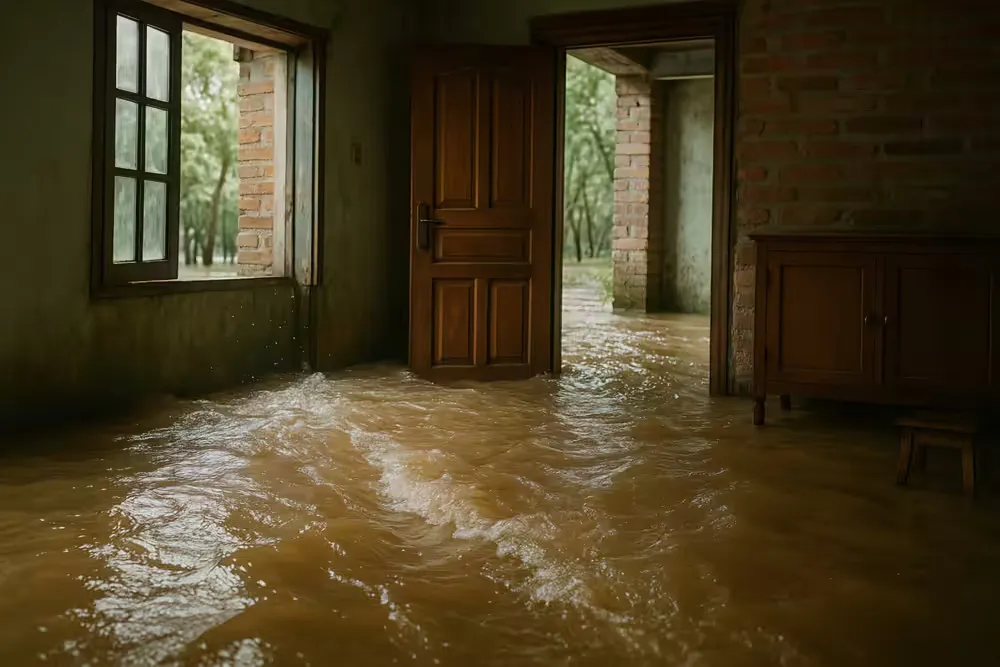
FEMA puts it plainly. Just one inch of water in an average-sized home can cost more than $25,000 in damage.
Note the direction of that number. It is a floor, not a ceiling.
One inch is not a flood in most people’s imagination. It is a wet floor.
But an inch reaches carpet, pad, baseboard, the bottom of drywall and the bottom of every cabinet in the room.
Once water touches those materials the job stops being a mop and starts being a restoration.
Flood water is also rarely clean. North Carolina’s public safety guidance says flood water “may contain sewage” and to “keep children and pets out of the affected area until cleanup has been completed.”
That changes the job again. Contaminated water means porous material comes out rather than being dried.
So preparation is not about surviving a dramatic event. It is about keeping a few inches from becoming a five-figure loss.
Charlotte does not need a hurricane to see this. A summer thunderstorm that stalls over one part of the metro can drop enough rain in an hour.
Low-lying driveways and finished basements are where it shows up first. So are crawl spaces, which fill quietly and stay wet.
Older homes with original drainage carry more of the risk. So do properties where the ground has settled toward the house over the years.
What Outside Work Protects a Home From Flooding?
Water management around the house does most of the work.
Clean the gutters, twice a year at least. A blocked gutter overflows against the wall of the house.
Check that downspouts discharge well away from the foundation. Extensions are cheap and they change where water ends up.
Look at the grade around the house. The ground should fall away from the walls rather than toward them.
Regrading a low spot beside a foundation is one of the highest-value jobs on this list.
Clear the storm drain nearest your property before a storm. A drain blocked by leaves backs up into the street and then the driveway.
Check window wells if you have them, and keep covers in good order.
Trim back trees that could drop limbs on the roof. Storm damage to a roof is how storm water gets in from above.
If you have a sump pump, test it before the season rather than during it. Pour a bucket in the pit and confirm it runs.
A battery backup for that pump is worth the money. Storms and power cuts arrive together.
What Should You Do Inside the House?
Move what matters upward, and know where things are.
Get boxes and stored items off basement and garage floors. Shelving a foot off the ground defeats most of what gets in.
Cardboard is the worst container for storage down there. It wicks water upward and collapses.
Move irreplaceable items to an upper floor. Documents, photographs and anything with sentimental value.
Photograph your possessions before anything happens. That inventory is what a contents claim runs on.
Store important documents in a waterproof container, or scan them and keep copies elsewhere.
Know where your electrical panel is and make sure you can reach it without crossing a wet floor.
Know where the water shutoff is too, and check it turns.
Consider raising appliances in a basement onto blocks or a platform. A water heater or furnace that stays dry is a much smaller problem.
Does Homeowners Insurance Cover Flood Damage?
Usually not, and this is the point that costs people the most.
The Insurance Information Institute is direct about it. Flood damage is excluded from standard homeowners policies and flood insurance is typically separate.
That surprises people every storm season. A burst pipe is covered and rising water is not.
The distinction is where the water came from. Water from a plumbing failure inside the house is one thing.
Water pressing in from outside the structure is another, and it needs its own policy.
Sewer backup is a third category again, and it usually requires an endorsement you had to add in advance.
Flood policies commonly have a waiting period before they take effect. Buying one as a storm approaches usually does not help.
So the time to look at this is now rather than during a warning. Even getting a quote tells you the number.
Ask your agent about all three. Flood, sewer backup, and whether the policy covers living costs if you cannot stay in the house.
Renters need their own version of that conversation. A landlord’s policy covers the building rather than your belongings.
If the house has flooded before, say so when you ask. Claim history affects both the price and what is available to you.
An insurance claim after a flood also runs differently, because two policies may be involved rather than one.
What Should You Do When a Flood Warning Is Issued?
Work through a short list, in order.
Charge phones and any battery packs. Power cuts and floods travel together.
Fill containers with drinking water in case the supply is affected.
Move vehicles to higher ground. Cars are the most commonly lost item in a flash flood.
Bring outdoor furniture and anything loose inside. Floating debris causes a lot of secondary damage.
Move remaining floor-level items upward, especially in a basement or garage.
Clear the storm drain nearest you again if you can do it safely.
Know your evacuation route and do not wait to be told twice. Flash flooding gives very little warning.
If you have time, photograph each room. A before record makes an after claim much simpler.
Do not go into a crawl space or basement once water has started entering. That is where the electrical runs are.
What Should You Do the Moment Water Gets Inside?
Safety first, and the electrical risk is the real one.
Do not walk into standing water if it is near outlets, appliances or a panel.
Cut power to the affected area at the breaker only if you can reach the panel from a dry route. If you cannot, leave it and call an electrician.
Get people and pets out of the affected area. Keep children out entirely.
Do not attempt to save possessions from a flooding basement. Nothing down there is worth it.
Once it is safe and water has stopped rising, photograph everything before it moves.
Then get the water out. Pumps and extraction, rather than mops, once there is any volume.
Do not use a household vacuum on water and do not run extension leads through wet areas.
The clock matters even here. The US EPA says to dry water-damaged areas within 24 to 48 hours, and that “in most cases mold will not grow” if you do.
That window is why storm and flood damage response starts the same day rather than after the water has receded.
Why Is Flood Water Treated Differently From a Leak?
Because of what is in it, not how much of it there is.
Flood water is treated as grossly contaminated. It has run across ground, through drains and past whatever was in its way.
The restoration standard puts rising water from rivers or streams in the same category as sewage.
That means the affected rooms are handled as contaminated. Sealed off, cleaned, disinfected and off limits in between.
It also means most porous material comes out rather than being dried. Carpet, pad, insulation and lower drywall usually go.
You cannot clean the inside of a carpet pad, and drying contaminated material just leaves you with dry contaminated material.
Protective equipment for the crew is heavier, and that is normal rather than alarming.
Anything that touched flood water and cannot be properly cleaned is discarded. That includes a lot of stored contents.
North Carolina’s guidance is worth repeating here. Keep children and pets out of the affected area until cleanup has been completed.
What Happens to a House After Flood Water?
More stages than a clean water loss, in a specific order.
Extraction first, usually with pumps because of the volume.
Then removal of contaminated material. That happens before drying rather than after it.
Then cleaning and disinfecting the structure that remains.
Then drying, with readings taken daily until the structure reaches dry standard.
Then the mold question. Flood water plus days of sitting is the combination that produces mold removal work.
Then reconstruction, which is a separate schedule and usually a longer one.
The crawl space deserves particular attention here. A flooded crawl space can hold water for weeks and feed moisture into the floor above the entire time.
Ask for the readings log at the end. It is your proof the structure dried, and your insurer may want it.
Keep everything that comes out photographed and listed. Contents lost to flood water are part of the claim.
Do not throw anything away before it is recorded. That is the most common way people lose money on a flood claim.
What Is Worth Doing Before the Next Storm Season?
Six things, and none of them are expensive relative to what they prevent.
Get a flood insurance quote, even if you decide against it. Knowing the number beats guessing.
Test the sump pump and buy a battery backup if you rely on it.
Extend the downspouts and fix any low spot beside the foundation.
Get everything off the basement and garage floor and onto shelving.
Photograph the house and its contents, room by room, and store that somewhere off site.
Find your water shutoff and your breaker panel, and make sure both are reachable and working.
Then check the crawl space once a year with a torch. You are looking for standing water, damp insulation and a torn vapor barrier.
Most of that list is a Saturday morning. The alternative is the FEMA number at the top of this page.
If a storm has already put water in your house, that is a different conversation and it is urgent. Call us, and we handle water damage restoration in Charlotte and across the metro at any hour.