Do Flood Repairs in Charlotte Need a Floodplain Permit?
On this page
Yes, if your home sits in one of Charlotte’s regulated floodplains. Repair work on a building there counts as development under the City’s floodplain rules, and development needs a Floodplain Development Permit before it starts. For smaller interior repairs, that is a general permit the County has already issued, so you do not apply for it. Bigger jobs may need an individual permit, and that one takes an application. Need to dry out and tear out wet materials before a permit is in hand? Ask the floodplain office at Charlotte-Mecklenburg Storm Water Services how its rules treat that work.
The rules reach both the FEMA floodplain and the Community floodplain on the official Charlotte-Mecklenburg maps. So the first step is checking whether your address is in either one. Our post on flood insurance outside a Charlotte flood zone explains the two maps and how to look up a home.
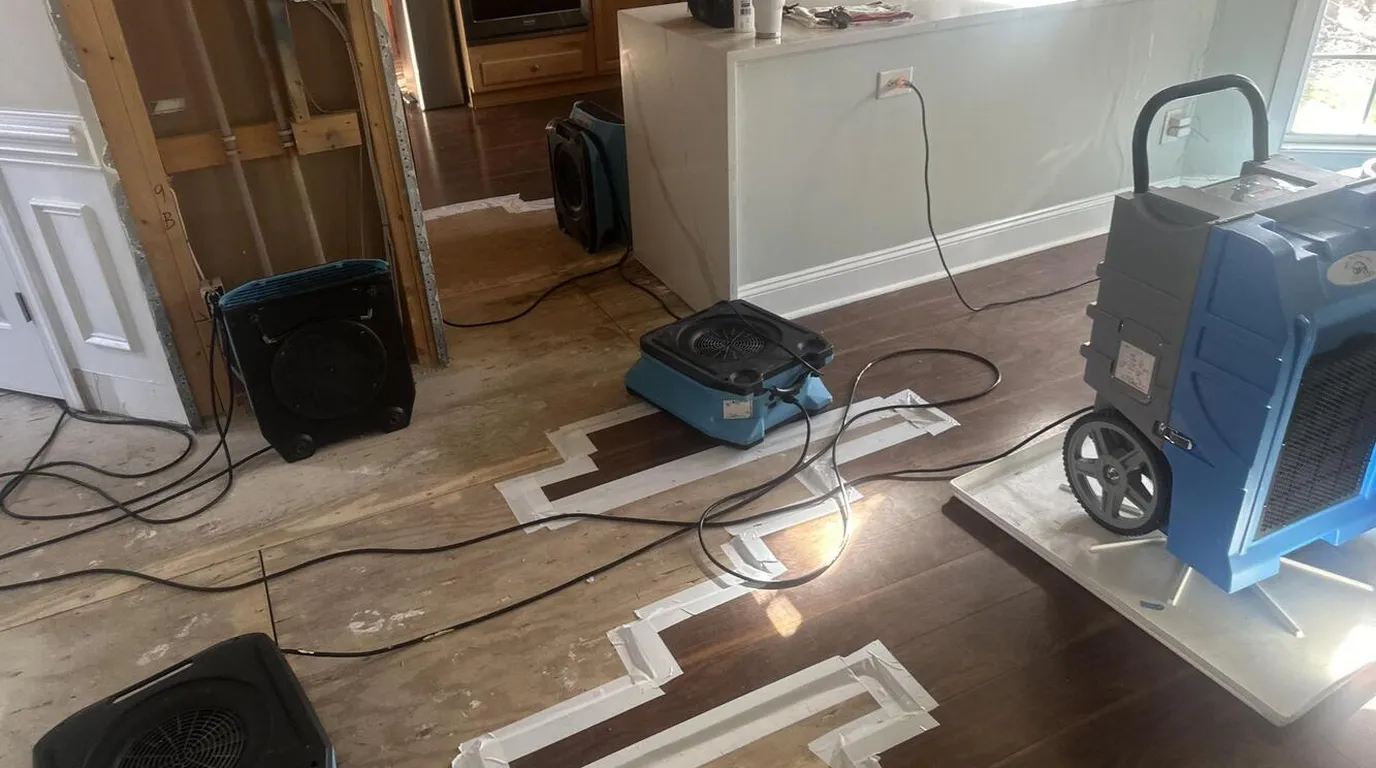
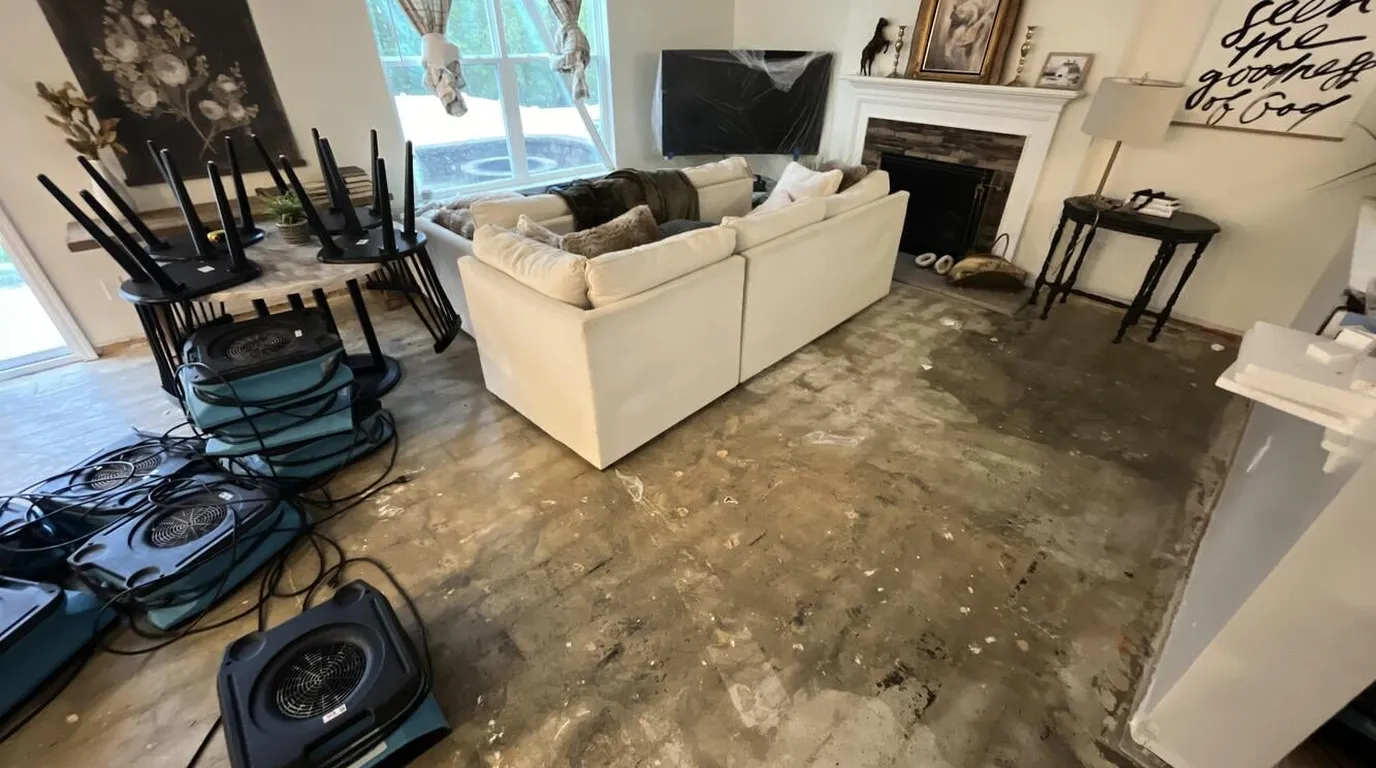
If flood water has already come in, our storm and flood damage repair work covers both halves of the job. We dry the house and rebuild it.
Which Flood Repairs Need a Floodplain Permit in Charlotte?
Three things decide whether you can renovate in the floodplain, according to the City’s Flooding and Maps page:
- Where the home sits in the floodplain.
- Whether the building’s floor is above the required elevation.
- What the work costs compared with the building’s value.
The required elevation is what Charlotte’s ordinance calls the flood protection elevation. It is the height a new or substantially improved home’s lowest floor has to reach. If you are not sure where your floor sits against it, ask the floodplain office before you plan the repairs.
For interior work, Article 27 of Charlotte’s Unified Development Ordinance ties a $10,000 line to that floor height:
| Your home and the work | Which permit |
|---|---|
| Interior repairs under $10,000, lowest floor below the required elevation | The general permit, with no application of your own |
| Interior repairs of $10,000 or more, lowest floor below the required elevation | An individual permit |
| Interior repairs of any cost, lowest floor at or above the required elevation | The general permit, with no application of your own |
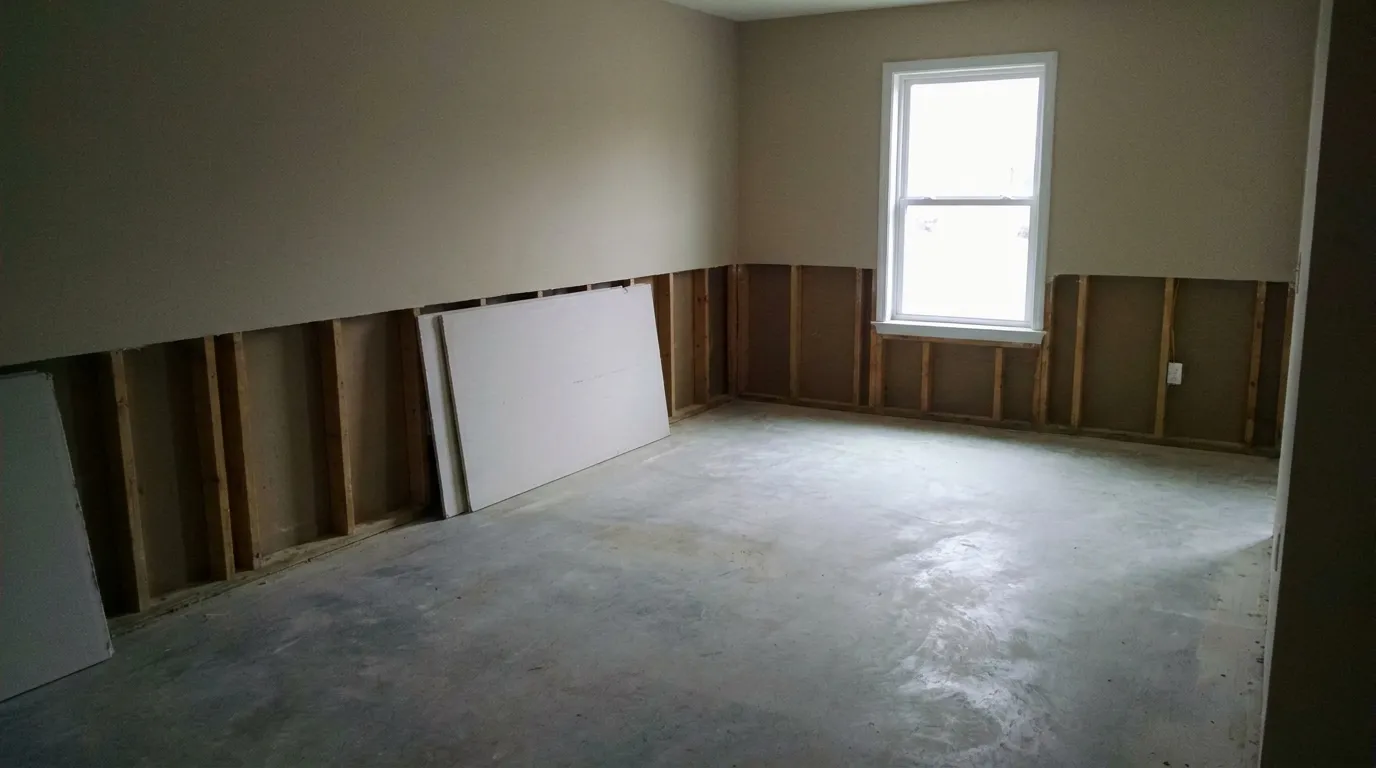
Grading, fill and new construction generally need an individual permit, the City’s page says. For outside work or an addition, ask the floodplain office which permit applies.
The ordinance has no separate category for cosmetic work. It speaks of interior renovations and sorts them by value and floor height. Work under the general permit still has to meet the ordinance’s standards for improvements, such as flood-resistant materials.
These are the City of Charlotte’s rules. Outside the area the City regulates, Mecklenburg County and each town, such as Matthews or Huntersville, have their own floodplain ordinances.
A floodplain permit is also separate from a building permit. Mecklenburg County Code Enforcement issues building permits. Its permitting page says work costing $40,000 or less on a one- or two-family home or townhome may not need one. That exception does not apply to work on its list, such as repairing or replacing load-bearing structures. For example, say interior flood repairs on a one-family home below the required elevation come to between $10,000 and $40,000. That job needs an individual floodplain permit. A building permit might not be needed for it, if none of the work is on that list.
How Do You Apply for a Floodplain Permit in Mecklenburg County?
You apply to the Floodplain Administrator at Charlotte-Mecklenburg Storm Water Services. Email FloodInfo@MeckNC.gov to ask for the application documents. For questions, the general floodplain line is 704-432-7246. When your package is ready, ask the office how it wants it sent.
An individual permit needs this package, as listed on the City’s page:
- The Individual Floodplain Development Permit Application.
- The check sheet for your type of project. For improvements to an existing building, that is the Substantial Improvement Check Sheet.
- Final construction plans or sketches that show all the proposed work.
- A Floodway Engineering Analysis from a North Carolina Professional Engineer, only if the check sheet calls for one.
- For building renovations, an Owner Affidavit of Building Improvements.
Once the County has your application, it sends details for paying the fee online. You pay after the initial review and before the technical review, and no permit is issued until the County has the payment. The fee is based on what the technical and compliance review costs, so ask the floodplain office what to expect for your project.
Review times vary, because some submittals are far more complex than others. If the office asks you for more information, send it quickly. Under the ordinance, an incomplete application can become void 90 days after you receive that request.
When Does Flood Damage Count as Substantial Under Charlotte Floodplain Rules?
Flood damage counts as substantial when the repairs would cost 50 percent or more of the building’s market value before the damage. Charlotte’s rule adds up damage from any cause over a ten-year period. That rule is in Article 27 of the City’s Unified Development Ordinance, in effect since June 1, 2023.
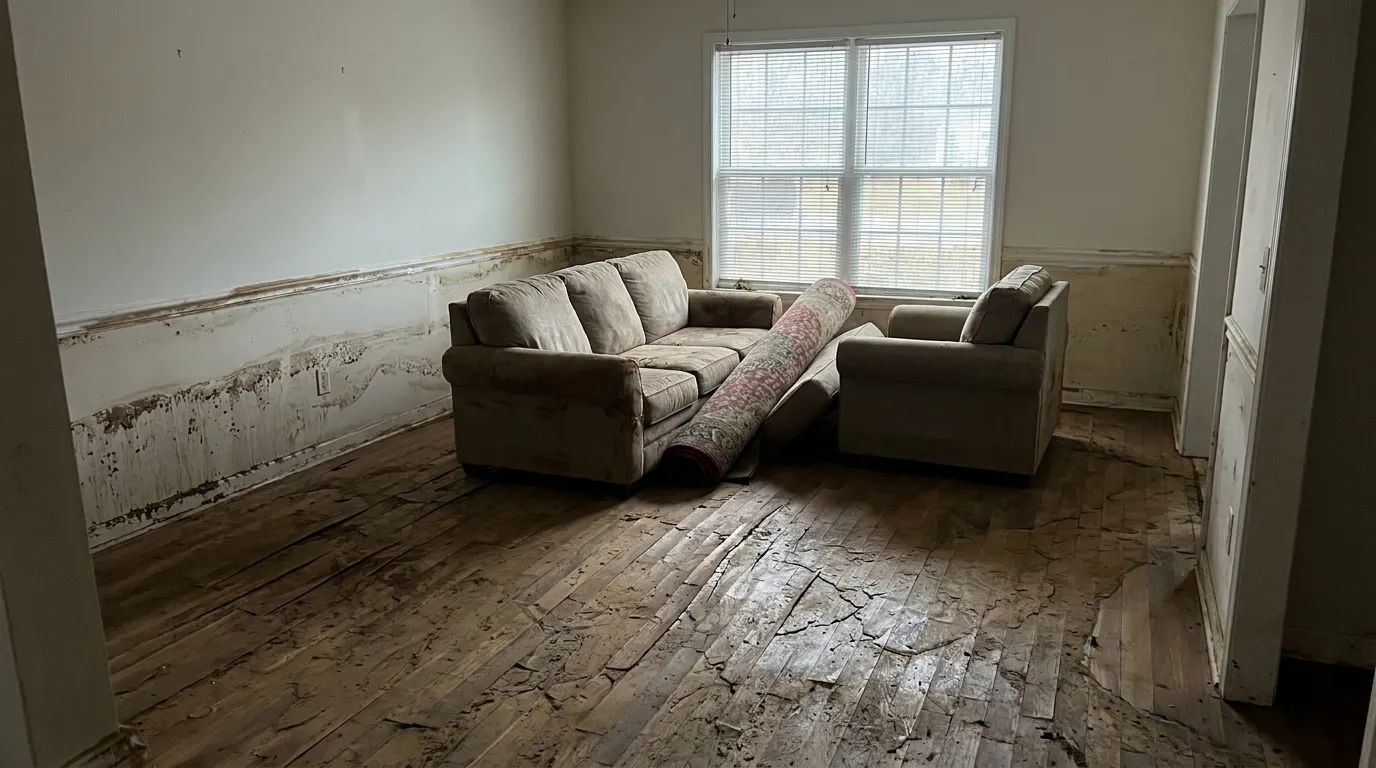
The same test covers improvements. Repairs, rebuilding, additions and other improvements are added together, and the ten-year total is measured against that 50 percent line. The Floodplain Administrator decides whether a series of repairs counts as one job. So repairs after a storm a few years ago can count toward today’s total, if they fall inside the ten years. Flood damage from before November 16, 2018 is counted at a lower line, when it falls in that window. If your home flooded before that date, ask the floodplain office how it counts.
FEMA uses the same 50 percent line for the National Flood Insurance Program. But FEMA does not decide whether a home crosses it. Local officials do, as North Carolina’s Department of Public Safety noted in 2019. In Charlotte, that is the Floodplain Administrator.
For example, a home worth $200,000 before a disaster is substantially damaged if repairs are estimated at more than $100,000. That is the Department’s own example, with the home’s value set by local officials.
Market value here means the building alone, not the land, the landscaping, the driveway or a detached shed. The Floodplain Administrator may use the building’s tax value for that number, under Charlotte’s ordinance.
Once the work counts as substantial, the whole house has to be brought into compliance with the ordinance. For a home, that means raising the lowest floor to or above the required elevation.
Charlotte’s ordinance makes an exception for homes with a lowest floor at least one foot above FEMA’s base flood elevation. That is the flood height shown on FEMA’s map. These homes do not have to be raised to the required elevation. Instead, the owner records an affidavit with the Register of Deeds before any building permit is issued.
If the work is not substantial, the house can be repaired without raising it. Charlotte’s ordinance adds one more step for a home with its lowest floor below the required elevation. It applies when the work costs between 10 and 50 percent of the building’s market value. The owner records a notice of floodplain improvements with the Mecklenburg County Register of Deeds before the building permit is issued. That notice goes into the property’s chain of title.
If flooding badly damaged your home and you hold a National Flood Insurance Program policy, ask your agent or adjuster about Increased Cost of Compliance. That coverage may add money toward meeting the rebuilding rules. What your policy covers is decided by your insurance company, not by us. Our insurance claims page explains what we record for the adjuster.
Who Should Pull the Floodplain Permit for a Charlotte Flood Repair?
The owner, or someone acting as the owner’s agent. An individual permit application comes from a person with a property interest or a contract to buy, or from that person’s agent, under Charlotte’s ordinance. So if someone else files for you, they file as your agent.
Whoever files, the Floodplain Administrator works out the total cost from the information the owner or agent provides. So the repair estimate should cover the whole job you plan. The Floodplain Administrator can inspect work in progress, serve notices of violation and issue stop-work orders. A permit can also be revoked if the work departs substantially from the approved application or plans.
Say you decide partway through to redo the kitchen as well. That adds to the total the Floodplain Administrator counts, so talk to the floodplain office before the extra work starts.
We are a licensed general contractor in North Carolina (#83926), so the same company dries the building and does the repairs. We write our estimates in Xactimate. We use photos, thermal imaging, moisture readings and daily drying logs to document the damage. You get a copy of all of it.
Building permits are paid for by the general contractor, or by a homeowner acting as their own general contractor, according to Mecklenburg County Code Enforcement.
The Bottom Line on Floodplain Permits in Charlotte
In Charlotte, the permit question comes before the rebuilding, not after it. When you are not sure which permit your rebuild needs, ask the floodplain office first. When you need the drying and the rebuild, call us. Our estimates are free, and nothing starts until you say so. You can also start from our page on water damage restoration in Mecklenburg County.
To get a house ready before the next storm, see our post on preparing your home for severe weather flooding.