The Role of Board-Up Services After a Fire or Break-In
· Updated August 23, 2026
On this page
Are you wondering whether board-up services are worth it after a fire or a break-in? You are in the right place, and the answer has more to do with your insurance claim than with security alone.
In this article we cover what board-up services actually protect, why a fire and a break-in create different problems, how boarding up changes what a restoration crew can save, where it sits in the recovery timeline, and why insurers effectively expect it. Keep reading, because this is the cheapest work done on a damaged property and it protects the most expensive work that follows.
What Do Board-Up Services Actually Do?
They close a building that can no longer close itself.
Plywood goes over broken windows and forced doors. Tarps go over damaged roof sections. Secure panels cover openings in walls.
That is the physical description. The purpose is broader than the materials suggest.
A board-up protects against four things at once. Weather, unauthorised entry, animals, and further damage to what is still salvageable inside.
It is deliberately temporary. None of it is a repair and none of it is meant to last past the rebuild.
What it buys is time. Assessments, insurance decisions and rebuild schedules all take longer than a building can stay open.
It is also almost always the first work done on site. Everything else waits behind it.
That order is not a preference. Cleaning a room that is going to take rain through the ceiling tonight is wasted effort.
Why Do You Need a Board-Up After a Fire?
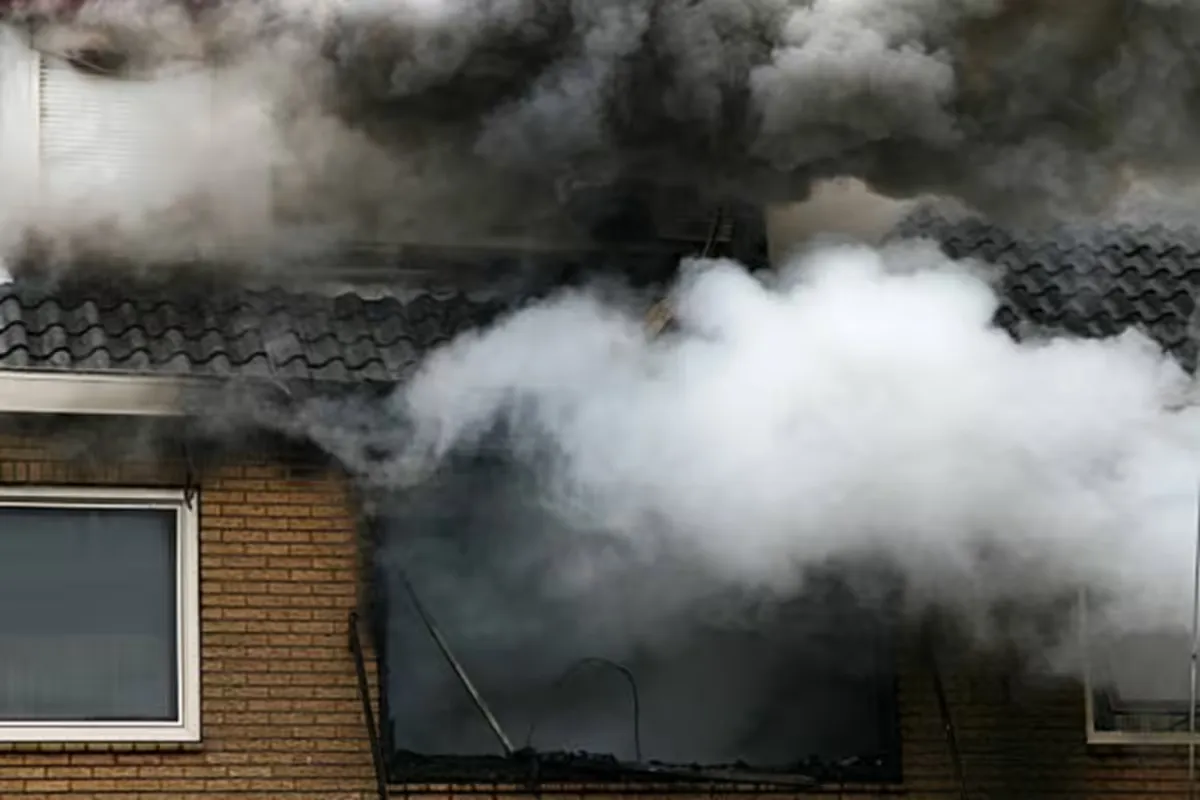
Fires open buildings in more ways than people expect.
Heat breaks glass, so windows go early. That is often the first opening.
The fire service makes others on purpose. Cutting a roof or opening a wall to reach the fire is normal practice, and it saves the building.
Those holes are still holes once the fire is out. A house can be sound and still be wide open.
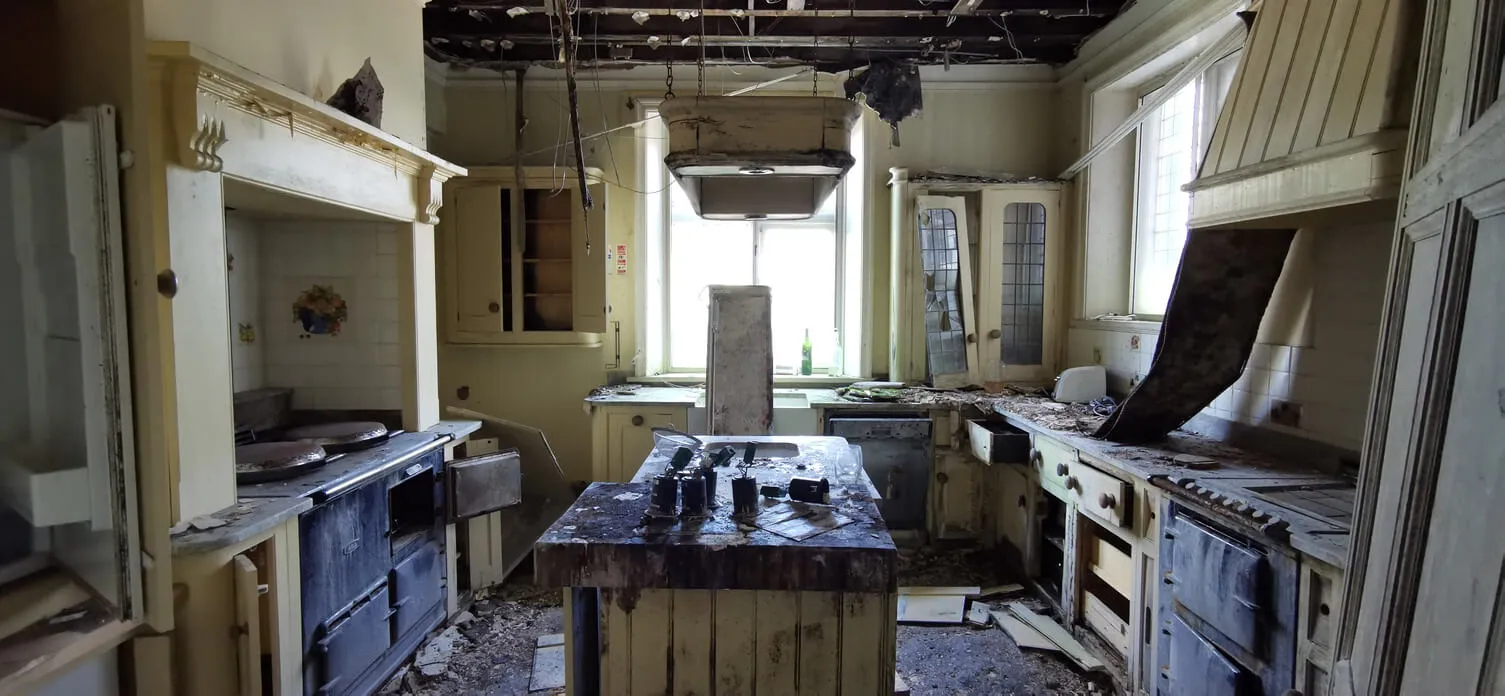
Then the weather arrives, and a fire-damaged building is unusually vulnerable to it. Materials are already weakened and the interior is already contaminated.
Rain through a burnt roof spreads soot into rooms that were clean. That converts a one-room problem into a whole-floor problem.
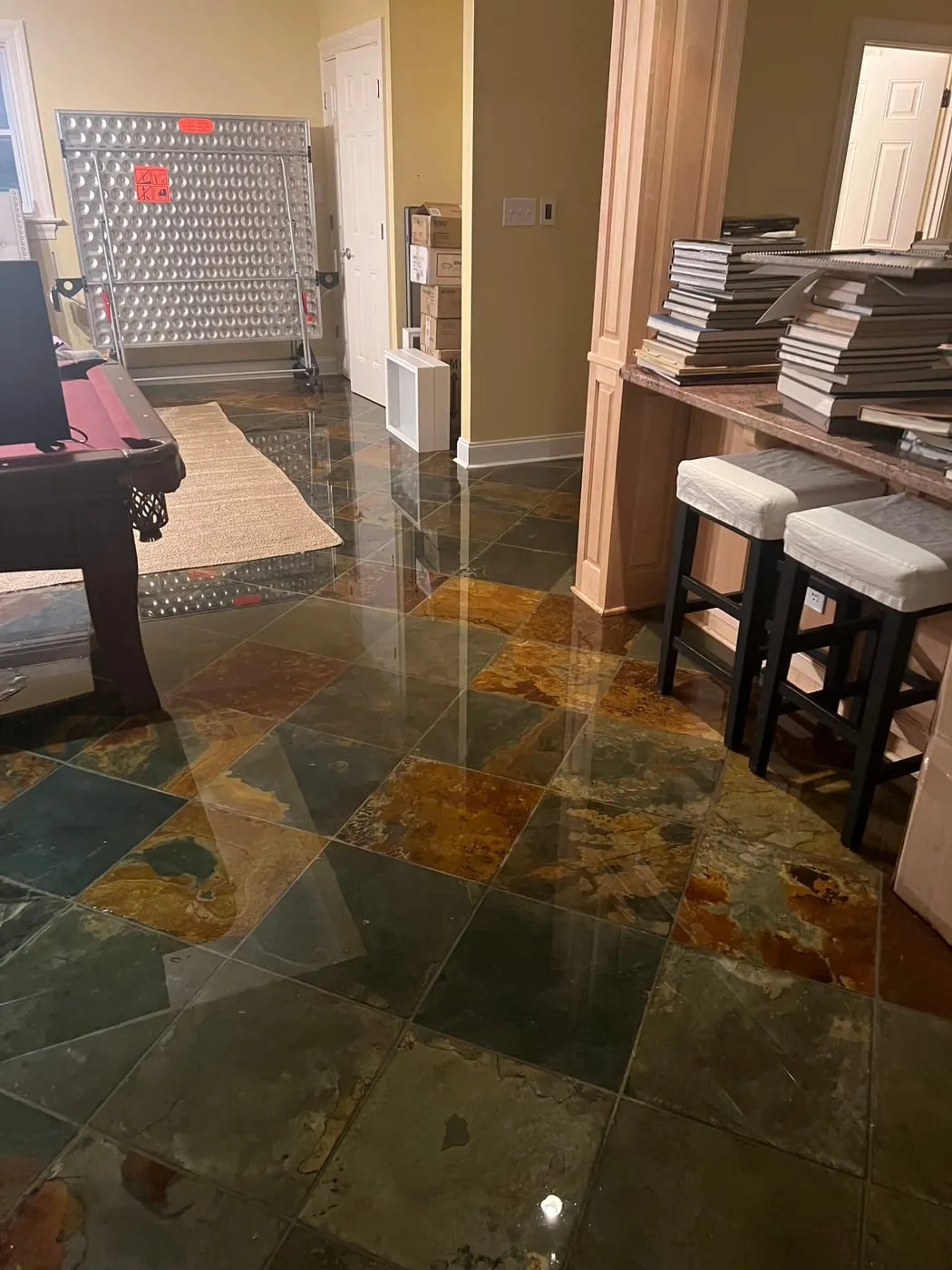
Water is also already inside from putting the fire out. Adding more to it makes the drying job worse and the mold window tighter.
There is a security dimension too. A visibly damaged, empty property advertises itself.
So the board-up is protecting the restoration as much as the building. Every additional day of exposure adds to the scope.
Why Do You Need a Board-Up After a Break-In?
Because the opening that let someone in is still there.
A forced door or a smashed window does not repair itself, and a real repair usually takes days. Glass has to be ordered and doors have to be fitted.
In the meantime the property is open to the same entry point. Repeat entries after a break-in are common enough that police often mention it.
Weather is the second problem, and it is easy to forget in the aftermath. A broken window on the weather side of a house lets in a surprising amount of rain.
There is also the question of staying there. A house you cannot lock is one you may not want to sleep in.
Boarding up lets you make that decision on your terms rather than under pressure.
Insurance matters here as well. Most policies expect reasonable steps to prevent further loss, and leaving a forced door open is the opposite of that.
A secure temporary door is often the right answer rather than plywood. You still need to get in and out.
Photograph the damage before anything is boarded. The claim needs the state it was found in.
How Does Boarding Up Change What Restoration Can Save?
More than people expect, and this is the part that gets undersold.
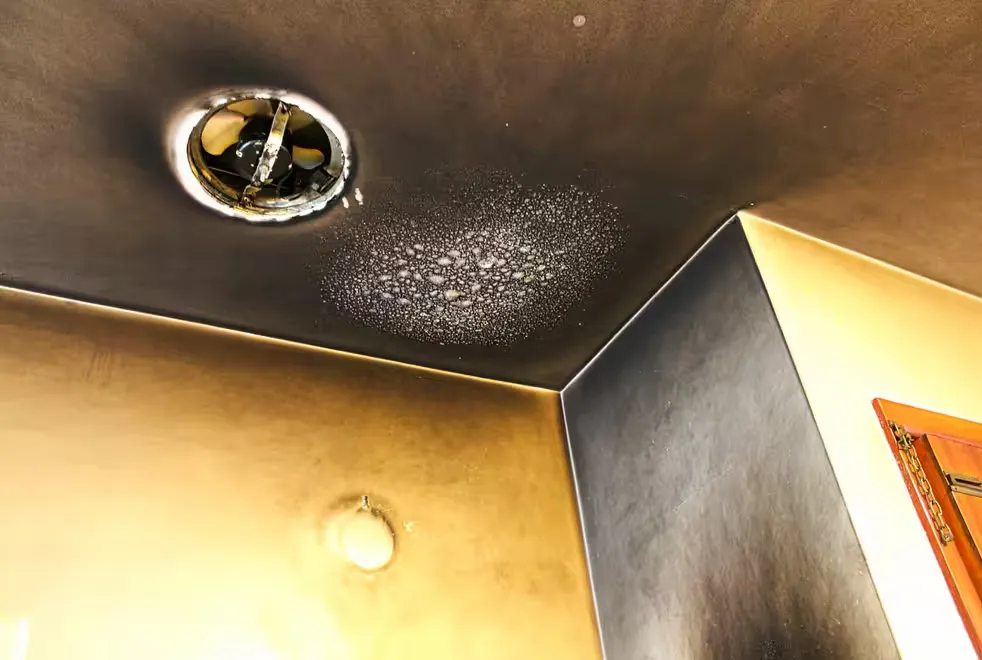
Soot is acidic. It etches metal, discolors grout and yellows paint the longer it sits.
Water accelerates all of that. Rain arriving through an open roof turns dry soot into a wet, spreading residue.
Contents are the clearest example. Furniture, clothing and documents that could have been cleaned often cannot be after a few days of weather.
Building materials follow the same pattern. Drywall that was smoke-damaged but dry is salvageable in a way that soaked drywall is not.
The mold clock is the other factor. The US EPA says to dry water-damaged areas within 24 to 48 hours, and that in most cases mold will not grow if you do.
An open building makes that window impossible to hit. You cannot dry a space that keeps taking on water.
So boarding up is not separate from the restoration. It is the step that decides how much restoration is even possible.
That is why a good crew treats it as urgent rather than administrative.
How Do Board-Up Services Connect to Smoke Damage Restoration?
They are the first stage of the same job, not a different service.
The board-up crew is usually the first to see the property properly. What they observe feeds the restoration scope.
Sealing the building also makes containment possible. You cannot hold a work area at negative pressure in a house with a hole in the roof.
Air scrubbers have the same problem. Cleaning the air in an open house means cleaning the outdoors.
Odor treatment definitely does. Ozone and hydroxyl treatment need a closed envelope to work at all.
So every later stage of fire and smoke damage restoration depends on the building being closed first.
Drying depends on it too. Dehumidifiers cannot pull a structure dry while outside air keeps arriving.
That is the practical argument for one company doing both. A board-up crew that hands off to a restoration crew loses what the first crew saw.
Ask about that at the start. Knowing who does what after the boards go up saves a difficult conversation later.
What Techniques Do Professional Board-Up Crews Use?
The materials are simple. The judgement is not.
Plywood thickness is chosen for the opening and the exposure. A ground-floor window facing a street is a different problem from a first-floor one at the back.
Fixings are chosen for what they are going into. Screws into burnt or rotten framing do not hold, so those openings get through-bolted or braced.
Roof tarping is the most technical part. A tarp that lifts in the first storm is worse than none, so how it is fastened matters more than the tarp.
Fastening runs with the roof structure rather than across it. Battens spread the load so wind cannot peel an edge.
Openings that must stay usable get secure temporary doors rather than fixed panels.
Debris gets cleared from frames before anything is fitted. Broken glass and burnt material stop plywood sitting flat.
Air flow gets thought about too. Sealing a smoke-damaged house tight can trap the residue and the damp inside it.
And everything gets photographed before and after. That record is part of the job, not an extra.
Boards get labelled on larger properties. On a commercial job with twenty openings, knowing which is which matters at removal.
Access is planned rather than improvised. The crew coming back to dry the building needs a way in that does not undo the work.
Where Does a Board-Up Fit in the Recovery Timeline?
First, and usually within hours.
The fire service releases the property. Nothing happens before that.
Then the board-up, ideally the same day. Openings get closed and the building stops getting worse.
The survey follows, or runs alongside. How far did the smoke go, what got wet, and what is safe.
Water extraction and drying start immediately after, because that clock does not wait.
Then the cleaning stages, then odor treatment, then sealing, then rebuild.
The temporary work stays up through most of that. It comes off when the permanent repair goes in.
Somebody should be checking it in the meantime. Weather works on tarps and boards over weeks.
That checking gets forgotten on long claims. Ask who is responsible for it before you need to.
Is DIY Board-Up Worth the Risk After a Fire?
For one ground-floor window with a sound frame, possibly. Beyond that, the reasons against stack up.
A fire-damaged building may not be structurally sound. Materials that burnt and were then soaked behave unpredictably.
Roof work is the clearest line. Tarping means working at height on decking that may be burnt through.
Then there is the residue. Soot covers every surface the smoke reached, and without the right mask there is no way to know what you are breathing.
A poorly fitted board is also a false sense of security. Plywood screwed to a burnt frame comes away in the first storm.
Getting it wrong can cost more than the job. A tarp that fails overnight puts water through a building that was dry when you left it.
Insurance is the last reason. Work done by a company is photographed, itemised and easy to claim.
If you do board something yourself, photograph it and keep the receipt. That is still mitigation and it still counts.
Do not go back into a fire-damaged building for possessions before it is released. Nothing in there is worth it.
Ladders are the other risk worth naming. Most board-up injuries are falls, not anything to do with fire.
If you are not sure whether a wall or floor is safe, that is your answer. Ask the crew to look before you do.
The same goes for the roof. If you cannot see the decking, you cannot judge whether it will hold you.
How Do Board-Up Services Protect Your Insurance Claim?
By satisfying something most policies already require.
Policies generally ask you to take reasonable steps to stop further damage after a loss. Boarding up is the clearest example there is.
Skipping it can change how the extra damage is handled. Rain that came in through an open window is not the same claim as the fire that broke it.
So a board-up is usually covered. It is also close to expected.
Document everything from the start. Photograph the openings before boarding, the work after, and keep every invoice.
Report the loss as soon as the property is safe. Reporting is not the same as committing to a claim.
Do not wait for approval before you act. Emergency work is the part insurers expect you to get on with and write down as you go.
Our insurance claims process covers how billing usually runs, including where a carrier pays the homeowner rather than us.
If water damage is part of the loss, and after a fire it usually is, that documentation runs alongside.
If your property is open right now, that is the urgent part. Call us, and we handle emergency board-up and everything after it across Charlotte and the metro.