Kitchen Fire Damage: What to Do Immediately
· Updated August 23, 2026
On this page
Are you dealing with kitchen fire damage and trying to work out what to do first? You are in the right place. The first hour matters more than most of what follows.
In this article we cover the safety calls that come before anything else, why scrubbing soot makes the damage permanent, what to photograph before cleanup starts, the water damage almost everyone forgets, and when a kitchen is safe to use again. Keep reading, because two of the most common instincts after a kitchen fire actively make the restoration harder and more expensive.
What Should You Do First After Kitchen Fire Damage?
Safety comes before the kitchen. Every time.
Get everyone out of the house, including pets, before you assess anything. Property is replaceable and the assessment can wait ten minutes.
Do not go back in for belongings. Smoke fills a house faster than people expect, and what looks like clear air near the floor is not.
Call 911 if there is any doubt at all. A fire that looks out is not always out.
Fire can travel inside cabinets, into wall cavities and up into the ceiling. What you can see is not the whole picture.
The fire service will check for that. That check is free and it is the only way to be sure.
Do not put water on a grease fire. Water and hot oil turn instantly to steam and throw burning grease outward.
For a small contained pan fire, a lid and turning off the heat is the right move. For anything larger, leave and call.
Never throw water at anything electrical either. That includes the microwave, the outlet behind it, and the appliance itself.
When Should You Shut Off Utilities After a Kitchen Fire?
Only if it is safe, and only if you can do it without going back into smoke.
Gas is the first priority if you can smell it. If you can smell gas, leave and call the utility from outside.
Electricity is the second. If the panel is dry and accessible from outside the affected area, cutting power to the kitchen is sensible.
Do not reach into a wet or smoke-filled space to do it. Nothing in the kitchen is worth that.
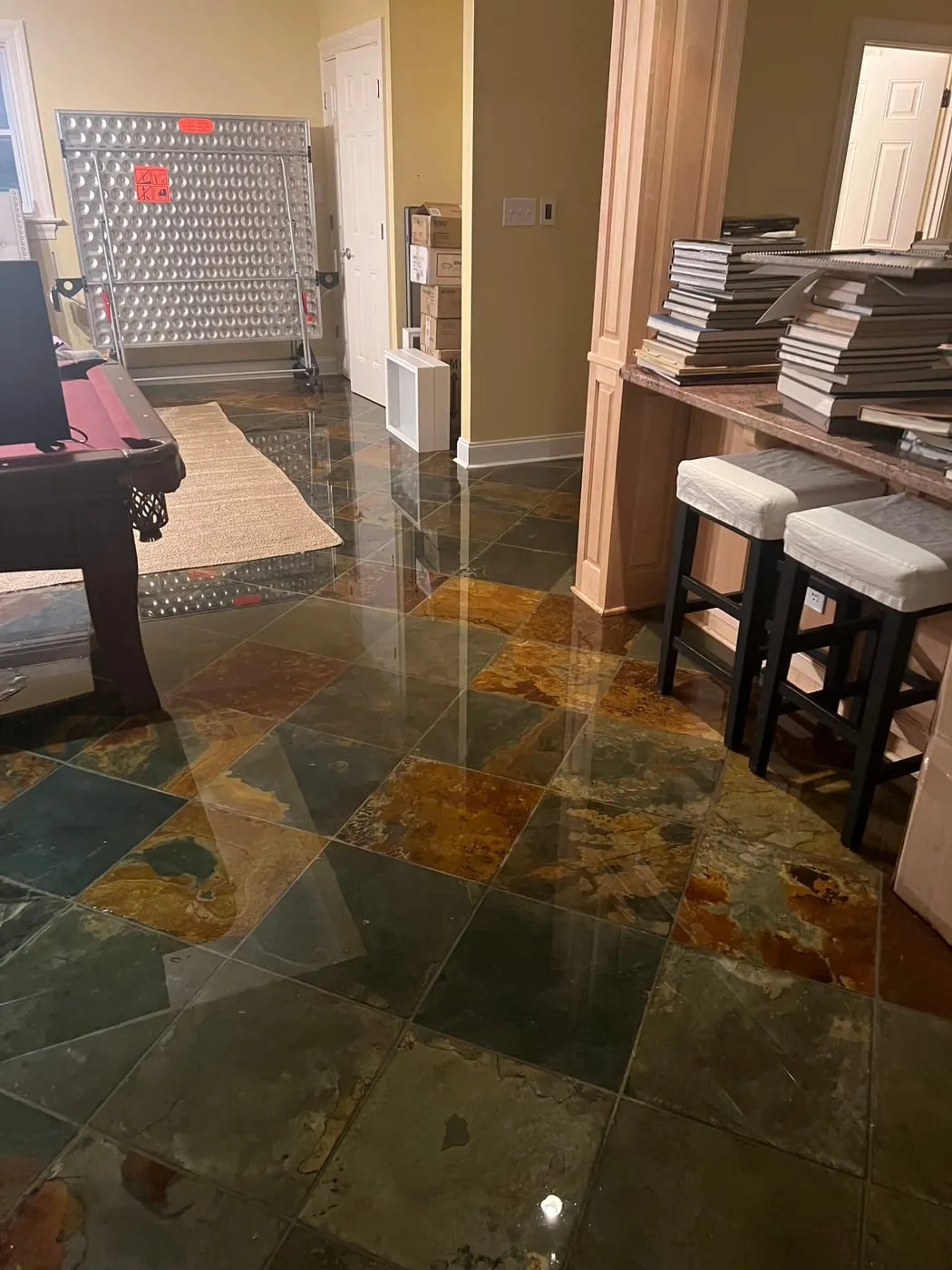
Water matters more than people expect after a fire. If the fire service used hoses, or a sprinkler ran, there is now water in the building.
Leave utilities to the fire service if they are on scene. They will make those calls as part of the job.
Once the property is released back to you, the utilities question changes. Do not turn appliances back on until someone has looked at them.
A stove, microwave or refrigerator that was in a fire may look fine and have damaged wiring inside. That is a check, not an assumption.
Why Should You Not Clean Soot Off Surfaces Yourself?
This is the instinct that costs people the most money, and it is completely understandable.
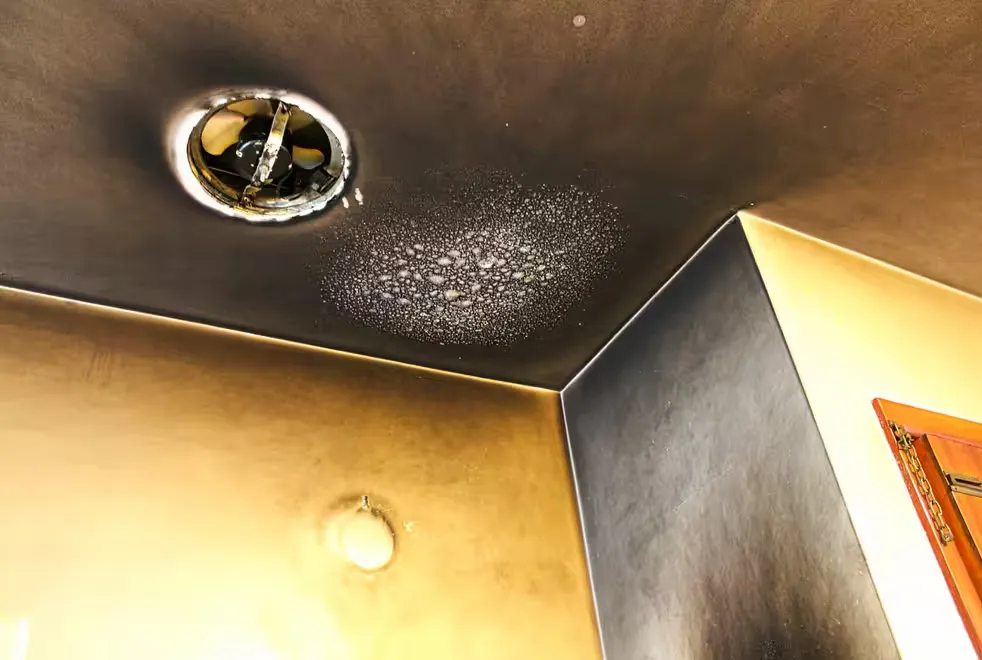
Soot is not dirt. It is a fine, oily, acidic residue, and it behaves nothing like dust.
Wiping it drives it into the surface. On paint, plaster and grout, that turns a cleanable film into a permanent stain.
Household cleaners often make it worse. Water-based products can spread the oil rather than lift it.
Professionals use dry sponges and specific solvents chosen for the surface and the type of soot. The order matters as much as the product.
Soot is also acidic, which is why time matters. It etches metal, discolors grout and yellows paint the longer it sits.
That is the real reason to move quickly rather than the appearance. Every day of delay locks more of the damage in.
Different fires leave different residue. A grease fire, a plastic fire and an electrical fire each need a different approach.
So the honest advice is to leave it. Photograph it, then leave it for someone doing fire and smoke damage restoration.
What Should You Photograph Before Cleanup Starts?
Everything, and before anything moves.
Photograph the room from every corner. Wide shots establish the scope in a way close-ups cannot.
Then photograph the source. The pan, the appliance, the outlet, whatever started it.
An adjuster will ask what caused the fire. A photograph answers that better than a description weeks later.
Photograph the soot lines on the walls and ceiling. Those patterns tell a restoration crew where smoke travelled.
Get the contents too. Cabinets, their contents, small appliances, anything on the counter.
Open the cabinets and photograph inside them. Smoke gets into closed spaces and people forget to claim what was in there.
Video is worth doing as well. Walk the room slowly and narrate what you are seeing.
Do this before anyone starts cleaning, including you. Once cleanup begins, the evidence goes with it.
Then call your insurer and report the loss. Reporting is not the same as committing to a claim.
Is It Safe to Stay in the House After Kitchen Fire Damage?
Sometimes, and the answer depends on how far the smoke went.
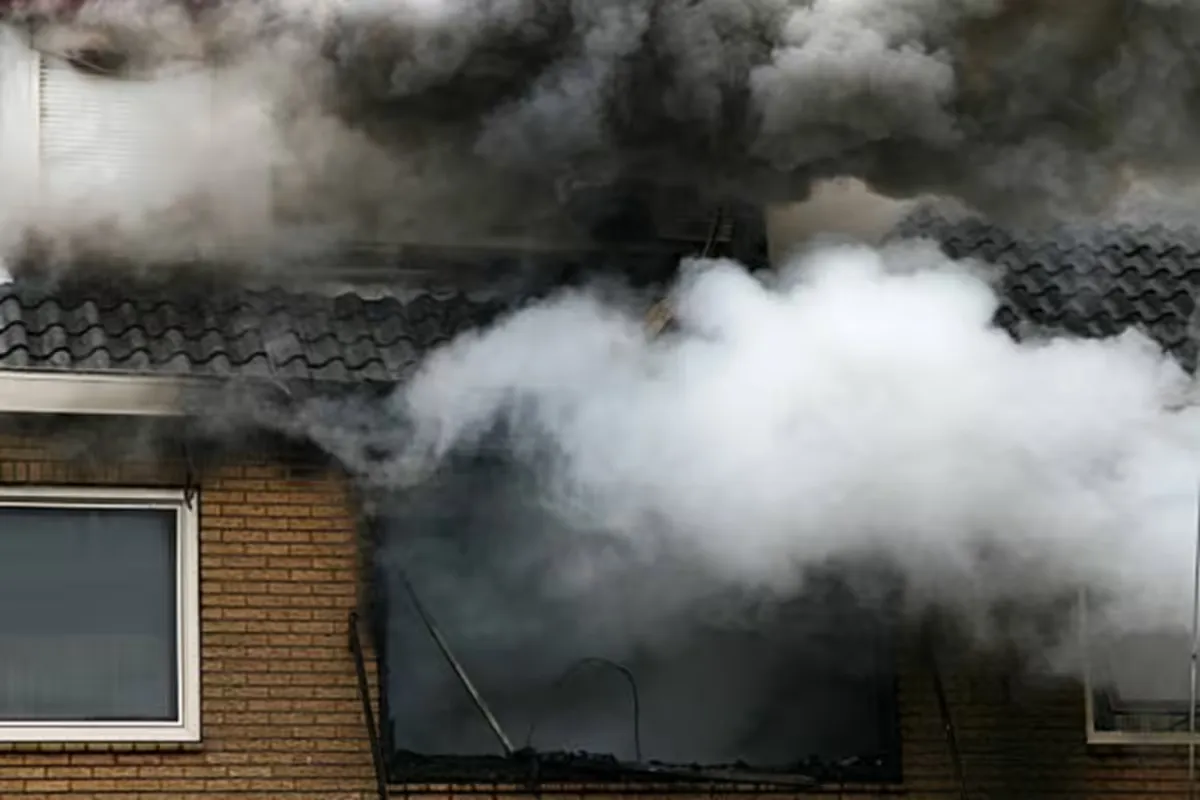
Smoke travels much further than fire. A contained pan fire can leave residue through most of a floor.
Soot and smoke residue settle on every surface the smoke reached. Without proper equipment there is no way to know what you are breathing.
So stay out of the affected rooms until someone who can measure it says otherwise. That is different from leaving the house.
Whether the rest of the home stays usable comes down to layout. An open-plan kitchen and living area is one space, not two.
A closed kitchen with a door is a much easier situation. That door may have kept most of the residue in one room.
Watch for a few specific things. A sagging or stained ceiling means water above it, which is a reason to stay out from under it.
A lingering smell that gets stronger when the HVAC runs is another. That usually means residue got into the ductwork.
If anyone has asthma or a lung condition, be less casual about all of this. Say so on the first call, because it changes the order of the work.
What Hidden Water Damage Follows a Kitchen Fire?
This is the part almost everyone misses, and it becomes the second problem.
Putting out a fire uses water. A hose, an extinguisher, a sprinkler or a saucepan all leave water behind.
That water goes into cabinet bases, under the flooring and into the wall behind the range. Nobody is looking for it while dealing with the fire.
It also goes downward. A kitchen fire on an upper floor puts water into the ceiling below it.
The 24 to 48 hour rule still applies here. The US EPA says to dry water-damaged areas within that window, and that in most cases mold will not grow if you do.
So the fire job and the water damage restoration job start on the same day. They are not sequential.
Cabinet bases are the classic casualty. Particleboard swells and never really recovers.
Check under the sink and behind the toe kicks. Water sits in those spaces and cannot evaporate out.
If you skip this step, you get a mold problem four weeks later on top of a fire claim. That is a much worse conversation than dealing with it now.
What Does Kitchen Fire Damage Restoration Involve?
More than cleaning, and usually in a set order.
It starts with an assessment. How far did the smoke go, what kind of residue is it, and what got wet.
Then stabilisation. That may mean boarding up an opening, or setting up containment so the rest of the house stays usable.
Water extraction and drying come early if water is involved. That clock does not wait for the soot work.
Soot removal is next, and it is surface-by-surface. Different materials and different residues need different methods.
Odor removal is a separate stage from cleaning. Smoke gets into porous material, and cleaning the surface does not reach it.
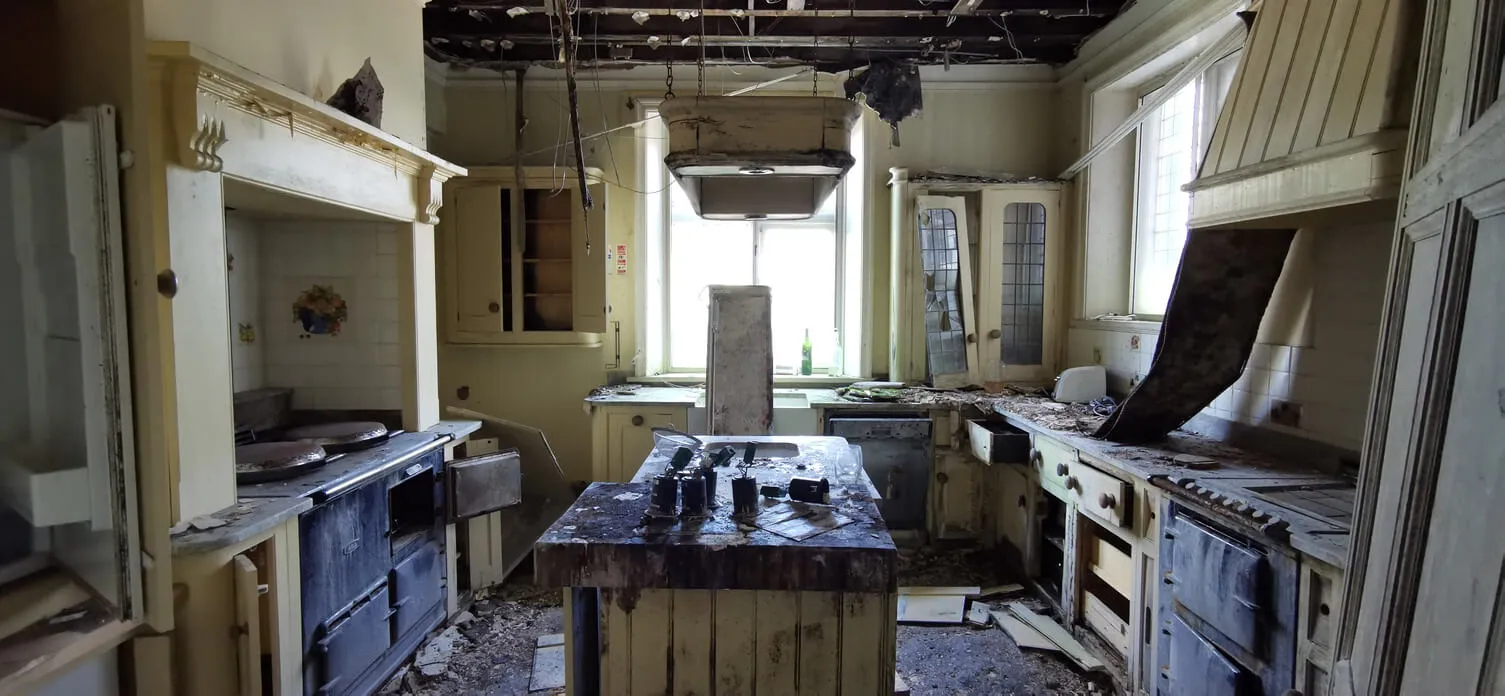
If the fire reached a wall cavity or the space under the floor, that gets opened up and dried too. A wet crawl space under a kitchen holds moisture long after the room above looks finished.
Contents get handled separately again. Some things clean up well, some do not, and the sorting is part of the job.
Then repairs. Cabinets, drywall, paint, flooring and whatever else came out.
The HVAC system deserves a specific check. If it was running during the fire, it moved smoke through the whole house.
Ask about that directly. It is the most commonly skipped part of a kitchen fire job.
When Is It Safe to Use the Kitchen Again?
Not until the residue is gone, and that is later than people want to hear.
Soot on surfaces where food is prepared is the obvious problem. Countertops, cutting boards and the inside of cabinets all need cleaning before use.
Anything unpackaged that was in the room should go. Fruit in a bowl, an open bag of flour, salt in a cellar.
Packaged food is a judgement call, and the packaging is the test. Smoke gets through cardboard and plastic film more easily than people assume.
Cans and sealed jars usually survive, but the outsides need cleaning. Do not open a sooty can without wiping it first.
Appliances need checking before they run again. A microwave or dishwasher that was in a fire may have damaged wiring.
The refrigerator is its own problem. If the power was off for a long stretch, that is a food safety question separate from the smoke.
Do not run the extractor fan to clear the smell. If the ductwork has residue in it, you are just moving it around.
Wait for someone to confirm the room is clean rather than deciding by eye. Soot is easy to underestimate and hard to see on dark surfaces.
How Can You Reduce the Chance of Future Kitchen Fire Damage?
Cooking is the leading cause of home fires, so most of prevention lives in the kitchen.
Stay in the room while anything is on the hob. Unattended cooking is the single biggest contributor.
Keep a lid within reach when you fry. A lid smothers a pan fire faster than anything else in the house.
Keep tea towels, packaging and paper away from the burners. Most kitchen fires start with something that should not have been near the heat.
Clean the range hood filter and the oven. Built-up grease is fuel that is already in position.
Check the smoke alarm every month, and do not remove the battery because it triggers when you cook. Move the alarm instead.
Keep a fire extinguisher rated for grease and electrical fires nearby, and know how to use it before you need it.
Do not overload the outlets behind the counter. Electrical distribution and lighting equipment is the leading cause of home fire property damage, per the NFPA.
If you have a fire, even a small one you put out yourself, get the room checked. Fire inside a cabinet or a wall is not something you can rule out by looking.
If you are dealing with kitchen fire damage right now, get in touch. We handle fire and smoke damage across Charlotte, and the first hour is the one that decides how much of the kitchen survives.