Smoke Damage in Charlotte? Why DIY Cleanup Can Make It Worse
· Updated August 23, 2026
On this page
Are you thinking about cleaning up smoke damage yourself? You are in the right place, and this article may save you money rather than cost you it.
In this article we cover what soot actually is, the five DIY moves that make a restoration harder, why the smell keeps coming back, what is safe for you to do, and when to stop and call someone. Keep reading, because the instinct to start wiping is the most expensive one you can act on after a fire.
What Does Smoke Damage Actually Do to a House?
More than staining, and further than the fire went.
Smoke follows air, so it goes wherever air goes. Through doorways, up stairs, into closets, drawers and wall cavities.
If the HVAC was running, it went through the ducts too. That puts residue in rooms the fire never came near.
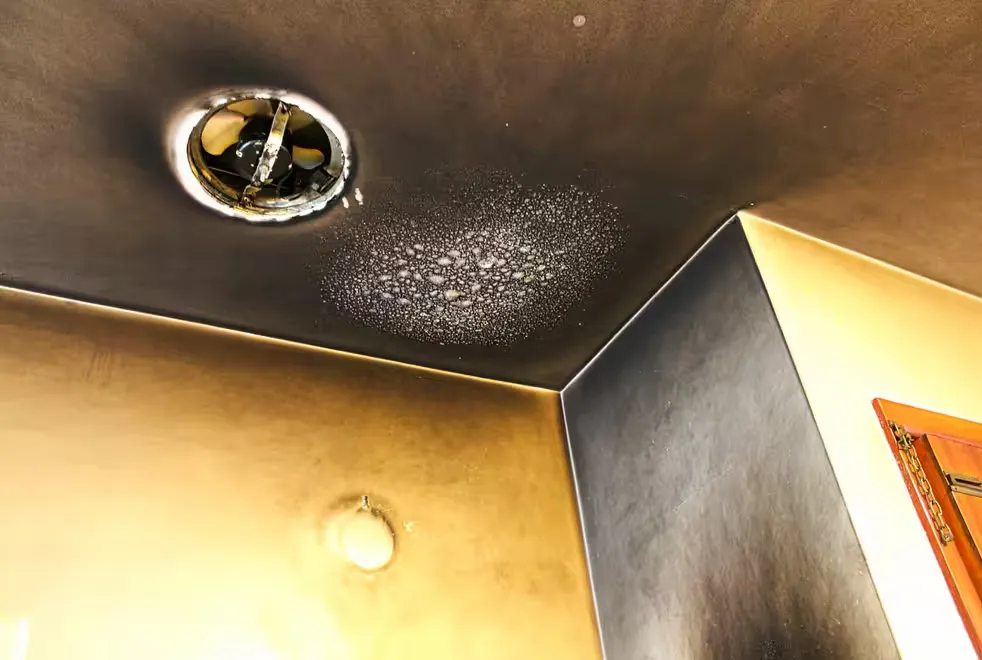
Soot is not dark dust. It is fine, oily and acidic, and it bonds to surfaces rather than resting on them.
That acidity is why waiting costs you. Soot etches metal, discolors grout and yellows paint the longer it sits.
Different fuels leave different residue. A grease fire, a plastic fire and a wood fire each leave something that behaves differently.
Odor is the third layer, and the hardest. Smoke particles lodge inside porous material, which is why a cleaned room can still smell.
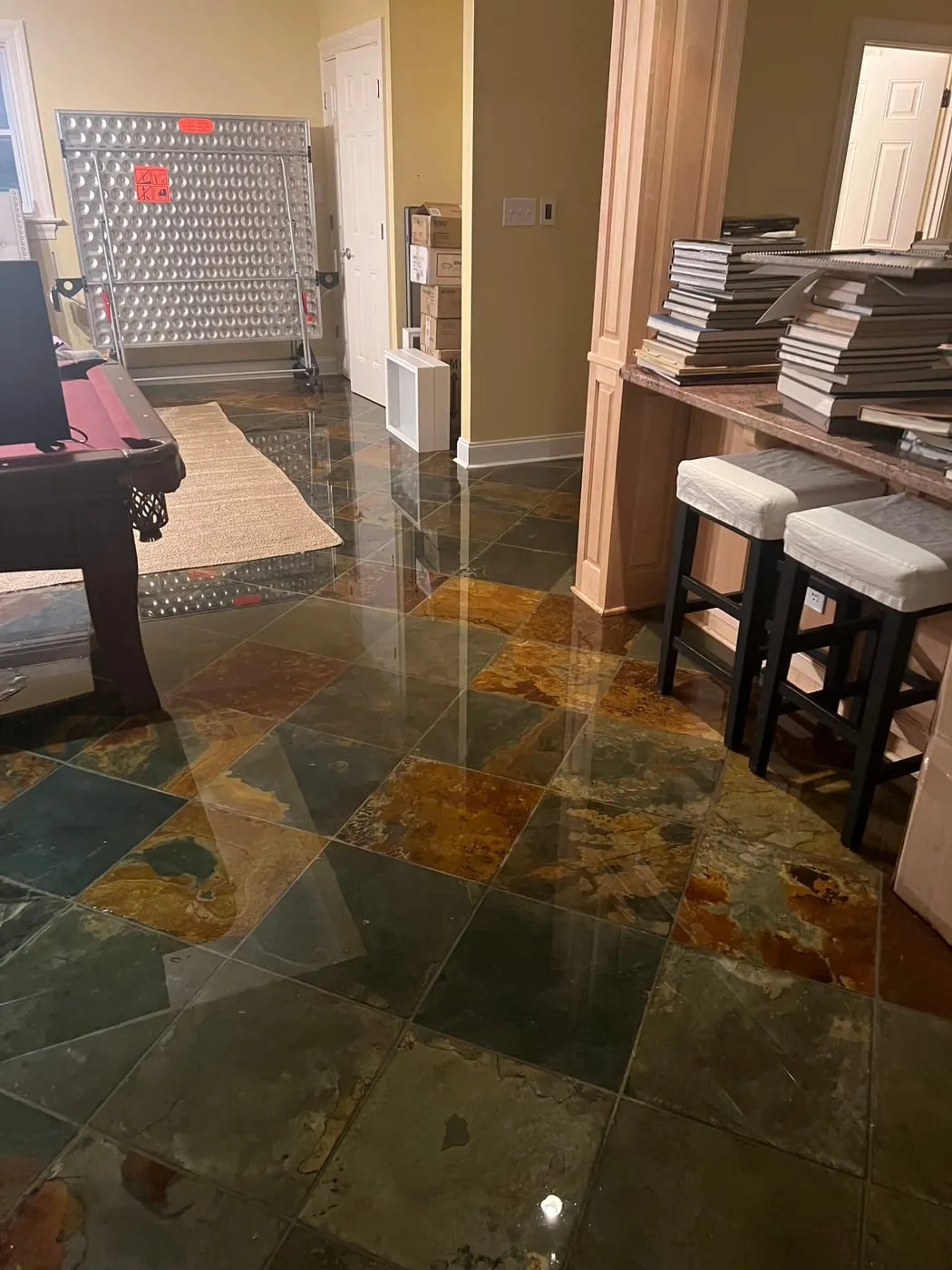
Then there is the water. Putting a fire out uses water, and that water is now in your floors and walls.
So a smoke job is really three jobs at once: residue, odor and moisture. That is why it does not respond to a bucket and a sponge.
The water half gets forgotten most. People focus on what they can see and smell, and the wet subfloor under the kitchen goes unnoticed for weeks.
That is how a fire claim turns into a mold problem a month later. Two claims, one of which was avoidable.
Why Does Wiping Soot Make Smoke Damage Worse?
Because soot is oily, and wiping presses oil into a surface.
On paint, plaster and grout that turns a removable film into a permanent stain. The mark you are trying to remove becomes part of the wall.
Professionals start dry for exactly this reason. Dry sponges and specialist vacuums lift residue without pushing it in.
Only after that does anything wet come near it, and with solvents chosen for the residue and the material.
Household cleaners are water-based. Against an oily residue they spread it further and press it deeper.
Order matters too. Cleaning a wall before the ceiling means doing the wall twice.
There is also a health reason to stop. Soot and smoke residue are on every surface the smoke reached, and without proper protective equipment there is no way to know what you are breathing.
That is the honest version of the risk. Not a scare story, just a reason to wear the right mask or leave it alone.
Doing it wrong first also raises the professional bill. Driven-in soot costs more to fix than fresh soot.
What Are the Most Common DIY Smoke Damage Mistakes?
Five come up again and again.
Wiping soot with a damp cloth is the first and the worst. It converts a cleaning job into a refinishing job.
Using air fresheners is the second. They add a smell on top of a smell, and the underlying one returns within a week.
Running the HVAC to clear the air is the third. If there is residue in the ductwork, the system distributes it into clean rooms.
Repainting over stained walls is the fourth. Without sealing first, the residue keeps releasing straight through the new paint.
Throwing everything out is the fifth, and it costs people real money. Contents that could have been cleaned are also contents that could have been claimed.
There is a sixth worth naming. Cleaning before photographing destroys the evidence an insurance claim is built on.
Take the photographs first, every time. The room, the source, the soot patterns and the contents, including inside cupboards.
Then report the loss. Reporting is not the same as committing to a claim.
Why Does the Smoke Smell Keep Coming Back?
Because the source of the smell was never removed, only covered.
Smoke particles are small enough to get inside the pores of drywall, wood, plaster and fabric. Surface cleaning does not reach them.
Heat during the fire opened those pores, the smoke went in, and cooling closed them again. The smell is effectively sealed inside the material.
Humidity brings it back out. That is why a house that seemed fine in spring smells like a fire in July.
Charlotte summers make this worse than it would be elsewhere. Warm humid air is exactly the condition that reactivates it.
The professional answer to this is sealing, and it is the stage most people have never heard of.
Unsealed framing, subfloor and rough plaster get an odor-blocking sealer before the rebuild goes back. That puts a barrier between the residue and the room.
That is not something you can do afterwards. Once the drywall is up, the surfaces that needed sealing are behind it.
If a quote is much cheaper than the others, this is usually the stage that is missing from it.
Is DIY Smoke Damage Cleanup Ever Safe?
Some of it, yes, and it is worth knowing which parts.
Photographing everything is safe and genuinely useful. Do that before anything else.
Opening windows to ventilate is fine, provided the structure is safe to enter and the fire service has released it.
Removing undamaged items from unaffected rooms is sensible. Getting them out before residue spreads protects them.
Throwing out unpackaged food from the affected area is correct. Fruit in a bowl, an open bag of flour, anything not sealed.
Changing the HVAC filter is worth doing, but do not run the system until the ductwork has been assessed.
What is not worth doing is any wet cleaning of soot. That is the line.
Also leave electronics alone. Soot inside a device is conductive and corrosive, and switching it on can finish it off.
Do not move soot-covered contents into clean rooms. That spreads residue into parts of the house that were fine, which is a bigger job than the one you started with.
Do not run a household vacuum over soot either. A standard filter passes fine particulate straight back into the room.
Leave any structural cleaning until the building has been checked. If a burst pipe or the fire hoses put water into a ceiling, that ceiling has weight in it.
If you have asthma or a lung condition, do not do any of it. That is not caution, it is the CDC’s own framing about who reacts more strongly to airborne irritants.
What Should You Do Instead of DIY Smoke Cleanup?
Work in a specific order, and none of the early steps involve cleaning.
Confirm the property is safe to enter. If the fire service has not released it, wait.
Photograph the damage from every angle, including inside cabinets and closets. Video helps too.
Report the loss to your insurer, and keep the claim number and the name of who you spoke to.
Get the building closed if it is open. Emergency board-up stops weather and everything else that follows an open house.
Get the water dealt with on the same day. The US EPA says to dry water-damaged areas within 24 to 48 hours, and that in most cases mold will not grow if you do.
That clock starts on the day of the fire, not when the soot work finishes. It is the most commonly missed deadline in the whole process.
Then get the smoke assessed properly, so the scope is based on where the residue actually went.
Stay out of the affected rooms until someone who can measure it says otherwise. That is different from leaving the house.
Keep the receipts for anything you spend in the meantime. Emergency accommodation and mitigation costs are often part of a claim.
Do not throw damaged contents away before they are inventoried. Things that could have been claimed get binned in the first day more often than anything else.
How Do Professionals Approach Smoke Damage Differently?
They map before they clean, and they work in stages rather than room by room.
The first job is establishing how far the smoke travelled. Soot patterns on walls and ceilings show where the air moved.
Then the residue type is identified, because it decides the method. Grease, plastic and wood residues each need a different approach.
Containment goes up so cleaning does not push residue into unaffected rooms. Air scrubbers with HEPA and carbon filtration run through the work.
Soot removal is dry first, then wet, ceiling down to floor. Metal gets attention early because of the acid.
Odor treatment is its own stage after cleaning, using hydroxyl generators, ozone or thermal fogging depending on the job.
Sealing follows, on the surfaces that cannot be fully cleaned, before anything is rebuilt.
Contents are handled separately, often off site, and inventoried as they go. That inventory is what a contents claim runs on.
The HVAC system is cleaned specifically rather than assumed to be fine. It is the single most common reason a smell returns.
What Should You Ask Before Hiring a Smoke Damage Company?
Ask what happens to the ductwork. If it is not in the scope, the smell has somewhere to hide.
Ask how they identify the residue type. A generic answer means a generic method.
Ask whether sealing is included, and on which surfaces. This is the stage that decides whether the job lasts.
Ask whether odor treatment is separate from cleaning. If it is folded in, it is probably a masking product.
Ask whether they handle the water side too. Fires are put out with water, and the two jobs share a deadline.
Ask how they document. Photographs, residue mapping, moisture readings and a contents inventory are what a claim is decided on.
Ask what happens if the smell returns. Get that answer before the work starts, not after.
Ask who does the rebuild. A company that mitigates and rebuilds saves you handing the job to a second firm halfway through.
Ask how quickly they can start. Acidic residue does damage every day it sits, so a start date next week is not the same offer as one tomorrow.
Check the credentials you can actually verify. We are an IICRC Certified Firm, number 56517068, and licensed general contractors in North Carolina and South Carolina.
We are family-owned and have worked this metro since 2014, and we handle fire and smoke damage and water damage restoration as one job rather than two.
If you have smoke damage in Charlotte or nearby, call us before you start wiping. That single decision usually saves more than anything else in this article.