Hidden Water Damage: Signs You Might Miss Until It's Too Late
· Updated August 23, 2026

On this page
Are you trying to find out whether you have hidden water damage? You are in the right place, and most of the signs are things people notice and then explain away.
In this article we cover the early warnings in walls, floors and ceilings, why the room can look fine while the wall stays wet, where water hides in a house, how to tell whether a leak is still running, and when it stops being something to watch. Keep reading, because by the time hidden water damage is obvious it is rarely still cheap.
Why Is Water Damage So Often Hidden?
Because water moves, and most of where it moves is inside the building.
It runs downhill, so it leaves the room it started in. It also wicks upward through porous material, which surprises people.
Drywall pulls water up from the floor. So does carpet, insulation and untreated timber.
That means the wet patch you can see is usually the smallest part of the problem.
Water also travels sideways along framing. A leak can appear in a room nowhere near where it started.
Surfaces dry first and cavities dry last. So a wall can feel completely dry on the outside and be soaked inside.
That single fact explains why so much water damage is found late. Everything you can touch tells you the wrong thing.
Water damage is common, too. The Insurance Information Institute reports that about one in 60 insured homes files a water damage or freezing claim each year, averaging $13,954 between 2018 and 2022.
Plenty of those started as something small that nobody noticed for weeks.
A burst pipe announces itself. A weeping joint on the same line does not.
That is the difference worth understanding. The dramatic failures get dealt with, and the quiet ones do the long-term damage.
What Are the Early Signs of Hidden Water Damage in Walls?
Look for changes in the surface rather than for water.
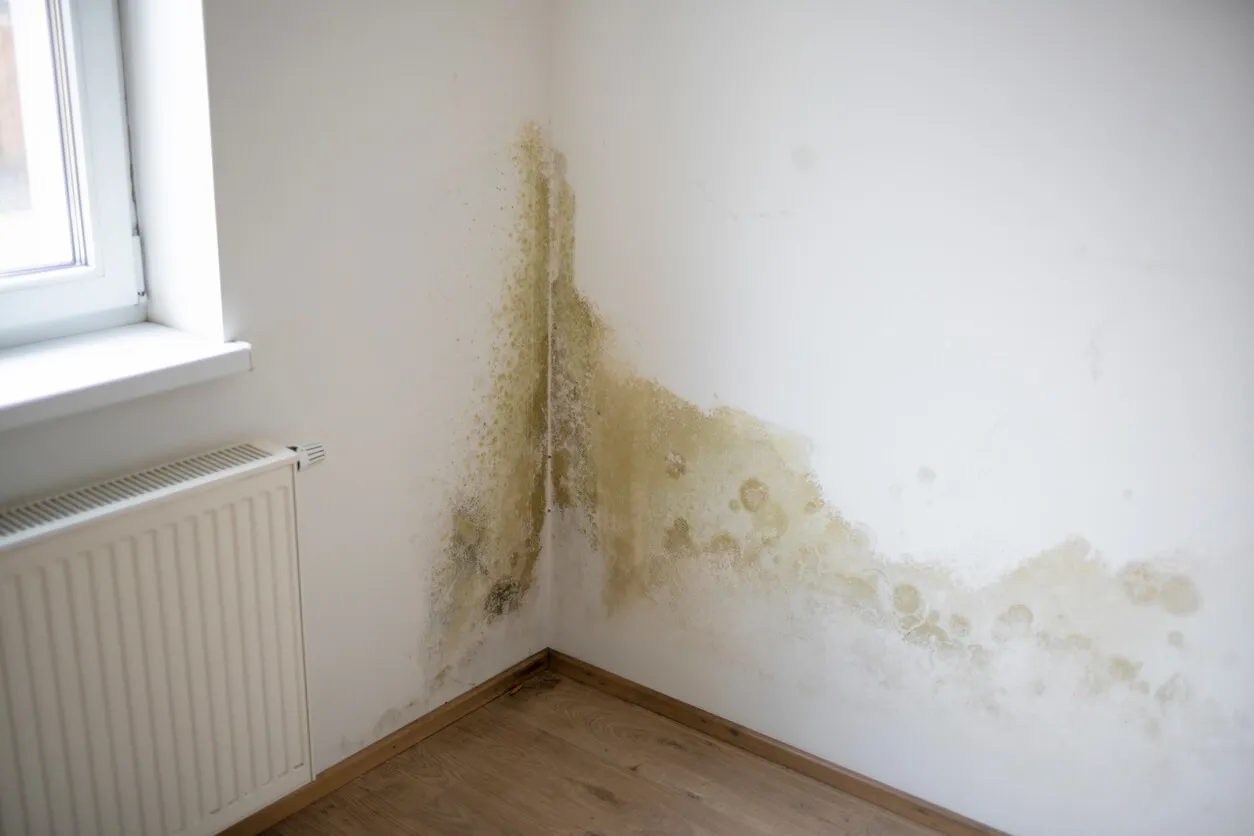
Bubbling or blistering paint is the clearest early sign. Paint lifts because moisture is pushing from behind it.
Warped or separating baseboard is the second. Timber swells as it absorbs, and the joint opens.
Soft drywall is the third, and it is the one to take seriously. If a wall gives under light pressure, it is holding water.
Discoloration that keeps returning after painting is a fourth. You are painting over an active source.
Look at the bottom few inches of a wall specifically. Water wicks upward, so the base tells you what is happening inside.
Nail pops and hairline cracks along a seam can point the same way. Moisture moves the board and the fixings show it.
A cold patch on a wall is worth checking too. Evaporating water cools a surface.
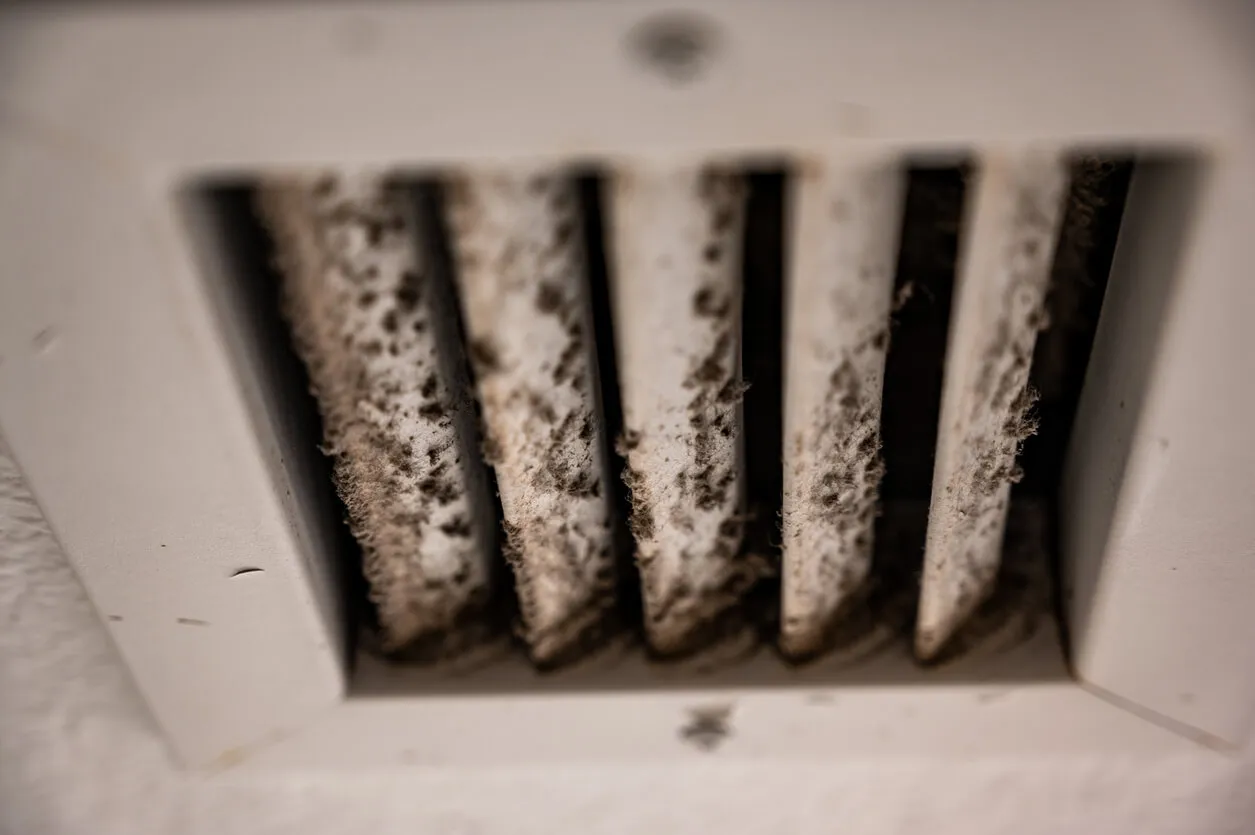
Smell is the sign people dismiss most often. Musty air near a wall usually means something behind it is wet.
What Are the Signs of Hidden Water Damage in Floors?
Floors tell you sooner than walls do, because they move visibly.
Cupping hardwood is the classic. The edges of each board rise higher than the middle as it absorbs from below.
Crowning is the opposite and it usually comes later. The middle rises after the surface dries faster than the underside.
Soft or spongy spots underfoot mean the subfloor is affected. That is a structural issue rather than a finish one.
Lifting or peeling vinyl and laminate is another. The adhesive fails when moisture gets underneath.
Grout that stays dark, or tiles that sound hollow when tapped, can mean water under a tiled floor.
Carpet that feels cool or damp long after a spill usually means the pad below is still wet.
A floor that has started to squeak where it did not before is worth a look. Moisture changes how boards sit.
The room under the affected floor is where to check next. Water goes down, so the ceiling below is the second casualty.
What Are the Signs of Hidden Water Damage in Ceilings?
Ceilings are the most urgent because of weight.
Brown or yellow staining is the obvious one. That is water carrying dissolved material through the board.
Rings around a stain mean it has happened more than once. Each ring is a separate wetting and drying cycle.
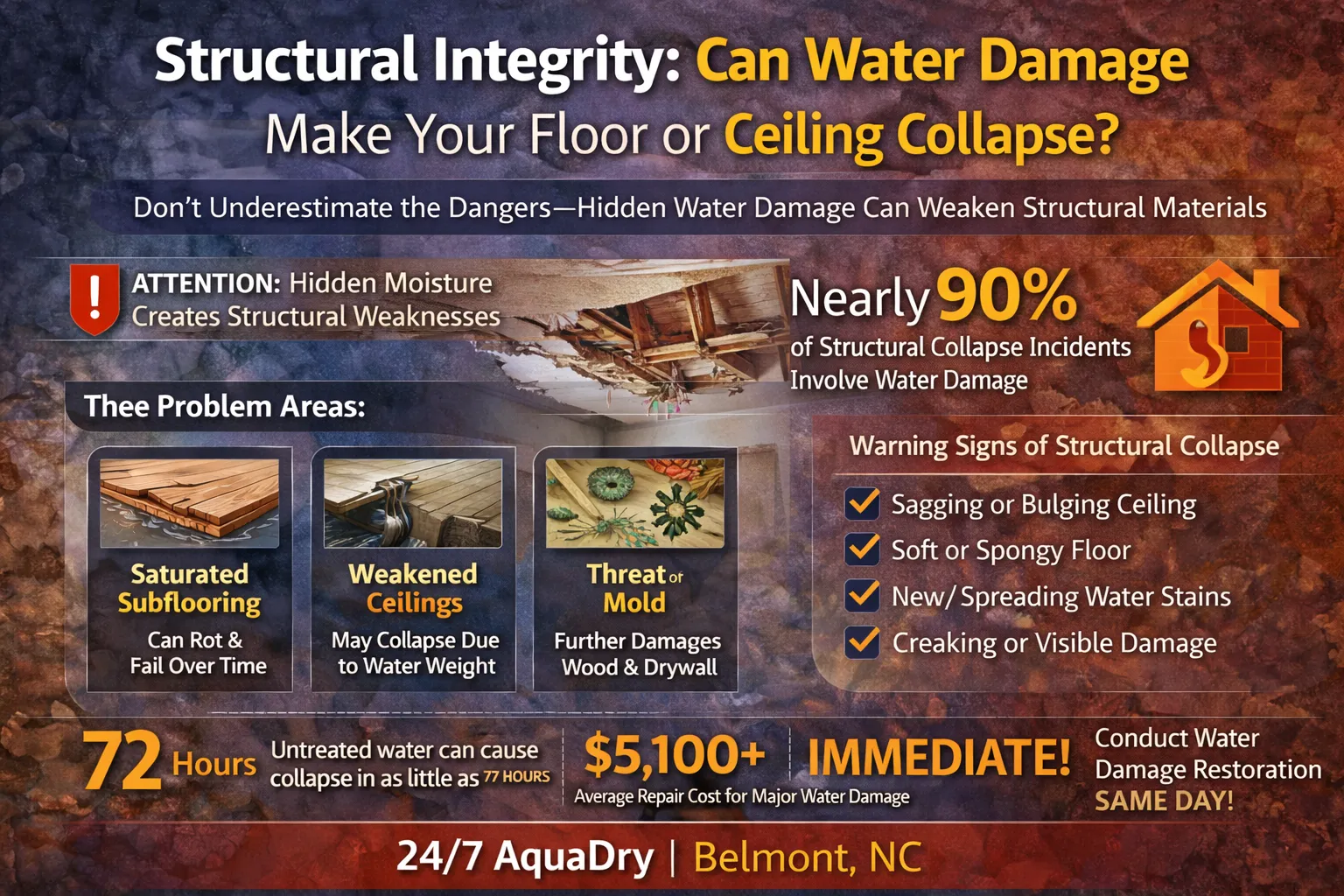
Sagging is the dangerous sign. Wet drywall holds water and gives way, sometimes suddenly.
Stay out from under a sagging ceiling. Do not poke it to relieve pressure unless you know what is above.
Peeling paint and small cracks around a light fitting can point to water tracking along a joist.
Water at a ceiling light is an electrical hazard as well as a water one. Cut power to that circuit.
Remember that ceiling stains rarely sit directly under the leak. Water runs along framing before it drops.
So the stain tells you where the water fell, not where it came from. Finding the source is a separate search.
Where Does Water Hide in a House?
Six places, and most of them are places nobody looks.
Wall cavities are first. Insulation inside a wall may never dry on its own, and it is invisible.
Under cabinets is second. A slow leak under a sink rots the cabinet base from the inside out.
Under flooring is third. Water spreads across a subfloor far wider than the visible wet patch.
Crawl spaces are fourth and the most-missed of all. A wet crawl space feeds moisture into the floor above for as long as it stays wet.
Attics are fifth. A roof leak wets insulation and framing, and nothing shows in a room until the ceiling stains.
Behind and under appliances is sixth. Refrigerator supply lines and dishwasher connections leak slowly and quietly.
The shower pan deserves its own mention. A failed pan sends water into the subfloor and the ceiling below rather than onto the bathroom floor.
If you have a suspicion and no visible evidence, those are the places to check.
How Can You Tell If a Leak Is Still Active?
The staining tells you where. Whether it is still running is a separate question.
Mark the edge of a stain with a pencil and check it in a day. If it has grown, water is still arriving.
Feel for temperature difference. An actively wet area often feels cooler than the wall around it.
Check whether it changes with use. A stain that grows after a shower points at the bathroom above.
Watch your water bill. An unexplained jump is often the first hard evidence of a supply leak.
Turn everything off and check the meter. If it is still moving, water is leaving the system somewhere.
Smell tells you duration rather than activity. A musty smell means something has been wet for a while.
None of these are as good as a moisture meter, which reads inside the material rather than guessing from the surface.
That is what a professional assessment brings, and it is the only way to find the edge of the water.
Why Does Hidden Water Damage Get Expensive?
Because three things compound while nobody is looking.
The first is spread. Water keeps moving into more material for as long as it keeps arriving.
The second is salvage. Carpet, pad, drywall and hardwood all have a window in which they can be dried instead of replaced.
The third is mold. The US EPA says to dry water-damaged areas within 24 to 48 hours, and that “in most cases mold will not grow” if you do.
A hidden leak blows through that window before anyone knows there was one. That is why hidden damage so often becomes a mold removal job.
Insurance is the fourth factor, and it is the one that stings. Slow, long-running leaks are commonly treated as maintenance rather than sudden accidental damage.
That distinction can be the difference between a covered claim and no claim at all.
Structural damage is the last one. Saturated framing and subfloor are a rebuild rather than a dry-out.
So the honest reason to act on a suspicion is that a suspicion is the cheapest stage this problem has.
There is a resale angle as well. Water damage found during a buyer’s inspection costs more than water damage found by you.
Repeat losses matter too. A property with a claim history carries that record for five to seven years.
What Should You Do If You Suspect Hidden Water Damage?
Look before you call, but do not wait long.
Check the obvious sources first. Under every sink, behind the washing machine, at the water heater, around the toilet base.
Look at the ceiling of the room below anything suspicious. That is where water lands.
Go into the crawl space or basement with a torch. You are looking for standing water, damp insulation and a torn vapor barrier.
Check the attic after heavy rain. Wet insulation and dark stains on framing tell you a lot.
Photograph anything you find, with something for scale. If a claim follows, that record starts now.
Do not paint over a stain. You lose the evidence and the moisture keeps coming.
Do not assume it dried on its own. Surfaces dry first and cavities dry last, so the room proves nothing.
If the source is a sewage backup or storm water rather than a supply line, keep out of the area entirely. That is a health question, not a damage one.
Do not run a fan at a stain and call it handled. Drying a surface while the cavity stays wet is the most common false fix there is.
If you find something and cannot tell how far it goes, that alone is a reason to get it measured.
When Does Hidden Water Damage Need a Professional?
Five triggers, and they are fairly clear.
Any soft drywall or spongy flooring. Both mean material is saturated rather than damp.
Any ceiling stain that is growing, or any sagging at all. Ceilings are a safety question.
A musty smell you cannot trace. That means something has been wet long enough to matter.
Any suspicion where you cannot find the source. Extent is the thing people consistently underestimate.
Anyone in the house with asthma, a mold allergy, a weak immune system or chronic lung disease. That does not change the water, it changes the urgency.
A proper assessment means readings across the affected area and the spaces above and below it, not a look around.
That is what tells you whether you have a damp patch or a wet wall cavity. Those are very different jobs.
We answer the line at any hour, and finding the edge of the water is what the first visit is for.
If something in your house does not look right, call us. We handle water damage restoration in Charlotte and across the metro, and a suspicion checked early is the cheapest version of this problem.