How Long Does Mold Take to Grow After Water Damage?
· Updated August 23, 2026
On this page
Are you trying to find out how long mold takes to grow after water damage? You are in the right place, and the answer is shorter than most people expect.
In this article we cover the window the EPA actually names, what happens on day one, day three and day seven, which materials fail first, the warning signs before anything is visible, and whether you can still beat it. Keep reading, because this is one of the few restoration questions with a real deadline attached. Miss it and the job changes from drying to removal.
So How Fast Does Mold Grow After Water Damage?
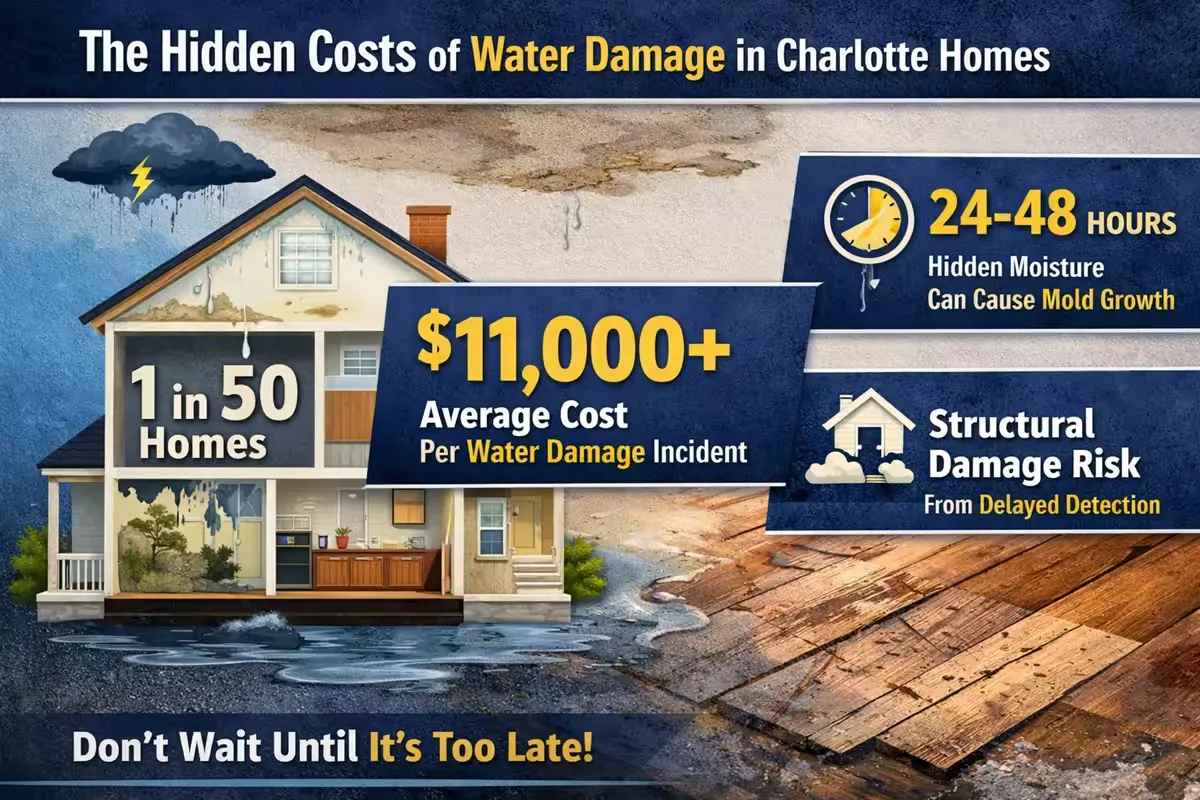
Fast. Often inside 24 to 48 hours.
The US EPA is specific about it. Dry water-damaged areas and items within 24 to 48 hours, and “in most cases mold will not grow.”
Read that from both ends. It is a warning and it is also a promise.
Beat the window and you probably have no mold problem at all. Miss it and you may have one whether or not you can see it yet.
Spores are already in your house. They are in the air, on surfaces, in dust, everywhere, all the time.
They are not the problem on a normal day. They are waiting for water.
Water damage supplies the missing ingredient. That is the whole mechanism, and it is why the clock starts the moment the water arrives.
In Charlotte the window can be tighter than the EPA’s number suggests. High summer humidity slows drying, and slower drying means longer wet.
What Happens Day by Day After Water Damage?
Day one is when the water spreads. Standing water is only the visible part.
In the first hours it moves into carpet pad, drywall, insulation and subfloor. Those materials pull water sideways and upward, not just down.
This is why a room can look better by evening and be worse than it was. The puddle is gone because the building absorbed it.
By 24 to 48 hours you are at the EPA’s line. Growth can begin, and this is the window a restoration crew is racing.
Nothing dramatic happens at hour 49. It is not a switch, it is a rising probability.
By day three, growth may already be underway where materials stayed wet. At that stage spores can move into other areas through airflow.
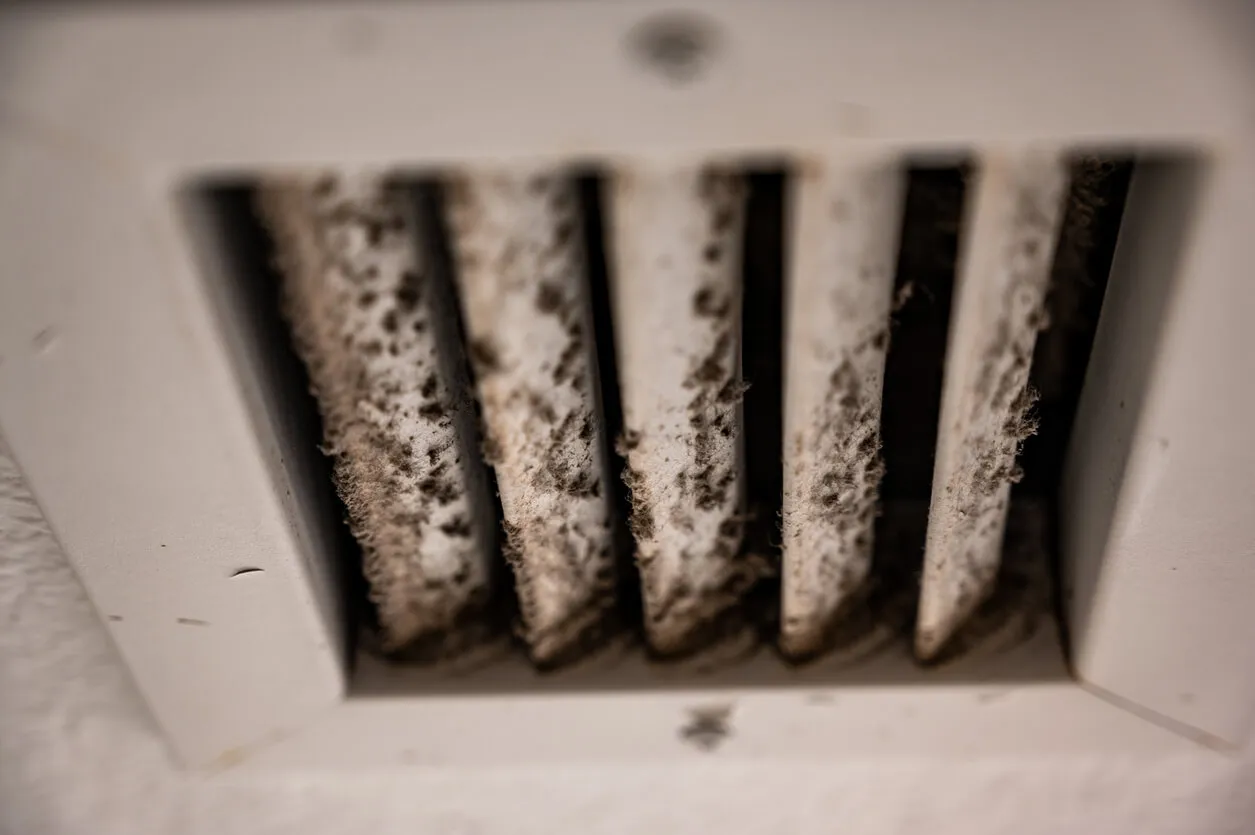
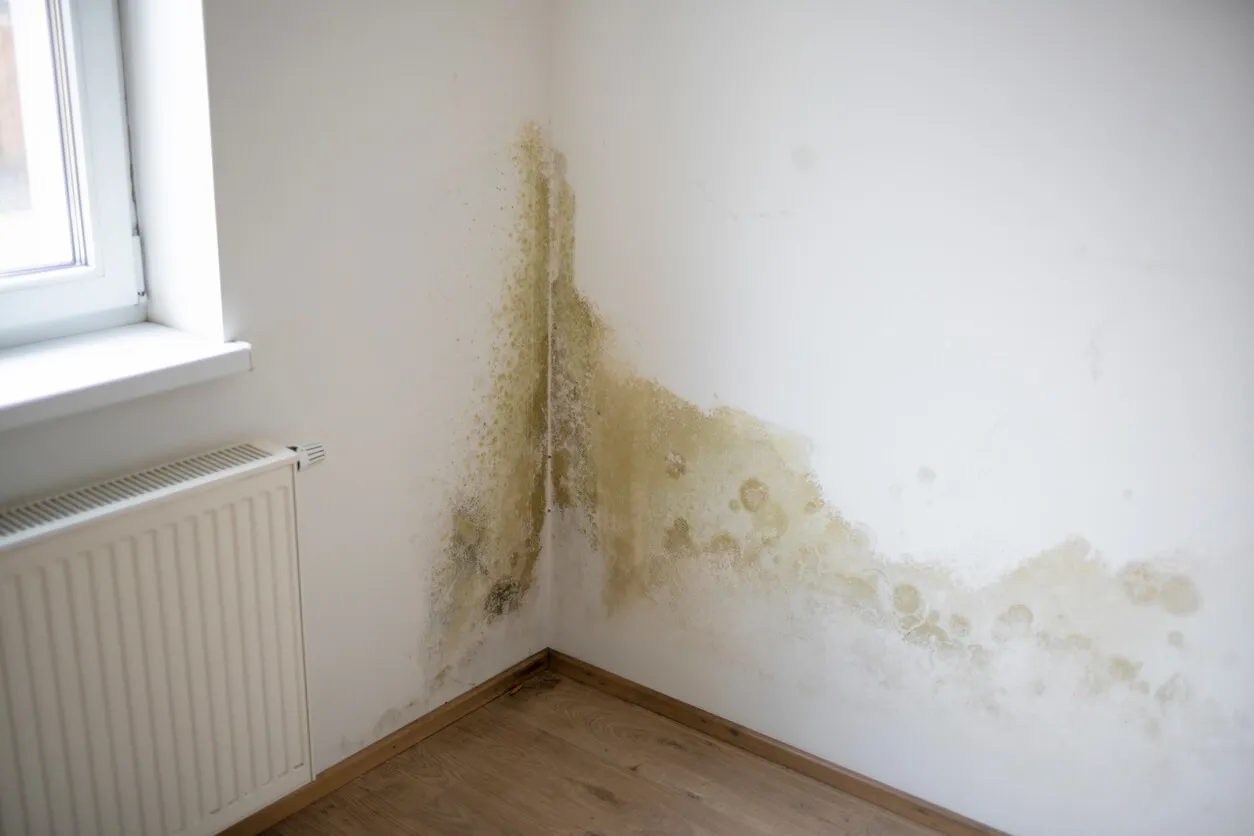
Around day seven, colonies can become visible. Dark or poorly ventilated spaces show it first.
By then you are usually past drying alone. The conversation shifts to what has to come out.
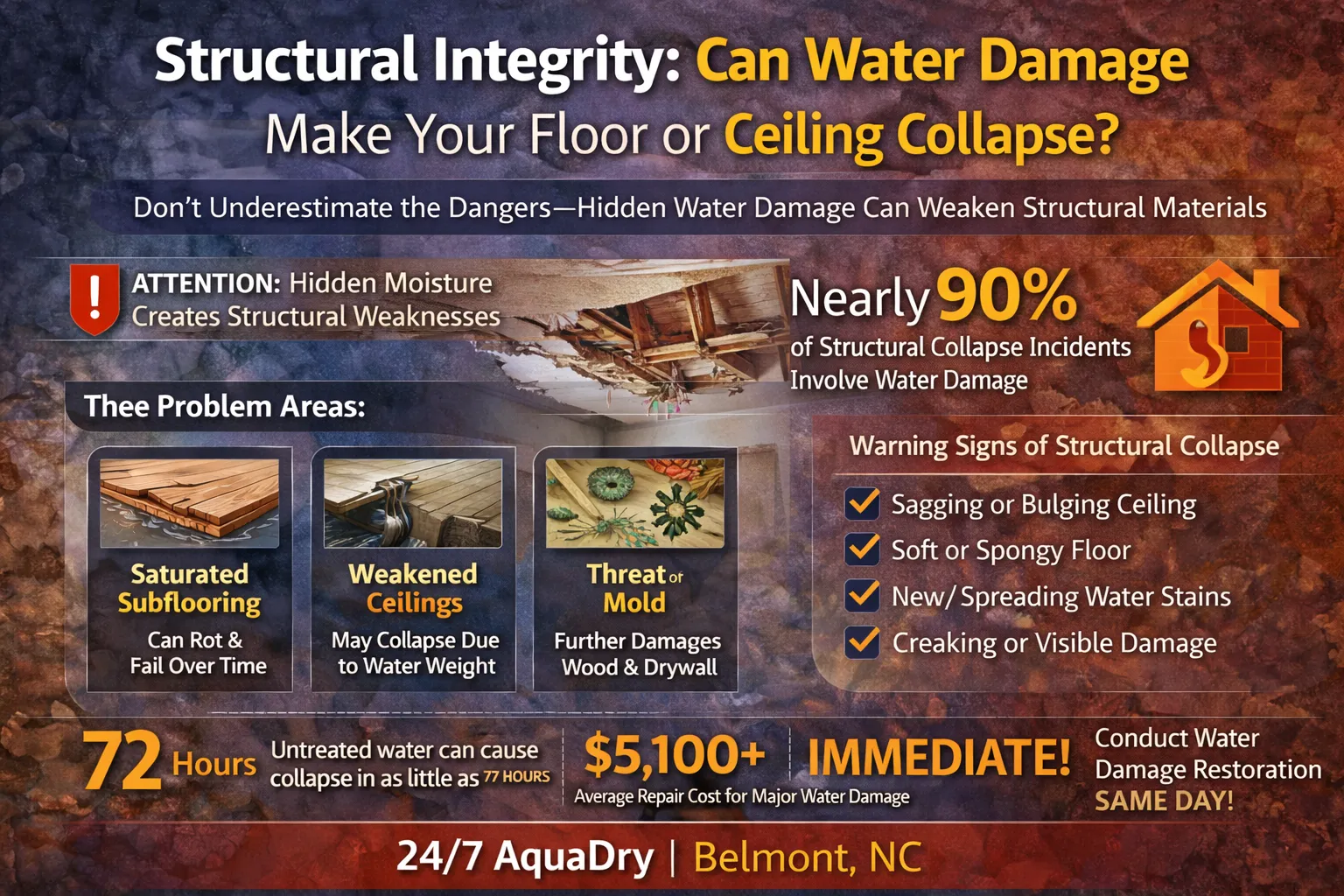
That progression is why “we will look at it next week” is the most expensive sentence in this whole subject.
What Conditions Make Mold Grow Faster After Water Damage?
Water alone does not do it. Mold needs water that sticks around, plus something to eat.
Temperature matters. Warm rooms grow mold faster than cold ones, which is why summer losses move quicker than winter ones.
Humidity matters just as much. In a humid climate, wet material dries slowly, and slow drying extends the risk window.
The CDC recommends keeping indoor humidity as low as you can, no higher than 50 percent, all day long. After a loss, that target matters more than usual.
Food is the third ingredient, and most of a house qualifies. Wood, paper-faced drywall, dust, glue, carpet backing and fabric all work.
Airflow is the fourth. Still air in a closed room is ideal for growth.
That is why the equipment does two jobs. Air movers keep air moving and dehumidifiers pull water out of it.
Closed-up houses are the worst case. A vacant property with the AC off after a leak is the fastest version of this timeline.
Which Materials Grow Mold First After Water Damage?
Some materials dry well. Others hold water like a sponge and hide it.
Hard, non-porous surfaces are the easy case. Tile, sealed concrete, metal and glass can usually be cleaned and dried.
Porous materials are the problem. Drywall is the most common trouble spot in any water damage restoration job.
Drywall absorbs quickly, holds moisture inside, and looks fine from the room. The paper facing is also food.
Carpet and pad are the second. Water goes through the visible fiber into the pad below, which is where it stays.
Pad is rarely worth saving after anything but a small clean loss. It dries slowly and it is cheap to replace.
Wood is third. Unfinished framing, subfloor, trim and cabinet bases all absorb.
Insulation is the quiet one. Wet fiberglass or cellulose inside a wall may never dry on its own, and nobody can see it.
That combination, wet insulation behind intact drywall, is the classic hidden mold job. Nothing looks wrong from inside the room.
What Are the Warning Signs Mold Is Already Growing?
Waiting for black spots is the mistake. Visible mold is a late sign, not an early one.
Smell is the most reliable early flag. Earthy, stale or sour air after a leak means something is wet.
That smell often shows up before anything is visible. Trust it even when the room looks fine.
Look for bubbling paint and warped baseboard. Both mean water got behind the surface.
Soft drywall is another. If a wall gives under light pressure, it is holding water.
Staining that keeps coming back after painting is a sign too. You are painting over an active source.
A room that still feels humid days after drying supposedly finished deserves attention. So does one that feels cooler and clammier than the rest of the house.
Watch for symptoms as well. The CDC says exposure “may cause a variety of health effects, or none at all,” with stronger reactions for people who have asthma, a mold allergy, a weak immune system or chronic lung disease.
If someone in the house is in one of those groups and feels better away from home, that is worth acting on.
Why Is Hidden Moisture the Real Problem?
The water you can see is the part you already dealt with. The water you cannot see is the part that decides the outcome.
Water moves by gravity and by wicking. It runs down, and it also climbs up through porous material.
A burst pipe behind a wall can soak insulation, framing, drywall and flooring at once. The visible wet patch is a fraction of it.
A roof leak can travel along a rafter and appear in a room nowhere near the actual hole. People chase the stain and miss the source.
This is why moisture meters exist. A meter reads what is inside the material, not what the surface looks like.
Dry to the touch is not dry. Surfaces dry first and cavities dry last.
Professional drying works from readings, not appearance. The equipment stays until the numbers say the structure is dry.
A wet crawl space is the most-missed version of all. It is under everything and nobody goes down there.
If the crawl space stayed wet, the floor above it is being fed moisture the whole time.
Can You Prevent Mold If You Act Fast After Water Damage?
Yes, in many cases, and this is the encouraging part of an otherwise grim timeline.
The EPA’s own wording is a prevention statement. Dry within 24 to 48 hours and in most cases mold will not grow.
That is achievable on most losses. It is mostly a question of how quickly the equipment arrives.
Extraction comes first. Standing water has to leave before drying makes any sense.
Then air movers and dehumidifiers, run continuously. Not a box fan and an open window.
Do not switch the machines off at night. They are sized for a number of hours, and every shutdown adds days.
Readings should be taken daily and written down. If nobody is measuring, nobody knows whether it is working.
A fan and some towels will not do it for a real loss. That approach dries the surface and leaves the cavity wet, which is the exact condition mold wants.
Fast, thorough drying is what turns a potential remediation into a straightforward dry-out.
What Should You Do Right After Water Damage to Stop Mold?
Stop the water first. Shut the supply valve, or the main if you cannot find the local one.
Remove standing water if it is safe. A wet vacuum beats towels, and a pump beats both on anything large.
Move furniture, rugs and boxes off wet flooring. Furniture legs stain, and cardboard wicks water upward fast.
Get air moving. Open interior doors, run the AC if the weather suits it, and get real equipment in as soon as you can.
Do not put the wet rug back down. Do not close the room up and leave it.
If drywall, carpet, walls or insulation were soaked, book an inspection now rather than after the weekend. That is the whole point of the 24 to 48 hour number.
Photograph everything before you move it. That record serves an insurance claim and a scope of work equally.
Watch the air for the next few days. If a musty smell develops, or surfaces stay damp, or anyone starts feeling off, treat that as new information.
When Does Mold After Water Damage Need a Professional?
Not every wet room becomes a mold job. Some do, and the line is reasonably clear.
Call when mold is visible on drywall, insulation, carpet or framing. Surface cleaning does not reach into material.
Call when the affected area is large, or when you cannot find where the water went. Extent is the thing homeowners consistently underestimate.
Call when the water was not clean. Category 2 and 3 water changes the job regardless of mold.
Call when someone in the house has asthma, a mold allergy, a weak immune system or chronic lung disease. That does not change the mold, it changes the urgency.
Proper mold removal runs in a fixed order: inspection, containment, removal of what cannot be saved, cleaning, then correcting the moisture source.
That last step is the one that decides whether it comes back. Cleaning without fixing the water buys a season.
A professional can also tell a surface problem from a deep one. That distinction decides whether you are cleaning or rebuilding, and it is not something you can judge from a photo.
Do not wait on a lab result to start. The CDC does not recommend home mold testing and says all molds should be treated the same for removal.
Why Does the Charlotte Climate Change the Mold Timeline?
Heat and humidity work against you here in a specific way.
Wet material in a humid house dries slowly. Slow drying means longer inside the risk window.
Summer is the hard season. Warm air holds more moisture, so a dehumidifier has to work harder for the same result.
That is why drying cannot be casual in this market. Moisture in a wall or under a carpet often will not leave on its own before the window closes.
Crawl spaces make it worse. Many homes here sit over one, and a damp crawl space feeds the floor above it year round.
The season shapes the source too. Storms in summer, frozen pipes in a cold snap, appliance failures all year.
Whatever the cause, the clock is the same. Storm water and a burst supply line both start the same 24 to 48 hour count.
If your home has taken water anywhere around Charlotte, the inspection is what buys you the window.
Do not wait for visible mold. By the time you see it, the timeline has already run.
If you are inside that window right now, call us. Same-day drying is the difference between a dry-out and a remediation.