Emergency Leak Repair: What to Do Before Experts Arrive
· Updated August 23, 2026
On this page
Are you dealing with an emergency leak and trying to work out what to do before help arrives? You are in the right place, and there is a lot you can usefully do in the meantime.
In this article we cover how to find and stop the water, the safety checks that come first, what to move and photograph, how to slow a leak you cannot stop, and which leaks are genuinely emergencies. Keep reading, because the minutes before a crew arrives are the cheapest minutes of the whole job, and most of what matters in them costs nothing.
What Counts as an Emergency Leak?
Not every drip needs a call at midnight. Some do.
Any leak from a pressurised supply line is an emergency. That water keeps arriving until a valve is closed.
A leak you cannot stop is an emergency by definition, whatever its size.
Water reaching an electrical panel, outlet or appliance is an emergency for safety rather than damage.
A ceiling that is stained, bulging or dripping is one too. Water above a ceiling has weight, and drywall gives way.
Any leak involving dirty water counts. A toilet supply line is different from a toilet overflow.
A slow leak that has clearly been running a while is urgent in a different way. The damage is already done and it is still growing.
What is usually not an emergency is a small drip you can catch in a bucket, from a clean source, with the shutoff working.
Even then, book it rather than living with it. A slow leak is how a wall cavity stays wet for months.
Winter changes the calculation. A freeze can turn a minor drip into a split line overnight.
So does an empty house. A leak in a property nobody is visiting runs unchecked for as long as it takes someone to call round.
If you are away and a neighbour reports water, treat it as urgent regardless of the description.
What Should You Check Before Touching an Emergency Leak?
Safety, and it takes thirty seconds.
Look for electricity first. If water is near outlets, appliances or a panel, do not walk into it.
Cut power to that area at the breaker if you can reach the panel from a dry route. If you cannot, leave it alone and call an electrician.
Do not touch a wet appliance and do not unplug anything standing in water.
Look up next. A sagging or dripping ceiling means water pooled above it.
Stay out from under that, and do not poke it to relieve pressure unless you know what is above it.
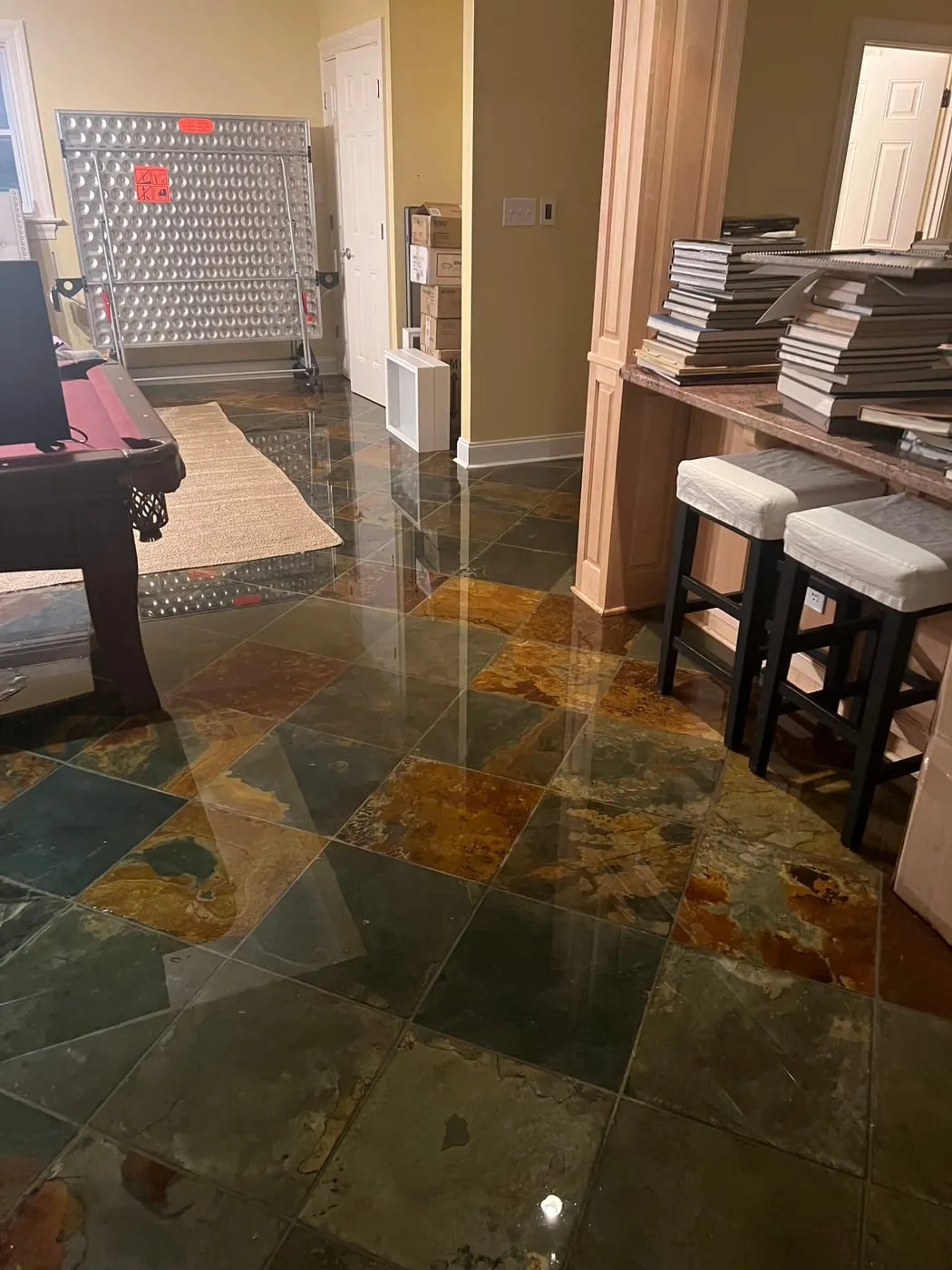
Check the floor. Wet tile and wet hardwood are genuinely dangerous.
Then check what kind of water it is. Clean supply water, grey water from an appliance, or sewage are three different situations.
If it is sewage or storm water, keep children and pets out of the area entirely. North Carolina’s public safety guidance says flood water “may contain sewage” and to keep them out until cleanup is complete.
How Do You Stop an Emergency Leak Fast?
Work outward from the fixture to the main.
Most fixtures have a local shutoff. Under a sink, behind a toilet, behind the washing machine, near the water heater.
Turn it clockwise. If it will not move, do not force it, because a snapped valve makes things worse.
Go to the main shutoff instead. In this area it is often in a crawl space, a garage, or close to where the supply enters.
Know where it is before you need it, and check that it turns. A valve untouched for fifteen years often will not move.
If the leak is at the water heater, shut off the water supply to it and the power or gas as well.
If you cannot find or turn anything, call the water company. They can shut the supply at the street.
After shutting the main, open a low tap to drain pressure from the system. That reduces what keeps coming out of the break.
If it is a burst pipe, go straight to the main. Do not spend ten minutes hunting for a local valve.
What If You Cannot Stop the Leak?
You can still limit it, and that is worth doing.
Contain the water first. Buckets, bins, towels and anything that holds volume.
If it is coming through a ceiling, put a container under it and move everything valuable out of the room.
A dripping ceiling that is bulging can sometimes be relieved deliberately, but that is a judgement call. If you are unsure, leave it.
Divert water away from electrical fittings. That is more important than saving the floor.
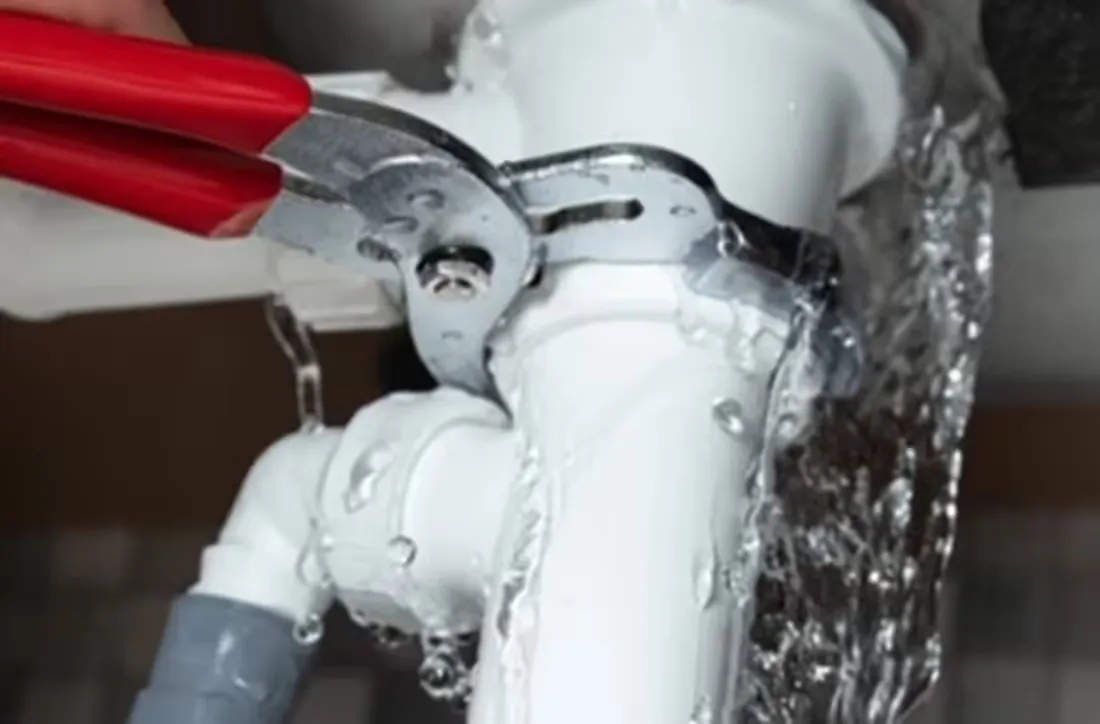
Wrap a leaking joint with a towel and lead the water into a bucket. It will not fix anything and it stops spray reaching the walls.
Move contents out of the path. Furniture, boxes and rugs come first because they wick water.
Get anything irreplaceable out of the room entirely. Documents, photographs and electronics.
Then keep calling. A leak nobody can stop is exactly what an after-hours line exists for.
Tell them what you have already tried. Knowing the main is off, or will not turn, changes what the crew brings.
Say where the water is coming from if you know. A supply line and a drain line are different problems.
If it is a sewage backup rather than clean water, lead with that. It changes who comes and what they bring.
What Should You Move and Photograph First?
Photograph before you move, then move quickly.
Take wide shots of the affected room from more than one corner. Wide shots establish scope in a way close-ups do not.
Photograph the leak itself, and the failed part if you can see it. An adjuster will ask what happened.
Then video the room, narrating what you are looking at. It takes a minute and fills gaps photographs leave.
Move contents off wet flooring next. Furniture legs stain carpet and cardboard wicks water upward.
Put foil or wood blocks under furniture legs if you have them. That stops finishes bleeding into the floor.
Lift rugs and get them outside or somewhere they can drain. Do not lift a soaked rug alone, because wet carpet is far heavier than it looks.
Open cabinet doors and drawers in the affected area. Those are closed spaces that hold moisture.
Keep receipts for anything you buy in the meantime. A wet vac, a fan or a hotel night may all be claimable.
Can You Start Drying Before the Crew Arrives?
Yes, and it genuinely helps.
Get standing water out if it is clean and safe to do so. A mop or wet vac is fine.
Do not use a household vacuum on water. It is not built for it and it is an electrical risk.
Get air moving. Open interior doors so air circulates rather than sitting in one room.
Run the air conditioning if the weather suits it. That pulls humidity down as well as moving air.
Use a dehumidifier if you own one, in the wettest room, and empty it often.
Do not put the wet rug back down and close the door. That is how a small loss becomes a mold job.
The reason for all of this is a deadline. The US EPA says to dry water-damaged areas within 24 to 48 hours, and that “in most cases mold will not grow” if you do.
Everything you do in the first hour is aimed at that window. It is the difference between drying and mold removal.
Which Leaks Cause the Most Hidden Damage?
The slow ones, and the ones inside the structure.
A supply line inside a wall is the worst case. It soaks insulation, framing and drywall before anything shows in the room.
A leaking shower pan is close behind. Water goes into the subfloor and the ceiling below rather than onto the bathroom floor.
A slow drain leak under a sink rots the cabinet base from the inside. By the time the cabinet floor is soft, it has been months.
Water heater leaks are often slow at first. A damp pan or a rust stain is the early sign.
Roof leaks travel. Water runs along a rafter and shows up in a room nowhere near the actual hole.
Crawl space leaks are the most-missed of all. A wet crawl space feeds moisture into the floor above for as long as it stays wet.
Look for the indirect signs. Bubbling paint, warped baseboard, a musty smell, or a stain that keeps coming back.
A water bill that jumped for no reason is worth taking seriously too. That is often the first evidence of a leak nobody can see.
When Should You Call for Emergency Leak Repair?
Sooner than most people do, and there are clear triggers.
Any leak you cannot stop. That one is obvious and it is the most common reason for a night call.
Water near anything electrical, including a panel, an outlet or an appliance.
A ceiling that is stained, bulging or dripping. That is a structural question as well as a water one.
Water that has reached drywall, insulation or subfloor. You cannot judge those by touch.
Anything involving sewage or storm water. That changes the job regardless of volume.
A leak that has clearly been running a while. The visible damage understates it, every time.
And any situation where you cannot tell how far the water went. Extent is the thing people underestimate most.
We answer the line at any hour, and on a dispatched emergency we are at your door within 60 minutes.
What Happens When the Crew Gets There?
Measuring comes before equipment.
The crew walks the affected rooms plus the spaces above and below. Water goes down and sideways.
Moisture readings get taken across materials rather than only where it looks wet. A meter reads inside the material.
The water category gets identified, because that decides how the job runs. Clean, grey and contaminated are three different jobs.
Standing water is extracted before drying starts. Removing it as a liquid is far faster than evaporating it.
Then material decisions. What dries in place, what comes out, and what needs opening up for access.
Then the equipment goes in and stays in. Air movers and dehumidifiers run continuously until the numbers say dry.
Someone should return daily, read the same points, and write the numbers down.
You should get that log at the end. It is your proof the structure reached dry.
Ask about the plumbing repair separately. Fixing the pipe and drying the building are two different trades, usually on the same day.
If you have a leak running right now, call us. We handle water damage restoration in Charlotte and across the metro, and the shutoff valve is the first thing to find while you wait.