Water Damage in Charlotte: What to Do in the First Hour
· Updated August 23, 2026
On this page
Are you dealing with water damage right now and trying to work out what to do first? You are in the right place, and the next sixty minutes matter more than anything that follows.
In this article we cover the safety checks that come before anything else, how to stop the water, what to move and what to photograph, the four mistakes that make a loss worse, and what a crew does when it arrives. Keep reading, because almost everything expensive about water damage is a function of time, and the first hour is the cheapest hour you will ever spend on it.
What Should You Do in the First Hour After Water Damage?
Six things, in this order, and none of them is calling a contractor first.
Check for safety, especially electrical. Stop the water. Get people and pets out of the wet area.
Then photograph everything, move what you can, and start air moving.
Then call for help. The order matters because two of those steps get harder the longer you wait.
Water damage is common enough that this is worth knowing before it happens. The Insurance Information Institute puts water damage and freezing at 27.6 percent of homeowners insurance claims in 2022, second only to wind and hail.
It is also on a clock. The US EPA says to dry water-damaged areas within 24 to 48 hours, and that “in most cases mold will not grow” if you do.
Everything below is aimed at that window. Hitting it is the difference between a dry-out and a remediation.
The good news is that most of the first hour is free. It is action, not spending.
None of it commits you to anything either. Stopping water and taking photographs does not start a claim or hire a company.
Charlotte adds one local factor worth knowing. Summer humidity slows drying, so the window can be tighter here than the EPA’s number suggests.
Older homes in the metro add another. Original supply lines and cast iron drains fail more often than newer ones.
Is It Safe to Be in the Room With Water Damage?
Check that before anything else, because everything else can wait a minute.
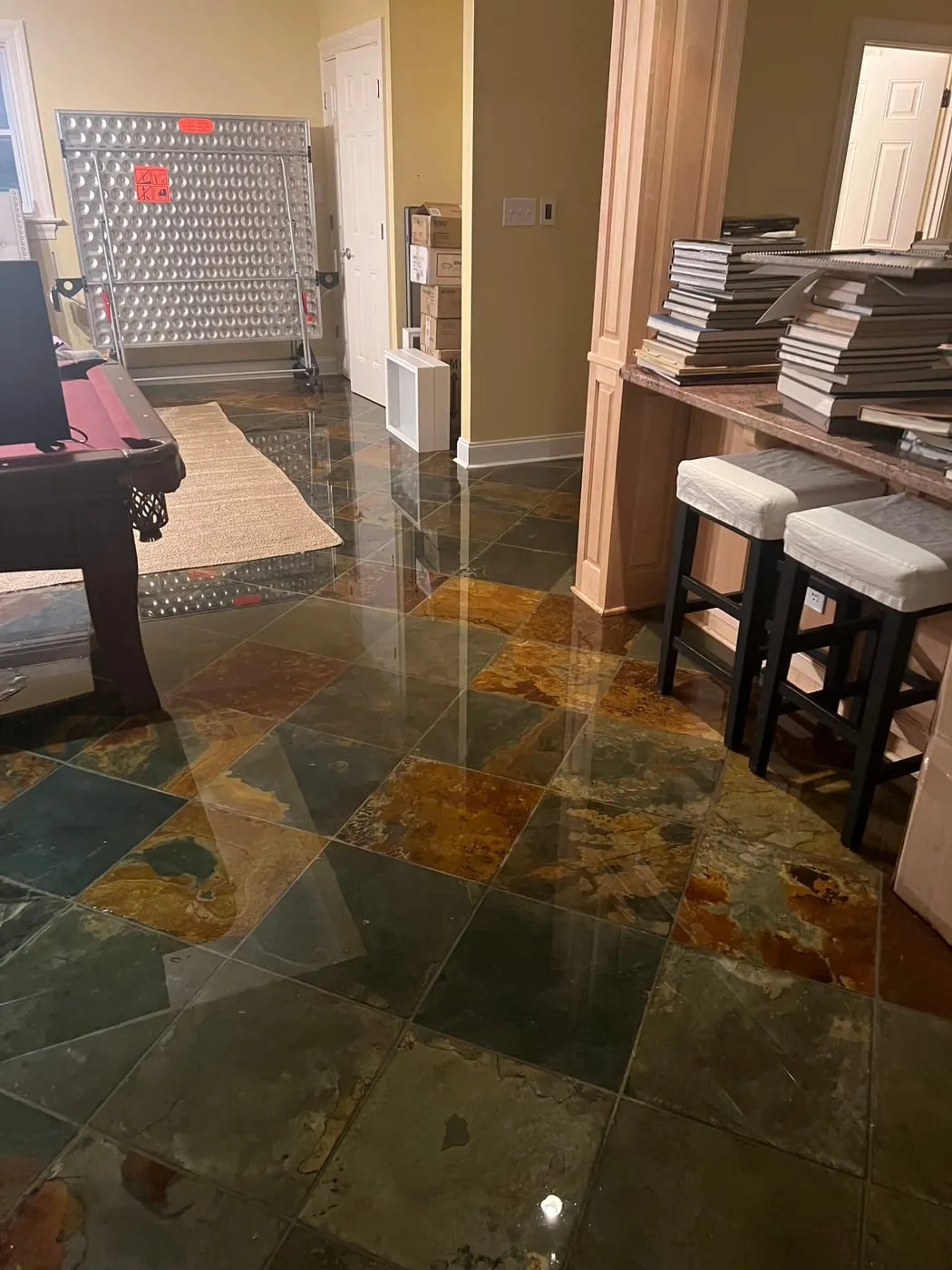
Electricity and water in the same room is the first hazard. If water is near outlets, appliances or a panel, do not walk into it.
Cut power to that area at the breaker if you can reach the panel from a dry route. If you cannot, leave it and call an electrician.
Do not touch a wet appliance or plug anything in. That includes trying to move a wet lamp out of the way.
A sagging or dripping ceiling is the second hazard. Water above a ceiling has weight, and drywall gives way.
Stay out from under it and do not poke it to relieve the pressure unless you know what is above.
Slip risk is the third and the most boring. Wet tile and wet hardwood are genuinely dangerous.
If the water is not clean, that is the fourth. Sewage or storm water means keeping children and pets out of the affected area.
North Carolina’s public safety guidance is blunt on that: flood water “may contain sewage,” and you should “keep children and pets out of the affected area until cleanup has been completed.”
How Do You Stop the Water Fast?
Find the source, then the nearest valve, then the main.
Most fixtures have a local shutoff. Under a sink, behind a toilet, and behind the washing machine.
Turn it clockwise. If it will not budge, do not force it and go to the main.
The main shutoff is usually where the supply enters the house. In this area that is often in a crawl space, a garage, or near the water heater.
Know where it is before you need it, and check that it turns. A valve that has not moved in fifteen years often will not.
If the water is coming from a burst pipe, the main is the fast answer. Do not spend ten minutes looking for a local valve.
If it is a water heater, shut off the water and the power or gas to it as well.
If the water is coming in from outside, there is no valve to close. That is a storm and flood situation and the priority shifts to keeping people out of it.
If you cannot stop it, call the water company. They can shut the supply at the street.
If the leak is in a crawl space, do not go down there while it is live. Standing water under a house often sits near electrical runs.
In a freeze, leave the tap open after you shut the main. That relieves pressure in the line and limits a second failure.
What Should You Move and What Should You Photograph?
Photograph first, then move. That order protects your claim.
Take wide shots of every affected room from more than one corner. Wide shots establish scope in a way close-ups cannot.
Then photograph the source. The failed pipe, the appliance, the ceiling stain, whatever it is.
An adjuster will ask what happened. A photograph answers it better than a description weeks later.
Then get the contents up off the floor. Furniture legs stain flooring and cardboard wicks water upward fast.
Put foil or wood blocks under furniture legs if you have them. That stops the finish bleeding into carpet.
Get anything irreplaceable out first. Documents, photographs and electronics.
Do not pick up soaked rugs on your own. Wet carpet is far heavier than it looks and it is a back injury waiting to happen.
Take a short video too, narrating what you see. It costs a minute and it fills the gaps photographs leave.
Photograph inside cupboards and closets as well. Contents claims get lost because nobody recorded what was in there.
Keep receipts for anything you buy in the meantime. A wet vac, a fan or a night in a hotel may all be claimable.
What Can You Do Before the Crew Arrives?
Start the drying, even with what you have.
Get air moving. Open interior doors so air can circulate between rooms.
Run the air conditioning if the weather suits it. That pulls humidity down as well as moving air.
A dehumidifier helps if you own one. Put it in the wettest room and empty it often.
Mop or wet-vac standing water if it is clean and it is safe. Every gallon you remove is one the crew does not have to.
Do not use a household vacuum on water. It is not built for it and it is an electrical risk.
Pull up wet area rugs and get them outside or somewhere they can drain.
Open cabinet doors and drawers in affected areas. Those are closed spaces that hold moisture.
If the loss is upstairs, check the room below. Water goes down, and the ceiling underneath is often the second casualty.
What Are the Most Common First Hour Mistakes?
Four, and they all feel sensible at the time.
Waiting to see how bad it gets is the first and the worst. Water spreads, and the loss grows every hour.
There is no version of this where waiting improves the outcome. The window is 24 to 48 hours and it starts now.
Deciding about insurance before measuring is the second. You do not need to choose whether to file before anyone looks.
People end up on both bad paths that way. Filing a claim barely above the deductible, or absorbing a five-figure loss because it did not look serious.
Cleaning before photographing is the third. Once the cleanup starts, the evidence goes with it.
Assuming it dried on its own is the fourth. Surfaces dry first and cavities dry last, so the room can look fine while the wall stays wet.
There is a fifth worth adding. Putting the wet rug back down and closing the door is how a small loss becomes a mold job.
If a room still smells musty days later, that is not the loss finishing. That is something still wet.
When Should You Call for Water Damage Restoration?
Straight away, and there are five clear triggers.
Standing water over more than a small area. If a towel will not do it, equipment will.
Water that reached drywall, insulation or subfloor. Those hold water and you cannot judge them by touch.
Anything involving dirty water. Dishwashers, washing machines, toilets and any sewage.
Water that has been sitting for more than a day. That window has already started closing.
Any loss where you cannot tell how far the water went. Extent is what people underestimate most.
We answer the line at any hour, and on a dispatched emergency we are at your door within 60 minutes.
That is not a marketing figure. It is the lever that keeps a drying job from becoming a mold removal job.
Calling does not commit you to a claim or to a scope. It gets a number on the loss, which is what every other decision depends on.
What Happens When a Restoration Crew Arrives?
Measurement first, not equipment.
The crew walks the affected rooms plus the spaces above and below them. Water goes down and sideways.
Moisture readings get taken across materials, not just where it looks wet. A meter reads inside the material.
Then the water category gets identified, because it decides how the job runs. Clean, dirty or grossly contaminated are three different jobs.
Standing water gets extracted before anything else. Drying starts when the pooled water is gone.
Then decisions about materials. What dries in place, what comes out, and what needs opening up for access.
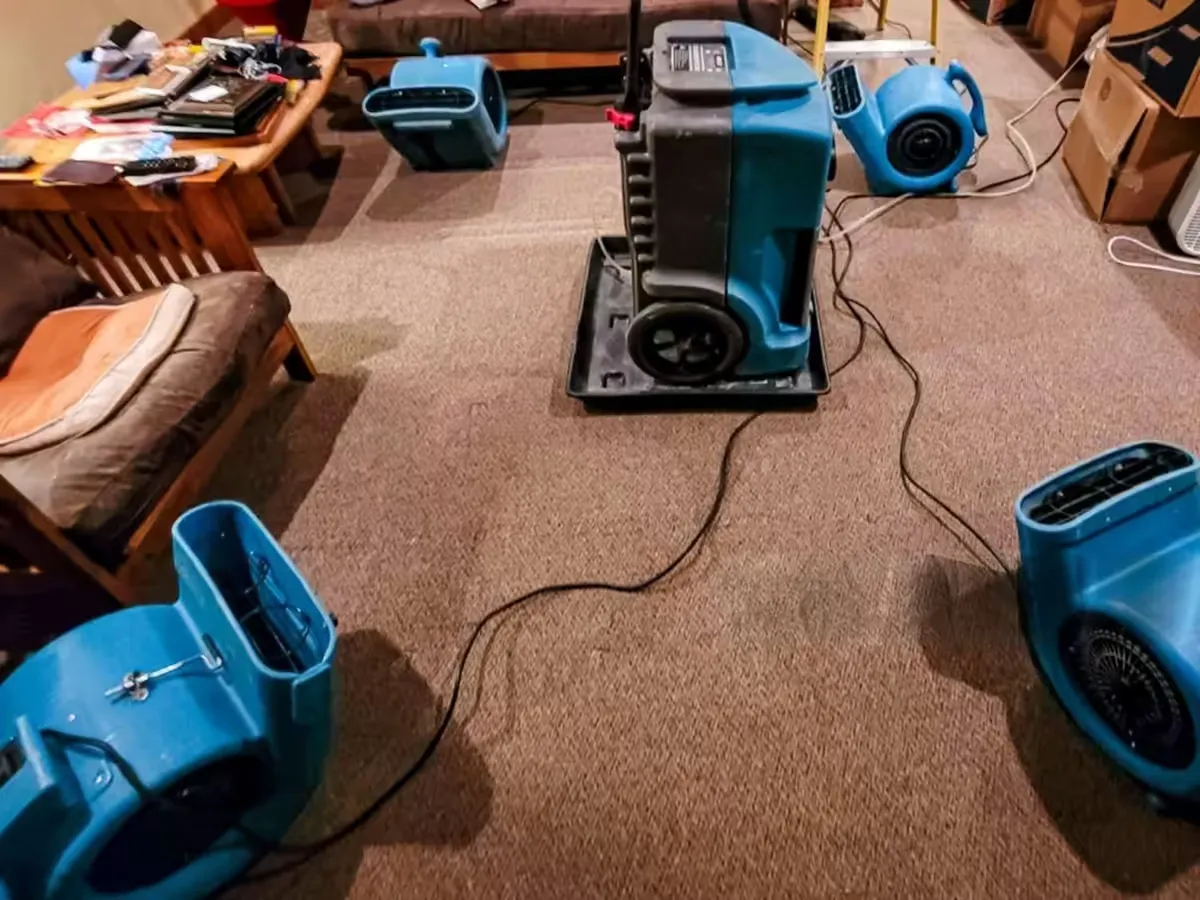
Then equipment goes in and stays in. Air movers and dehumidifiers run continuously until the readings say dry.
Someone should return daily to take readings at the same points and write them down.
You should get that log at the end. It is your proof the structure reached dry, and your insurer may want it.
Ask what happens to anything that comes out. Carpet, pad and drywall that are removed are part of the claim, so they get photographed and recorded first.
Ask about the rebuild at the same time. Drying and rebuilding are two separate schedules, and knowing that early saves a surprise later.
And say early if anyone in the house has asthma or a weak immune system. That changes which rooms get sealed off first and how quickly.
Nothing about that first visit obliges you to hire anyone. It gets you a number, and every other decision runs off it.
If you have water in the house right now, call us. We handle water damage restoration in Charlotte and across the metro, and the hour you are in is the one that matters most.