Black Mold vs. Other Mold: What Homeowners Should Know
· Updated August 23, 2026
On this page
Are you trying to work out whether you have black mold or just regular mold? You are in the right place, and the honest answer may surprise you.
In this article we cover what black mold actually is, why you cannot tell it apart by looking, what the CDC does and does not say about the health risks, who is genuinely more at risk, and why the species matters far less than most people think. Keep reading, because the useful question is not which mold you have. It is where the water is coming from.
What Is the Difference Between Black Mold and Regular Mold?
Less than the phrase “toxic black mold” suggests.
“Black mold” usually means one species, Stachybotrys chartarum. “Regular mold” is everything else people find in houses.
The CDC is direct about what that difference means in practice. “It is not necessary to determine what type of mold you may have growing in your home or other building.”
It goes further. “All molds should be treated the same with respect to potential health risks and removal.”
That is the whole answer, from the authority people usually cite when they are worried. The species does not change the plan.
What does change the plan is how much there is and where. A patch of anything on a bathroom ceiling is a different job from growth inside a wall.
The moisture source matters more than either. Mold is a symptom, and water is the cause.
So the useful questions are how far it goes, what is feeding it, and where the water is getting in. Not what it is called.
What Do People Usually Mean by Regular Mold?
Most household mold is one of a small number of common types.
The CDC names the most common indoor molds as Cladosporium, Penicillium and Aspergillus. Those are what usually turn up.
They show up as spotting on bathroom ceilings, fuzz on a window sill, or a film on grout. Familiar enough that people stop noticing it.
Color varies a lot. Green, grey, white, brown, even orange or pink.
None of that color tells you which species it is. Color changes with the surface, the moisture level and the age of the growth.
Regular mold is not harmless just because it is common. The CDC lists real effects for some people, which we cover below.
What it usually is, though, is a small moisture problem showing itself. A bathroom without a working extractor fan produces mold reliably.
Fix the moisture and that kind of growth stops. It is the most tractable version of the problem.
What Is Black Mold Actually?
Stachybotrys chartarum is a real species with specific requirements.
The CDC describes it as “a greenish-black mold” that grows on material with a high cellulose content, such as fiberboard, gypsum board and paper.
That is the important part for a homeowner. Its food is the paper facing on drywall, and the ceiling tile, and the cardboard box in the basement.
It also needs more water than most. The CDC says “constant moisture is required for its growth.”
Constant is the operative word. This is not a species that appears from a single spill that dried out.
It means a leak that kept leaking. A supply line dripping inside a wall, a roof that has been letting water in for months, or a crawl space that never dries.
So finding it tells you something useful. It says the water has been there a long time.
That is a more actionable fact than the name. If it is Stachybotrys, look for a long-running source rather than a one-off event.
Can You Tell Black Mold From Other Mold by Looking?
No. This is where most of the internet goes wrong.
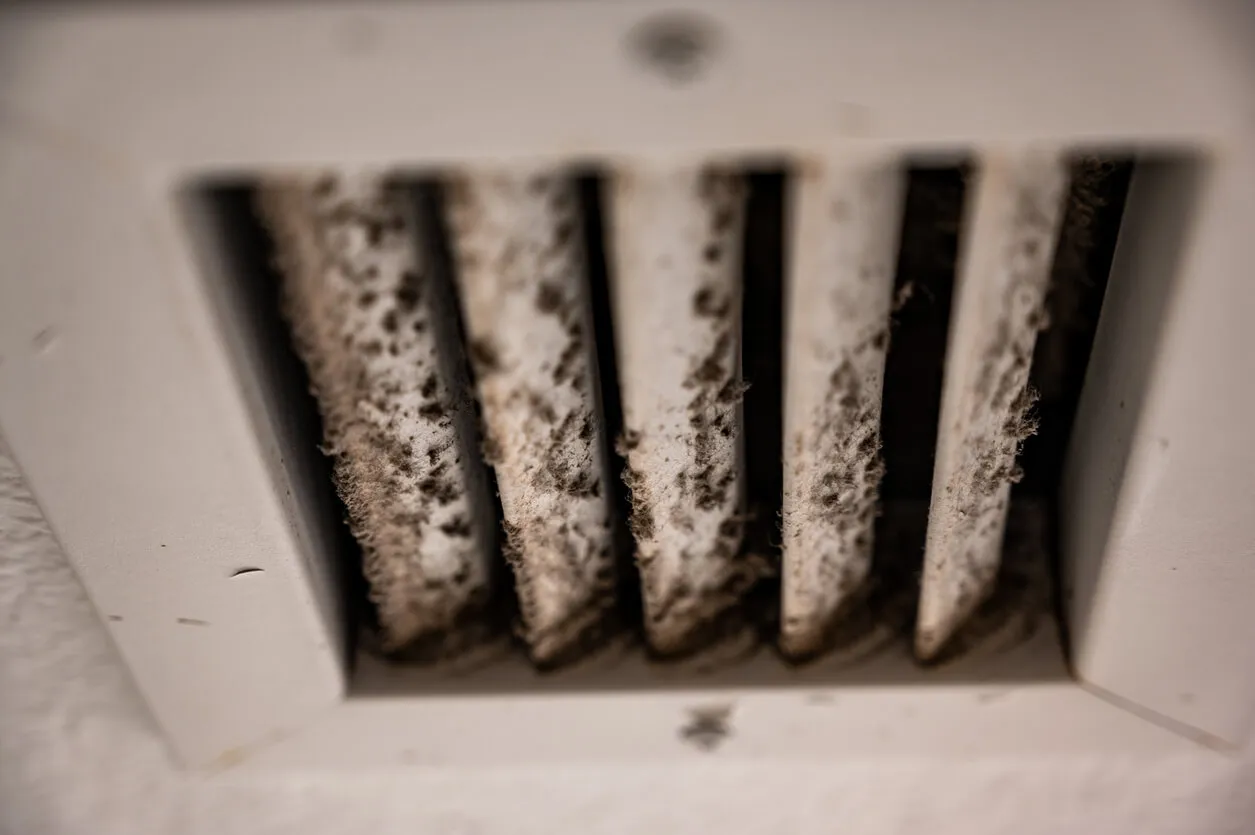
Plenty of common molds are dark. Cladosporium is frequently black or very dark green.
Stachybotrys is greenish-black, but so are other things, and the same species can look different on different materials.
Light changes it. Age changes it. What it is growing on changes it.
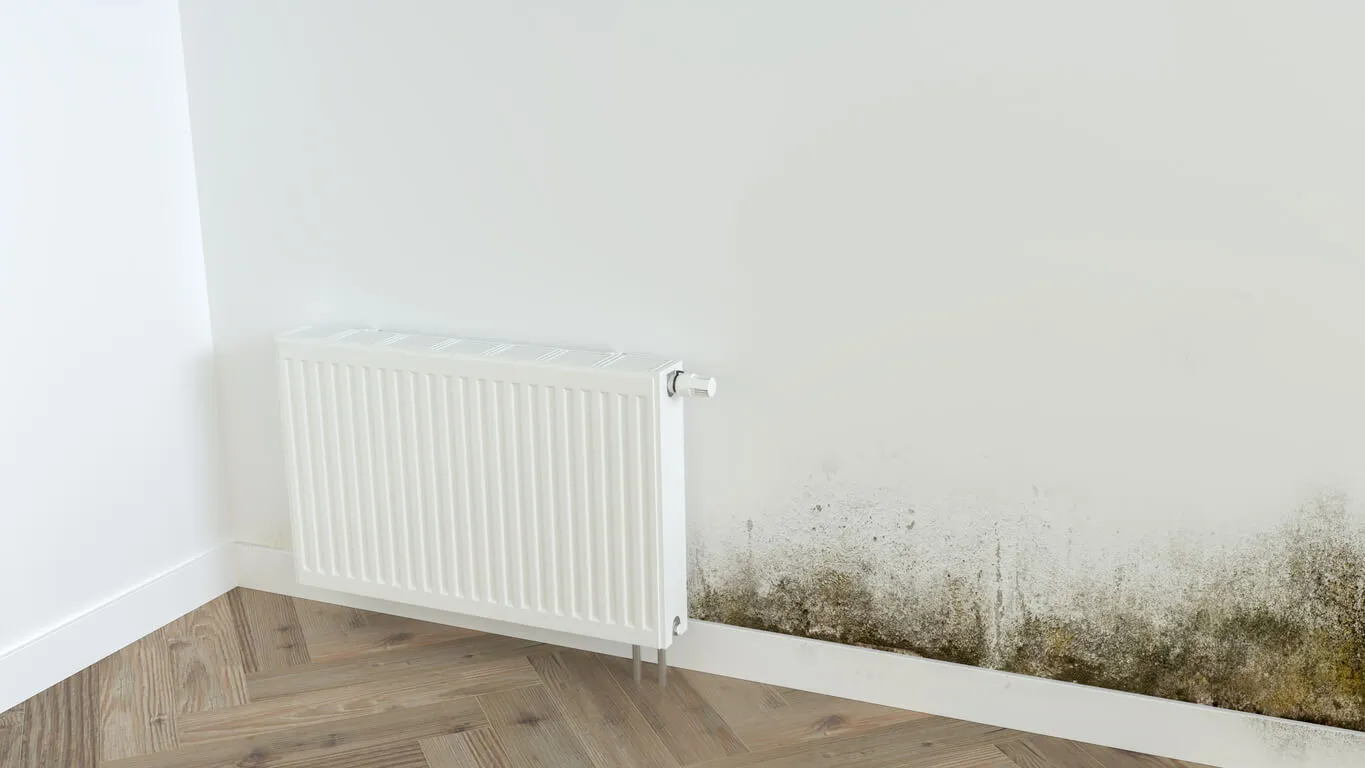
So a black patch on a wall is not a diagnosis. It is a wet wall with something growing on it.
People go looking for a texture difference too. Slimy versus fuzzy is not reliable enough to act on.
The honest position is that visual identification does not work. Anyone telling you they can name a species from a photo is selling something.
That sounds unsatisfying until you remember the CDC’s line. You do not need to know which type it is to know what to do about it.
Where Does Black Mold Grow Compared With Other Mold?
Both need water. They differ in how much and for how long.
Common molds will take an occasional damp surface. A steamy bathroom or a cool wall with condensation is enough.
They turn up in bathrooms, around windows, in kitchens, and on the cold side of exterior walls.
Stachybotrys needs sustained wetness on high-cellulose material. That narrows where it appears.
Behind drywall after a long leak is the classic. So is a wet ceiling above a bathroom, or a subfloor over a damp crawl space.
That is why it is so often hidden. The conditions it needs are the conditions inside a wall cavity, not on the surface of one.
Crawl spaces deserve their own mention. A wet crawl space provides constant moisture under the whole house.
If the growth is inside the structure rather than on it, that is a bigger job regardless of species. Extent is what drives the work.
Is Black Mold More Dangerous Than Other Mold?
Here is where careful sourcing matters, because this question attracts a lot of confident nonsense.
The CDC’s position is conservative. “At present, no test exists that proves an association between Stachybotrys chartarum and particular health symptoms.”
It also notes that Stachybotrys and other molds “may cause health symptoms that are nonspecific.” Nonspecific means the symptoms do not point to a particular mold.
That is a long way from “toxic black mold will make your family seriously ill.” We are not going to write the more dramatic version.
What the CDC does say about mold generally is worth quoting in full. “Exposure to damp and moldy environments may cause a variety of health effects, or none at all.”
For some people it can cause “a stuffy nose, sore throat, coughing or wheezing, burning eyes, or skin rash.”
People with asthma or a mold allergy “may have severe reactions.” Immune-compromised people and people with chronic lung disease “may get infections in their lungs from mold.”
Read both ends of that. “Or none at all” is real, and so is “severe reactions” for the groups named.
That is the honest shape of the risk. It depends far more on who is exposed than on which species is growing.
Who Is Most at Risk From Mold in a House?
Four groups, and the CDC names them directly.
- People with asthma
- People who are allergic to mold
- People who are immune-compromised
- People with chronic lung disease
If someone in the house is in one of those groups, mold matters more. That is the fact worth acting on.
It is also worth saying on the first phone call. It changes which rooms get sealed off first and how the work is sequenced.
Everyone else may notice nothing at all, and that is a normal outcome rather than a lucky one.
The pattern to watch for is location-based. If symptoms improve when someone leaves the house and return when they come back, that is information.
That does not diagnose anything. It is a reason to look for moisture, not a reason to panic.
A doctor handles the health question. A restoration company handles the water question.
Keep those two separate and you will get better answers from both.
Do You Need a Test to Identify Black Mold?
Usually not, and the CDC says so plainly. “CDC does not recommend mold testing.”
Its reasoning is practical. The health effects differ from person to person, so sampling cannot tell you whether someone will get sick.
There are no agreed standards for how much of a given mold is acceptable indoors. So a number on a lab report has nothing to be measured against.
Good sampling is also expensive. That money usually does more work spent on finding and fixing the moisture.
The CDC’s conclusion is the same one every time. “No matter what type of mold is present, you need to remove it.”
There is one situation where testing has a role. Where pre- and post-testing is agreed at the start of a job, an independent lab confirms the cleared scope passed at the end.
That is verification of work, not identification of species. Different purpose entirely.
If you can see it or smell it, you already know enough to act. Waiting on a lab result just extends the time the water has been sitting there.
Why Does Mold Keep Coming Back After You Clean It?
Because cleaning treats the symptom and the cause is water.
Wipe a patch off a wall and the wall is still wet. The growth returns because the conditions never changed.
This is the single most common reason people call us about a “recurring” mold problem. It is not recurring, it never stopped.
Bleach is the usual culprit in this story. On a porous surface it can lighten what you see without reaching what is inside the material.
So the visible spotting goes and the growth in the drywall carries on. The wall looks fixed for a few weeks.
The CDC’s own cleanup guidance pairs the two steps. Clean up the mold “and fix the moisture problem.”
That “and” is doing the work. Either step alone fails.
So the first question on any repeat mold job is where the water comes from. Roof, plumbing, condensation, crawl space or humidity.
Until you can answer that, you are cleaning on a schedule rather than fixing anything.
When Does Mold Need Professional Removal?
Some mold is genuinely a household chore. The CDC’s guidance covers cleaning hard surfaces with household products, soap and water, or a diluted bleach solution.
Call someone when it goes past that. The first trigger is extent.
A large area, or growth in more than one room, is not a sponge job. Neither is anything inside the structure.
The second trigger is location. Mold in drywall, insulation, subfloor or HVAC ductwork is not reachable by cleaning.
The third is the water. If the mold followed a sewage backup or flood water, the water itself changes the job.
The fourth is who lives there. Anyone in the four CDC risk groups is a reason to be less casual.
The fifth is history. If you have cleaned the same spot twice, the source has never been found.
Professional work runs in an order that matters. Find the moisture, map the extent, seal the area, remove what cannot be saved, clean, then fix the source.
The sealing comes before the cleaning. Disturbing growth without containment spreads spores into rooms that were fine, which is worse than leaving it alone.
How Do You Stop Black Mold and Other Mold Growing Back?
Control the water and you control the mold. Everything else is detail.
Keep indoor humidity down. The CDC says as low as you can, no higher than 50 percent, all day long.
A dehumidifier does that in a Charlotte summer. So does an air conditioner that is sized right for the house.
Fix leaks when they are small. A slow drip that gets ignored is exactly the “constant moisture” Stachybotrys needs.
Run extractor fans in bathrooms and kitchens, and make sure they vent outside rather than into an attic.
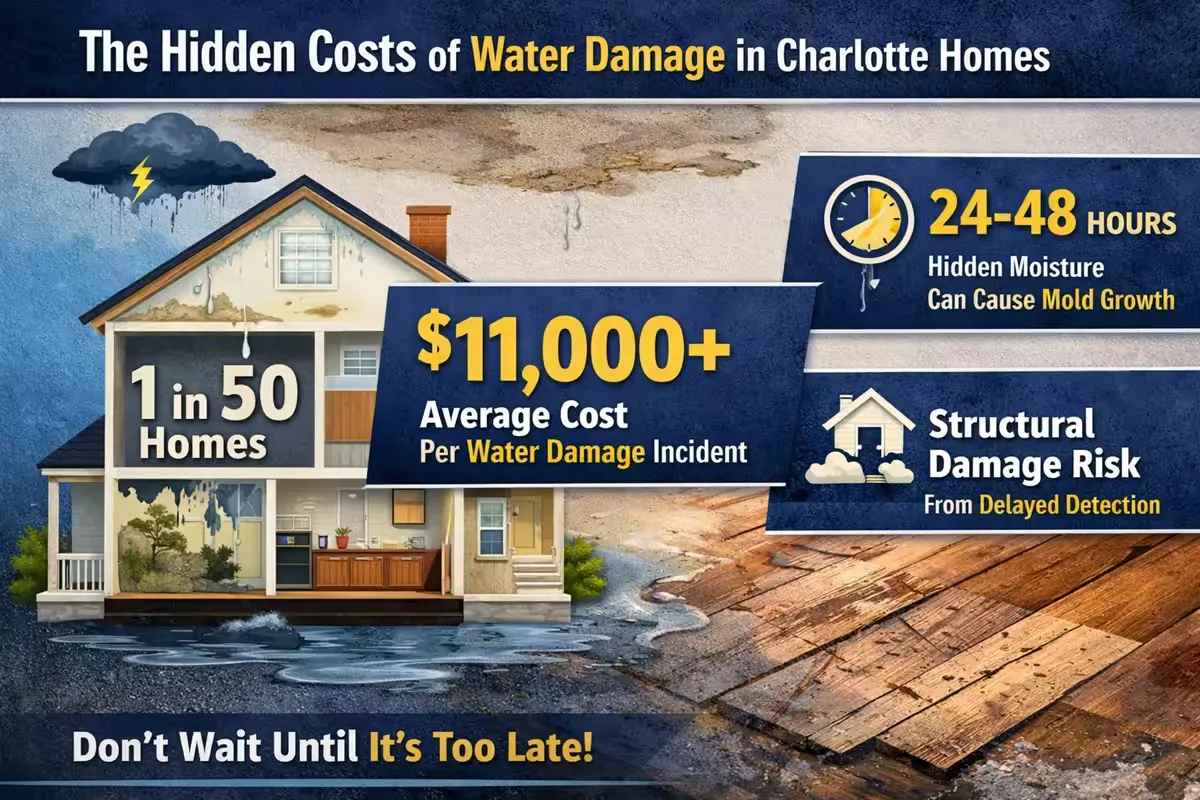
Dry anything that gets wet within 24 to 48 hours. That is the EPA’s window, and hitting it usually means no mold at all.
That applies after any water damage restoration job. Speed is the prevention.
Check the crawl space once a year. It is under everything and nobody looks.
After a storm, check the places storm water could have reached. Wet insulation is invisible from inside the room.
If you have found something and you are not sure how far it goes, get in touch. We handle mold and water damage across Charlotte, and finding the moisture is the part that decides whether it comes back.