The Quiet Damage After a Burst Pipe, and How to Stop It
· Updated August 23, 2026
On this page
Are you wondering what a burst pipe leaves behind after the obvious mess is cleaned up? You are in the right place, and this is the part that catches people out.
In this article we cover why the visible water is the smaller half of the problem, where the rest of it goes, the signs that show up weeks later, how professionals find what nobody can see, and what to do in the first hour. Keep reading, because the most expensive burst pipe is not the dramatic one. It is the one everybody thought was handled.
What Happens After a Burst Pipe Is Cleaned Up?
The visible water goes, and the hidden water stays.
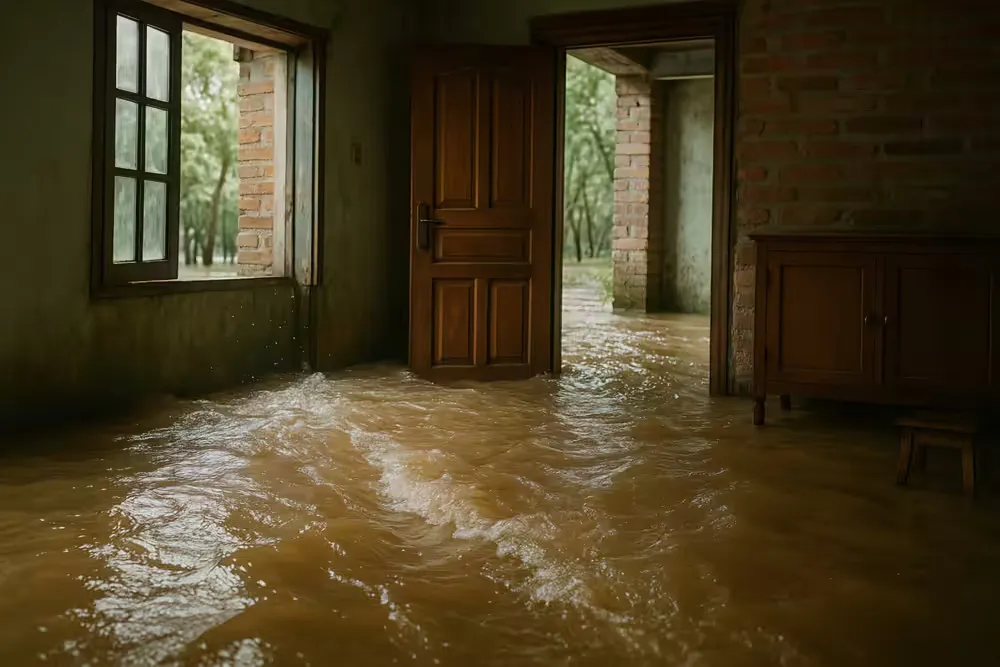
A burst supply line delivers a lot of water quickly. Most of it does not sit politely on the floor.
It runs into wall cavities, under flooring, along framing and down into the room below.
The puddle you mopped is the overflow. It is the part that could not fit anywhere else.
That is why a room can look completely handled by the evening and be soaked inside for weeks.
Surfaces dry first and cavities dry last. So everything you can touch reports good news that is not true.
Nobody is being careless when this happens. The information available at floor level is genuinely misleading.
The only way to know is to measure inside the material. That is the whole difference between a mop-up and a dry-out.
Insurance is the other reason to measure early. A sudden pipe failure is the classic covered loss, and insurance claims run on documentation.
Readings taken on day one and day four are facts. A description of how wet it looked is not.
That record also protects you the other way. A documented scope stops a job growing beyond what actually got wet.
Where Does Burst Pipe Water Actually Go?
Downward and sideways, into six places nobody looks.
Wall cavities are first. Insulation inside a wall may never dry on its own, and it is invisible.
Under flooring is second. Water spreads across a subfloor far wider than the wet patch above it.
The ceiling below is third. Water follows gravity, so an upstairs pipe means a downstairs problem.
Under cabinets is fourth. Toe kicks and cabinet bases sit right at floor level and absorb readily.
Crawl spaces are fifth, and they are the most-missed. A wet crawl space keeps feeding moisture into the floor above for as long as it stays wet.
Framing is sixth. Water travels along a joist or stud and appears somewhere unrelated.
Water also wicks upward through drywall. That is why the bottom few inches of a wall tell you what is inside it.
So the honest map of a burst pipe is much larger than the map of the puddle.
Why Is the Quiet Damage the Expensive Kind?
Because three clocks run while nobody is watching.
The first is spread. Water keeps moving into more material for as long as it stays in the building.
The second is salvage. Carpet, pad, drywall and hardwood all have a window in which they can be dried rather than replaced.
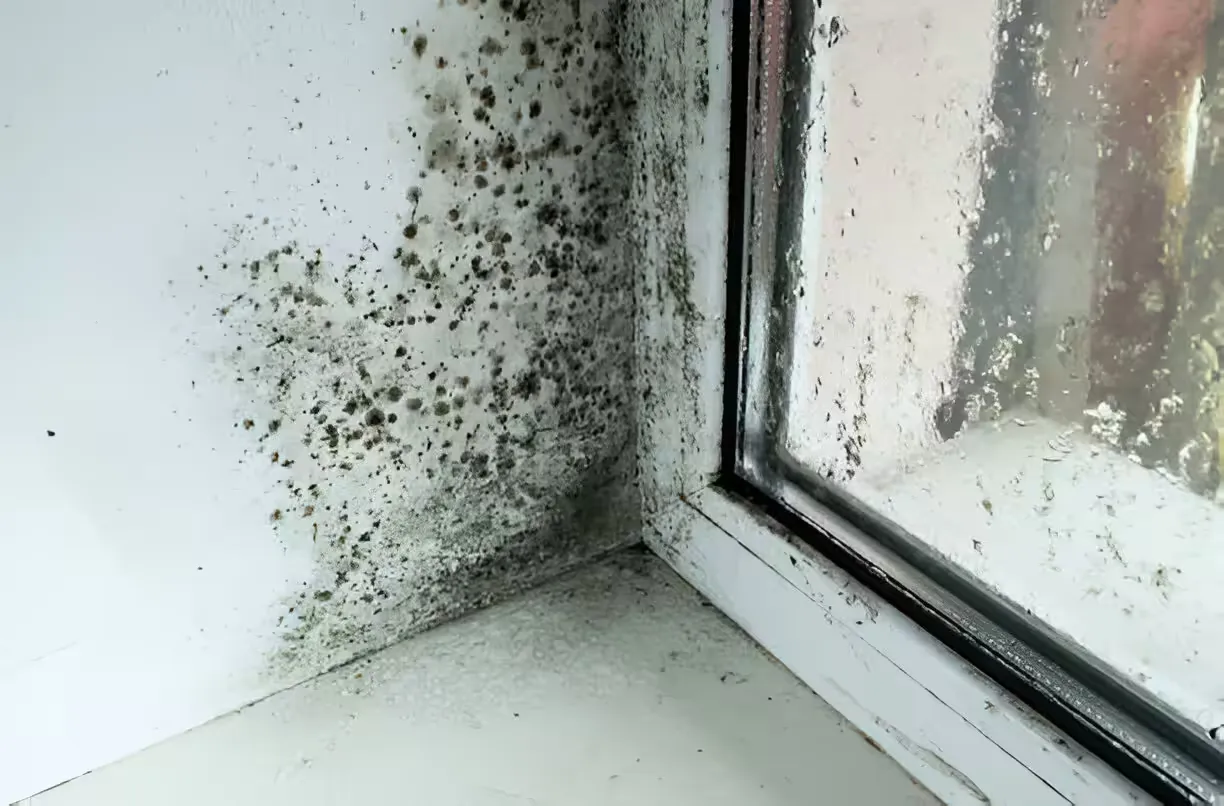
The third is mold, and it is the sharpest. The US EPA says to dry water-damaged areas within 24 to 48 hours, and that “in most cases mold will not grow” if you do.
A hidden wet cavity blows through that window while the room looks fine.
That is how a drying job becomes a mold removal job. Not through neglect, but through a lack of measurement.
There is a fourth clock on the insurance side. Coverage for mold usually depends on it resulting from a covered loss and on you having acted quickly.
So the delay can cost you the coverage as well as the extra work.
The structural clock is the slowest and the most serious. Framing and subfloor that stay wet for months rot rather than dry.
None of those four clocks are visible from the room. That is the entire problem with quiet damage.
They are all cheap to stop on day one. They all get expensive at about the same rate.
What Signs Show Up Weeks After a Burst Pipe?
The house tells you eventually, and here is what it says.
A musty smell is usually first. Earthy or stale air near a wall means something behind it is wet.
Bubbling or blistering paint is second. Moisture pushes from behind and lifts the surface.
Warped or separating baseboard is third. Timber swells as it absorbs and the joint opens.
Soft drywall is fourth, and it is the serious one. If a wall gives under light pressure, it is holding water.
Cupping hardwood is fifth. The edges of each board rise as it absorbs moisture from below.
A ceiling stain in the room below is sixth, and it often appears well after the event.
Staining that keeps returning after painting means an active source rather than a memory of one.
A room that feels cooler or clammier than the rest of the house is worth checking. Evaporation cools a surface.
Doors that suddenly stick can mean a floor has moved. So can new squeaking where there was none.
If anyone in the house starts reacting to something, note when and where. Symptoms that ease away from home are worth investigating as a moisture question.
How Do Professionals Find Hidden Burst Pipe Damage?
By measuring rather than looking, and by checking the places water goes.
Moisture meters are the core of it. A pin meter reads inside the material and a pinless one scans behind a surface.
Readings get taken across a grid rather than only where the floor looks wet. That is how the edge of the water gets found.
Thermal cameras help decide where to look. Evaporating water cools a surface, so wet areas often read cooler.
A camera does not measure moisture though. It shows a temperature difference and a meter gives the number.
The spaces above and below the affected room get checked as standard. Water goes down.
Wall cavities get checked at the base, because that is where wicking shows first.
Hygrometers read the air rather than the material, which tells you whether the dehumidifiers are keeping up.
That mapping is what a home dry-out cannot replicate. Not because the equipment is exotic, but because nobody owns it.
How Is a Burst Pipe Actually Dried Out?
Extraction first, then controlled drying, then verification.
Standing water gets extracted before anything else. Removing water as a liquid takes minutes and evaporating it takes days.
Then air movers, positioned to sweep along wet surfaces rather than blow at them.
Then dehumidifiers, sized for the space, pulling moisture out of the air so the materials can release more.
Fans alone move damp air between rooms. Both machines together are what dries a structure.
Trapped areas get opened up. Drilling a baseboard or removing trim is faster and cheaper than a wall that never dries.
Readings get taken daily at the same points and written down.
Equipment stays until those numbers reach dry standard, which is a comparison against unaffected material in the same house.
You should receive that log at the end. It is your evidence the structure reached dry.
What Should You Do in the First Hour After a Burst Pipe?
Stop the water, then protect what is left.
Go straight to the main shutoff. Do not spend ten minutes hunting for a local valve on a pressurised line.
Open a low tap afterwards to drain pressure out of the system.
Check for electrical hazards before walking into any standing water. Cut power to that area if you can do it from a dry route.
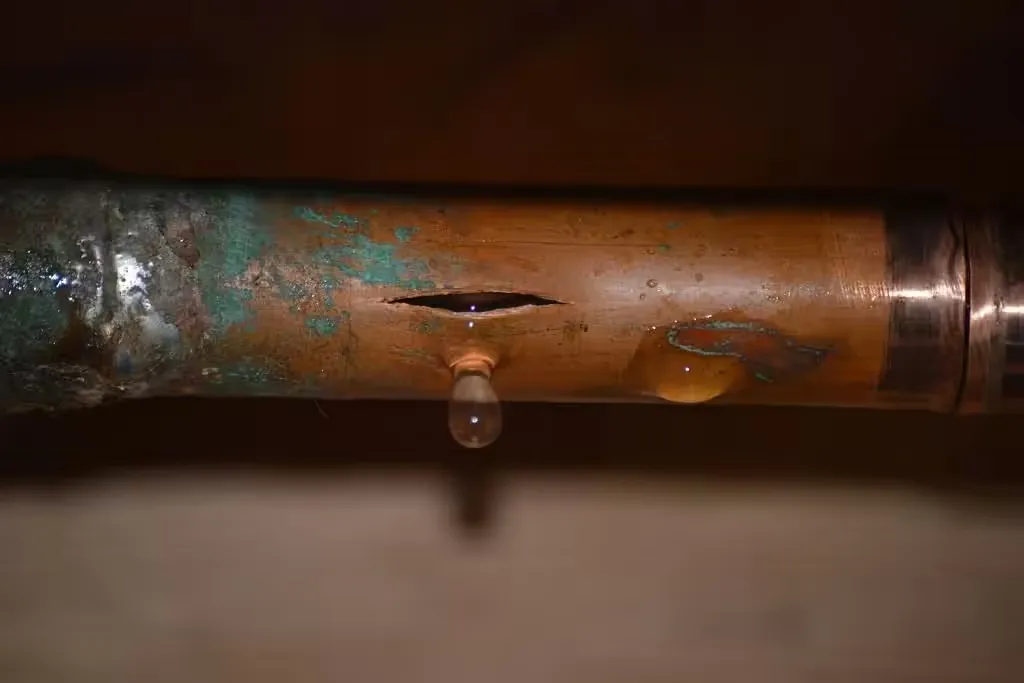
Photograph everything before you move it, including the failure point itself.
Get contents off wet flooring. Furniture legs stain and cardboard wicks water upward fast.
Extract standing water if it is clean and it is safe to do so.
Get air moving. Open interior doors and run the air conditioning if the weather suits it.
Then call for burst pipe cleanup rather than waiting to see how it dries. That decision is the whole difference.
Why Do Pipes Burst, and Can You Prevent It?
Mostly age, pressure and cold, and you can influence all three.
Freezing is the most dramatic cause. Water expands as it freezes and splits the line.
The failure often shows up when the ice thaws, which can be hours after the freeze itself.
Keep the heat on when you travel in winter. An unheated house is where most freeze failures happen.
Let a tap drip on the coldest nights, on lines running through exterior walls or unheated spaces.
Insulate exposed pipes in crawl spaces, garages and attics. That is a cheap afternoon.
Age is the second cause. Older supply lines and their fittings fail more often, and they usually give warning.
Water pressure that is too high stresses everything. A pressure gauge on an outdoor tap tells you where you stand.
Braided supply lines to washing machines and toilets are worth replacing on a schedule. They cost very little and they are a common failure point.
Know where your main shutoff is before you need it, and check that it still turns. A valve untouched for fifteen years often will not move.
If you are away a lot, consider a leak detector on the main. They are cheap now and they call you before the house does.
When Should You Call Someone After a Burst Pipe?
Straight away, and especially when it does not look that bad.
Call if water reached drywall, insulation or subfloor. Those hold water and you cannot judge them by touch.
Call if the pipe was inside a wall or under a floor. That water is inside the structure by definition.
Call if the loss is upstairs. The ceiling below is the second casualty every time.
Call if it has been more than a day. That window has already started closing.
Call if you cannot tell how far the water went. Extent is what people underestimate most.
And call if a room smells musty a week later. That is not the event fading, it is something still wet.
We answer the line at any hour and arrive within 60 minutes on a dispatched emergency. The first day is what decides the size of the job.
We are an IICRC Certified Firm, number 56517068, and licensed general contractors in both Carolinas. Family-owned, and working this metro since 2014.
Calling does not commit you to a claim or a scope. It gets a measurement, and every other decision runs off that.
If a pipe has gone in your house, call us. We handle water damage restoration in Charlotte and across the metro, and the quiet damage is the part worth measuring.