The Science of Fire Restoration: How Experts Restore Properties
· Updated August 23, 2026
On this page
Are you trying to understand how fire restoration actually works? You are in the right place, and there is more science in it than most people expect.
In this article we cover what heat and smoke physically do to a building, why soot behaves like an oil rather than a dust, why the order of the work matters more than the effort, and what decides whether a material is saved or removed. Keep reading, because understanding the mechanism explains every rule you will be given, including the ones that sound arbitrary.
What Does Fire Damage Actually Do to a Building?
Four separate things, and they need four different responses.
The first is burning. Material is consumed and structure is weakened, and that part is obvious.
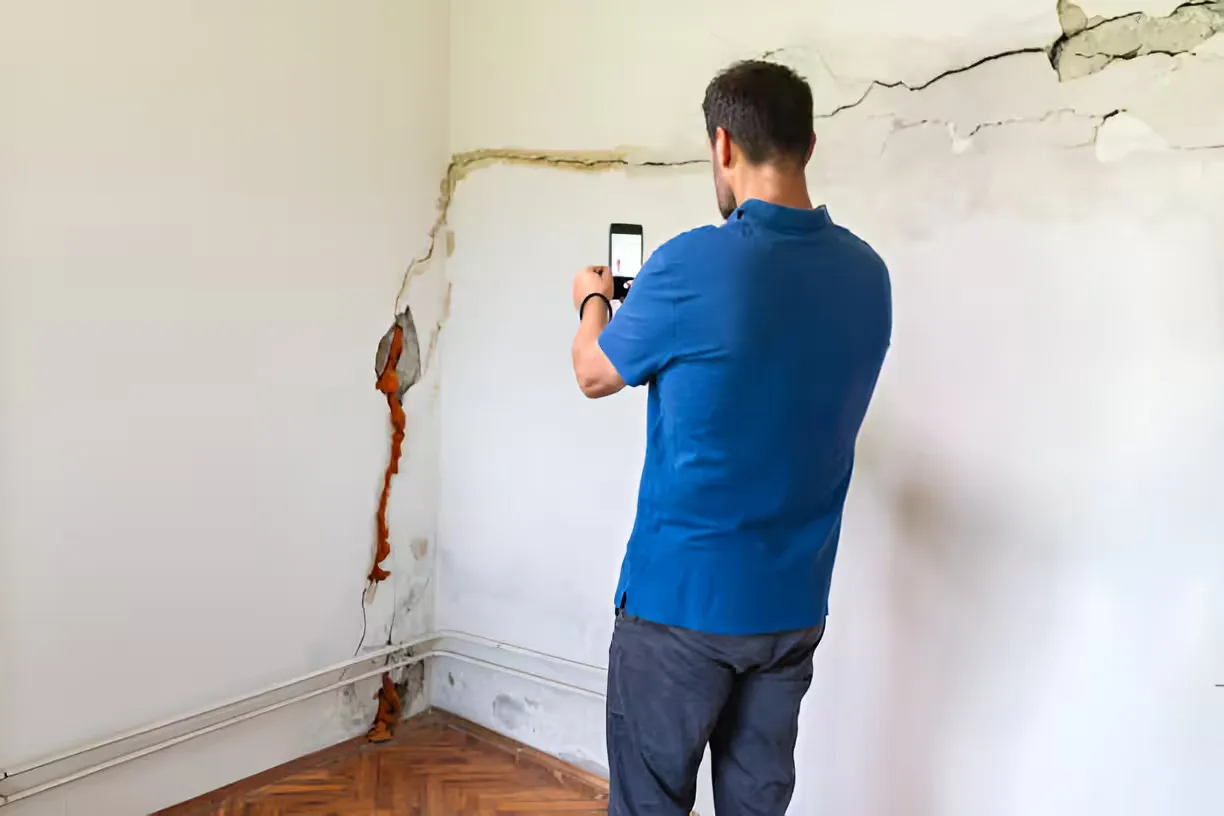
The second is heat without burning. Heat warps, cracks and distorts material well beyond where flames reached.
Heat also opens the pores of porous material. That matters enormously, and we come back to it.
The third is smoke, which travels much further than fire. Smoke follows air, so it reaches every space air reaches.
The fourth is water, and it is the one people forget. Putting out a fire uses water, and that water is now in the floors and walls.
So a fire-damaged house typically has burnt material, heat-distorted material, smoke residue across a wide area, and a water problem, all at once.
Those four need different treatments and they interact. Wet soot behaves differently from dry soot.
That is why fire and smoke damage restoration is staged rather than done in one pass. Each stage sets up the next.
Why Is Soot So Hard to Clean?
Because it is not dust. It is a fine, oily, acidic residue.
Oily is the first problem. Water-based cleaning spreads oil rather than lifting it.
That is the whole reason professional cleaning starts dry. Dry sponges and specialist vacuums remove residue without pressing it in.
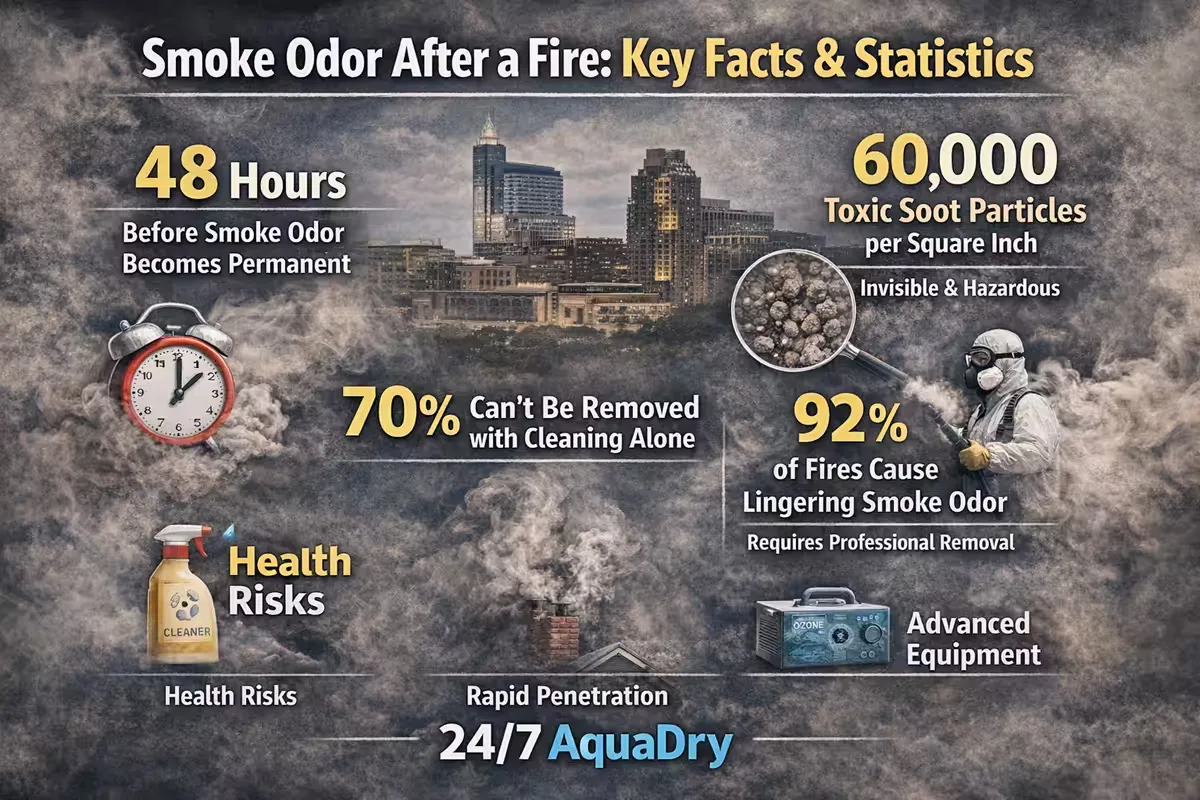
Acidic is the second problem, and it puts a clock on the job. Soot etches metal, discolors grout and yellows paint the longer it sits.
So delay is not neutral. Every day of waiting converts recoverable damage into permanent damage.
Fine is the third problem. Soot particles are small enough to get into pores, seams and gaps.
That is how residue gets inside closed cupboards and drawers. Nothing needs to be open for smoke to reach it.
Fuel type is the fourth variable. A grease fire, a plastic fire and a wood fire leave residues with different chemistry.
Method follows residue, which is why identification comes before cleaning on any competent job.
How Does Smoke Get Into Materials That Look Clean?
Through heat, and this is the mechanism that explains the smell.
During a fire, heat expands material and opens its pores. Wood, plaster, drywall and fabric all do this.
Smoke particles enter those open pores. They are small enough to go a long way in.
Then the fire is out, everything cools, and the pores close again. The residue is now inside the material.
That is why a room can be cleaned thoroughly and still smell like a fire. The cleaning removed what was on the surface.
Humidity brings the smell back out. Warm damp air reopens the process slightly and releases odor.
That explains the pattern people report. A house that seems fine in spring smells like a fire in July.
It also explains why air freshener fails. You are adding a smell on top of a source that is still there.
And it explains sealing, which is the stage that solves it. Surfaces that cannot be fully cleaned get an odor-blocking sealer that puts a barrier between the residue and the room.
That sealing has to happen before the rebuild covers those surfaces. Once drywall is up, the framing behind it is beyond reach.
Why Does the Order of Fire Restoration Work Matter?
Because each stage makes the next one possible, and doing them out of order wastes the work.
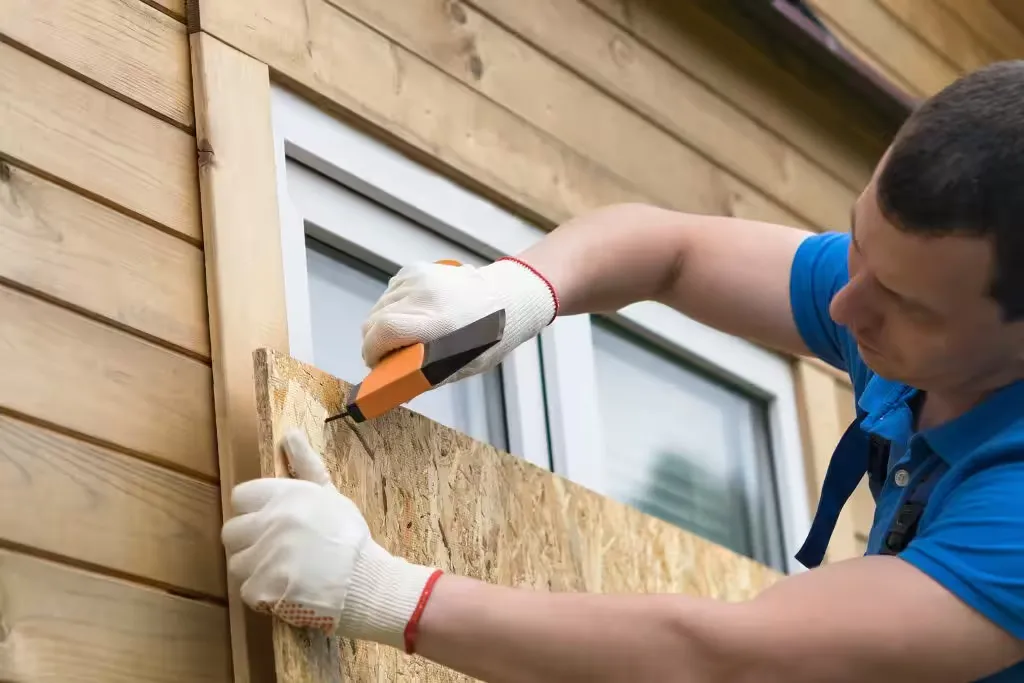
Stabilisation comes first. If the building is open, an emergency board-up closes it against weather and entry.
Nothing else is worth doing in a building that is still getting worse. Cleaning a room that will take rain tonight is wasted effort.
Water comes next, on its own clock. The US EPA says to dry water-damaged areas within 24 to 48 hours, and that in most cases mold will not grow if you do.
That window runs from the day of the fire, not from when the soot work finishes.
Containment goes up before cleaning starts. Cleaning disturbs residue, and without containment it lands in rooms that were fine.
Cleaning runs ceiling, then walls, then floors. Any other order means doing surfaces twice.
Dry methods precede wet ones on every surface. Reverse that and you have driven the residue in.
Odor treatment follows cleaning, because it cannot work while the source is still present.
Sealing follows odor treatment. Rebuild follows sealing. Skip a step and the one after it fails.
What Decides Whether a Material Is Cleaned or Removed?
Porosity, mostly, plus how much residue got in and whether it also got wet.
Non-porous surfaces are the easy case. Metal, glass, sealed tile and finished hard surfaces can usually be cleaned.
Semi-porous surfaces are a judgement. Finished wood and painted drywall depend on the residue and how long it sat.
Porous materials are the hard case. Unsealed wood, plaster, carpet pad, insulation and upholstery absorb rather than hold on the surface.
Wet plus porous usually means removal. Soaked insulation is not cleanable and does not reliably dry inside a wall.
Cost is the other factor, and it is legitimate. Three attempts at cleaning a material can cost more than replacing it.
Heat damage changes the answer too. A surface that was distorted by heat may need replacing regardless of residue.
Contents follow the same logic. Soft goods often clean well off site, and heavily soot-soaked sofas and mattresses usually do not.
Ask which surfaces are being cleaned, which sealed and which removed. A crew that cannot answer that has not finished the assessment.
Why Do Fire Restoration Crews Take Moisture Readings?
Because a fire job is also a water job, and you cannot judge water by looking.
Hoses, sprinklers and extinguishers all leave water behind. So does the humidity generated by the fire itself.
Water goes where you cannot see. Into wall cavities, under flooring, into the ceiling of the room below.
Dry to the touch is not dry. Surfaces dry first, cavities dry last, and the surface tells you nothing about the cavity.
A moisture meter reads inside the material. That is the only way to know whether drying is finished.
Readings get taken daily, at the same points, and written down. The equipment stays until the numbers say dry.
That log is also the evidence an insurance claim runs on. A reading taken on day one and day four is a fact.
Skipping this step is how a fire claim becomes a mold claim a month later. Two claims, one avoidable.
The space under the floor gets checked too. A wet crawl space keeps feeding moisture upward long after the rooms above look finished.
Thermal cameras help find where water went, but they do not measure it. A camera shows a temperature difference and a meter gives you the number.
Ask to see the readings. You should be able to watch the numbers come down rather than take somebody’s word for it.
What Happens to Your Belongings During Fire Restoration?
They get handled as a separate job, often somewhere else.
Sorting comes first. What can be cleaned on site, what needs off-site treatment, and what is not salvageable.
Soft goods usually leave the property. Clothing, curtains and bedding respond well to the right off-site process.
Hard goods can often be cleaned on site or at a shop, depending on the residue and the finish.
Electronics need specialist handling and should not be switched on. Soot inside a device conducts and corrodes.
Papers and photographs have their own recovery methods. Do not throw them out before someone has looked.
Everything gets inventoried as it goes. That list is what a contents insurance claim is built from.
Ask how the inventory is recorded before packing starts. Reconstructing it afterwards is much harder.
Contents work usually runs in parallel with the building work. It does not have to wait for the rebuild.
Take your own photographs of anything valuable before it is packed. Two records are better than one on a contents claim.
Tell the crew what matters to you before they start sorting. Sentimental items get a different level of effort if somebody knows.
How Long Does Fire Restoration Take?
It depends on how far the smoke went, and the range is genuinely wide.
Stabilisation is hours. Board-up and initial drying start the same day where possible.
Drying is typically three to five days for the water portion, longer where materials are dense or trapped.
Cleaning is the longest mitigation phase, because it is surface by surface across every room the smoke reached.
Odor treatment is short but has requirements. Some methods need the property empty while they run.
Sealing adds a day or two, and it sits between cleaning and rebuild.
Rebuild is a separate clock entirely, driven by materials and trades rather than by restoration.
Ask for the phases separately rather than one figure. One number for a whole fire job is a guess.
Anyone quoting a timeline before inspecting the property is guessing about your house specifically.
Insurance approvals sit between some of the phases. Emergency work normally starts without waiting, and the rebuild often does not.
Why Does Speed Matter So Much After a Fire?
Because three different clocks start at the same moment.
The acid clock is the first. Soot etches and stains, so recoverable damage becomes permanent damage day by day.
The mold clock is the second, and the EPA puts it at 24 to 48 hours.
The weather clock is the third. An open building keeps taking damage until it is closed.
Those three run at once, which is why fire response is measured in hours rather than days.
It is also why the first company to arrive often determines how much is saved. Not because of skill, but because of timing.
We answer the line at any hour, and on a dispatched emergency we are at your door within 60 minutes.
Because a fire is also a water loss, we handle the water damage restoration side on the same visit rather than sending someone else.
We are an IICRC Certified Firm, number 56517068, licensed general contractors in both Carolinas, and family-owned here since 2014.
If you have had a fire, call us. We cover fire damage restoration in Charlotte and across the metro.