How Professionals Remove Smoke Odor: Techniques That Work
· Updated August 23, 2026
On this page
Are you trying to find out how professionals remove smoke odor after a fire? You are in the right place, and the reason your own attempts have not worked is not effort.
In this article we cover why smoke smell survives a thorough cleaning, the six stages a crew actually works through, why air fresheners make things worse, how long the process takes, and what to ask before hiring anyone. Keep reading, because the stage that decides whether the smell comes back is the one most people have never heard of.
Why Is Smoke Odor So Hard to Remove?
Because the smell is not on the surface. It is inside the material.
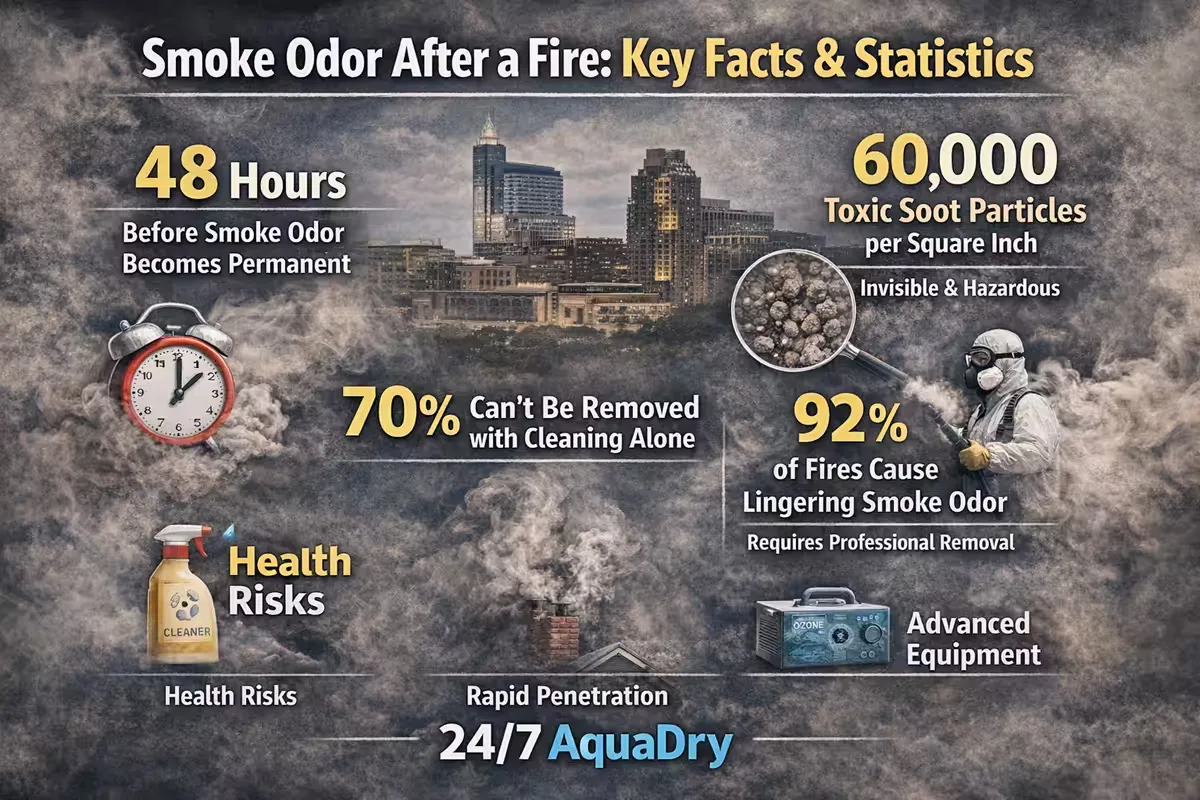
Smoke particles are extremely small. Small enough to get into the pores of drywall, wood, plaster, fabric and carpet backing.
Cleaning the surface removes what you can see. It does not reach what is producing the smell.
That is why a room can look completely restored and still smell like a fire. Nothing was done wrong, the cleaning just did not go deep enough.
Heat makes it worse. During a fire, heat opens the pores of material, the smoke goes in, and then everything cools and closes around it.
So the smell is effectively sealed inside. That is a physical problem, not a hygiene one.
Humidity brings it back out. This is why a house that smelled fine in March smells like a fire again in July.
Soot is oily too, which is why water-based cleaning spreads it rather than lifting it.
The HVAC system adds a fourth problem. If it ran during or after the fire, residue is in the ductwork and the system redistributes the smell every time it starts.
What Does a Smoke Odor Inspection Cover?
Everything the smoke reached, which is more than the fire touched.
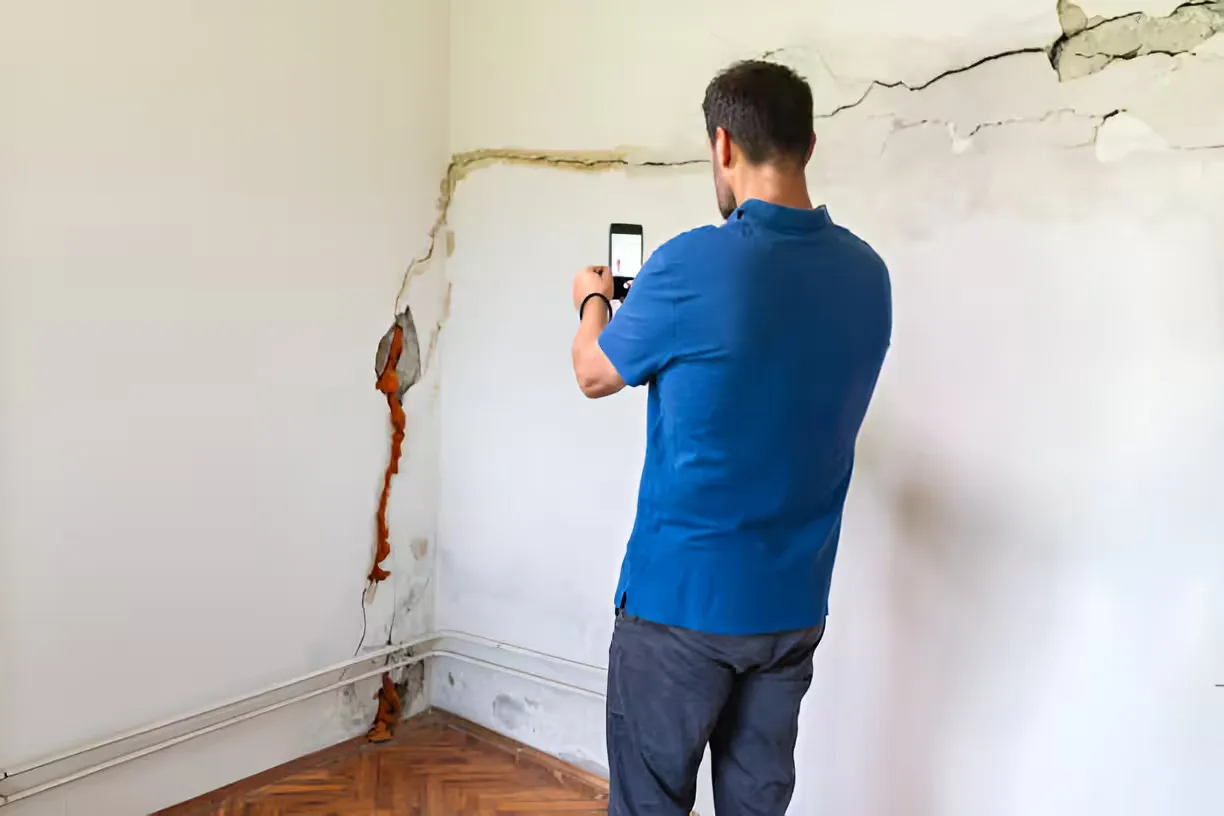
The crew maps how far the smoke travelled. That means checking rooms nowhere near the fire, including upstairs and inside closets.
Soot patterns on walls and ceilings show where air moved. Those lines are the map.
The residue type gets identified, because it changes the method. A grease fire, a plastic fire and a wood fire leave residue that behaves differently.
Every affected material gets assessed separately. Sealed surfaces, unsealed wood, carpet, upholstery and metal all respond differently.
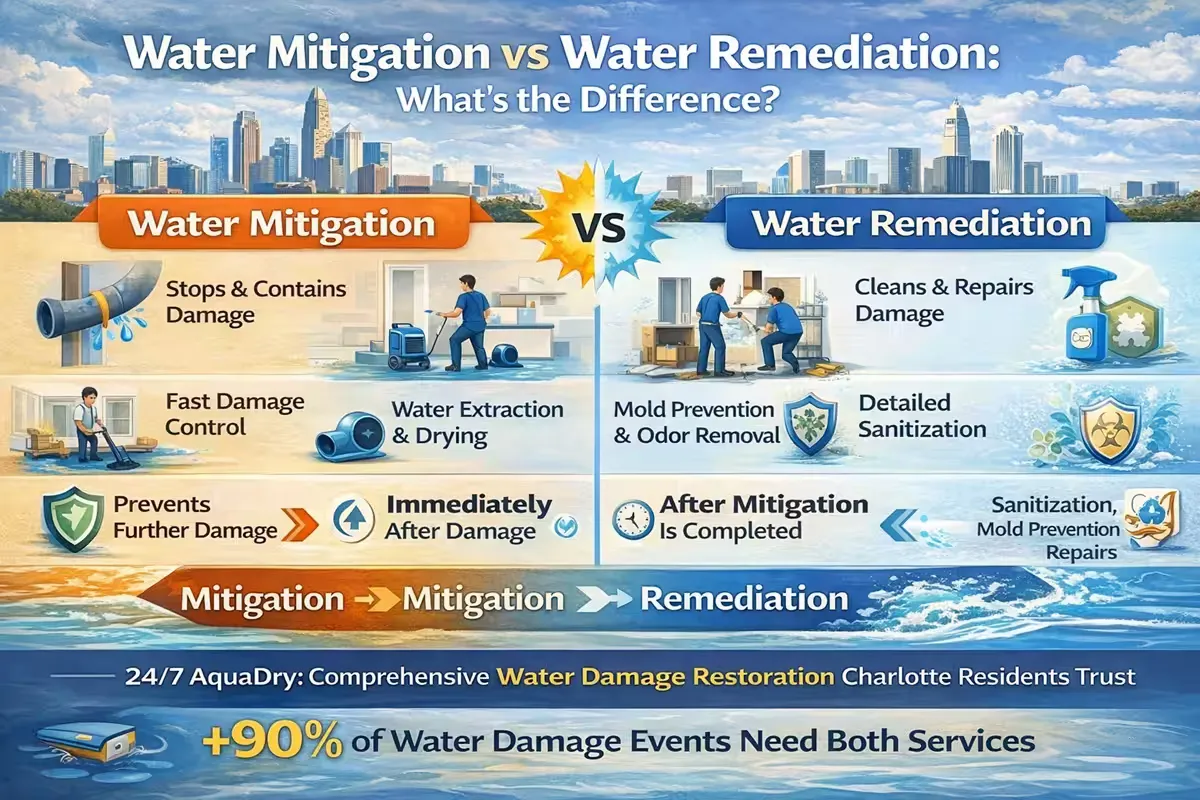
Anything that got wet gets moisture readings. Fires get put out with water, and that water is its own problem on its own clock.
Wet material also smells. Damp drywall and soaked carpet pad produce their own odor on top of the smoke, and drying is the only fix for that half.
If water reached the space under the floor, the crawl space gets checked too. A damp crawl space keeps feeding moisture upward long after the rooms look finished.
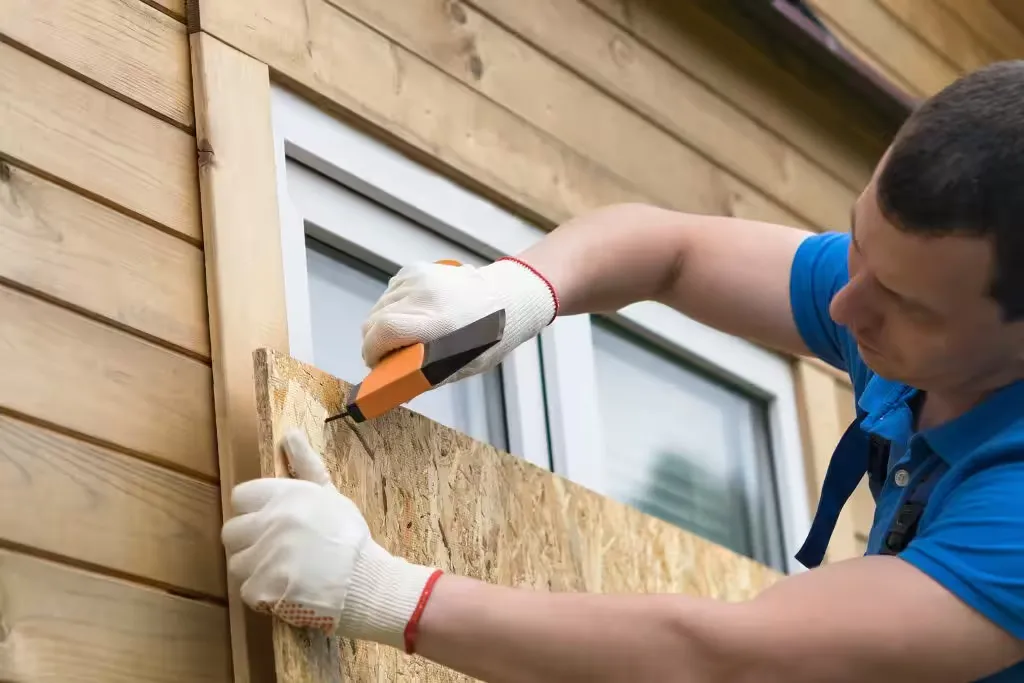
If the structure was opened by the fire or by the fire service, an emergency board-up goes on before any of the cleaning starts. An open building keeps taking weather.
The HVAC system gets a specific inspection. It is the most commonly missed source of a returning smell.
Contents get sorted at this stage. What can be cleaned, what needs off-site treatment, and what is not salvageable.
That map is what the scope is built from. A crew that starts cleaning before mapping is guessing at the size of the job.
How Is Soot Removed Before Odor Treatment?
Dry first, then wet, and never the other way round.
The first pass uses dry sponges and specialist vacuums. Those lift loose residue without pushing it into the surface.
That order is the single most important thing to get right. Wiping oily soot with a damp cloth drives it in permanently.
Wet cleaning follows, with solvents chosen for the residue and the material. What works on kitchen grease residue is wrong for burnt plastic.
Metal gets attention early. Soot is acidic, and fixtures, hinges and appliance housings corrode within days.
Ceilings come before walls, and walls before floors. Any other order means cleaning the same surface twice.
Anything holding heavy residue that cannot be cleaned comes out. Odor work cannot succeed while the source is still in the building.
That removal step is part of deodorising, not separate from it. You cannot treat around a soaked piece of carpet pad.
Ductwork is cleaned with its own equipment. Filters get replaced rather than cleaned, because a filter that ran during a fire is holding residue.
How Do Professionals Deep Clean Porous Materials?
Porous material is the hard case, and it is where the smell lives.
Drywall, unsealed wood, plaster, grout, fabric and carpet backing all absorb. Wiping them does very little.
Soft goods usually leave the property. Clothing, curtains and bedding respond well to the right off-site process.
Upholstery and mattresses are judged individually. Heavily soot-soaked pieces are usually replaced rather than treated.
Carpet gets assessed with the pad underneath it. The pad holds far more residue than the visible fiber.
Unsealed wood may be cleaned and then sealed. Sealing locks in what cannot be lifted.
Some materials are simply removed. Wet, contaminated insulation is not treatable and comes out.
That decision is a cost conversation worth having early. Removing a material is sometimes cheaper than three attempts at treating it.
Ask which surfaces are being cleaned, which are being sealed and which are coming out. If that answer is vague at the start, it gets vaguer later.
How Does Air Scrubbing Help Remove Smoke Odor?
It handles the part of the smell that is airborne rather than in a surface.
Air scrubbers pull room air through filtration and return it clean. HEPA filtration captures fine particulate that ordinary filters miss.
Activated carbon handles the gases. Particulate filters do not remove odor molecules on their own, which is why the carbon stage matters.
Machines run continuously rather than in bursts. They are sized for the room volume and a number of air changes per hour.
Ask how many machines and for how long. A single unit in a large open plan space is decoration.
Negative air machines do a related job. They hold the work area at lower pressure so residue does not migrate into clean rooms.
That containment protects the parts of the house that were fine. It is why a proper job does not spread the problem while fixing it.
This stage runs alongside cleaning rather than after it. Cleaning disturbs residue, and the scrubbers catch what gets airborne.
Filters get changed on a schedule during the work. A saturated filter stops working and nobody notices.
What Is Sealing and Why Does It Matter?
Sealing is the stage most homeowners have never heard of, and it decides whether the smell returns.
Some surfaces cannot be fully cleaned. Unsealed wood framing, subfloor and rough plaster hold residue that no solvent reaches.
Left alone, those surfaces keep releasing odor. That release increases with heat and humidity.
A sealer encapsulates what is left. It puts a barrier between the residue and the air in the room.
This is done on structural surfaces before rebuilding. Framing and subfloor get sealed before drywall goes back.
That timing is why it is easy to skip. Once the drywall is up, nobody can see whether it was done.
It is not paint. Odor-blocking sealers are a specific product class, and standard primer is not a substitute.
Ask directly whether sealing is in the scope. If a quote is much cheaper than the others, this is often the stage that is missing.
A house that smells fine at handover and smells like a fire the following summer usually failed at this step.
How Do Professionals Deodorise a Property After a Fire?
Only after the source is gone, the cleaning is done and the sealing is finished.
Hydroxyl generators are common because they can run with people and pets in the building. They work more slowly for that reason.
Ozone is more aggressive and requires the property to be empty. That affects your timeline and your accommodation.
Thermal fogging pairs with the original fire mechanism. It reopens pores with heat and carries a deodorising agent into them.
Which method fits depends on the residue, the materials and whether the house can be vacated. A crew should explain the choice rather than name a machine.
None of these work as a shortcut. Running ozone in a house that still holds soaked carpet pad wastes everyone’s time.
That is the difference between deodorising and masking. Masking adds a smell, deodorising removes one.
Air fresheners and scented sprays are the classic mistake. They work for a week and the underlying smell returns.
A final inspection should confirm the result. Ask what happens if the smell comes back, and get the answer before work starts.
Why Does DIY Smoke Odor Removal Usually Fail?
Not for lack of effort. The methods available at home cannot reach the problem.
Household cleaners are water-based, and soot is oily. Wiping spreads it and drives it in.
Scented products mask rather than remove. That is why the smell returns on the first humid day.
Vinegar and baking soda are useful in a kitchen and outmatched by a fire. They do nothing to residue inside plaster.
Consumer ozone machines carry real risks and are easy to misuse. Ozone is not something to run casually in an occupied home.
Repainting without sealing traps the problem underneath. The residue keeps releasing through the new paint.
The ductwork is beyond home equipment entirely. Without it, the system keeps redistributing the smell.
And nothing at home addresses sealing. That is the stage that decides the outcome, and it needs specific products applied at a specific point in the rebuild.
Doing the wrong thing first also makes the professional job harder. Driven-in soot is more expensive to fix than fresh soot.
How Long Does Smoke Odor Removal Take?
It depends on how far the smoke went, and the honest range is wide.
A single room with light residue can be a few days. A whole house with rebuild work runs to weeks.
The inspection is usually same day or next day. Nothing sensible starts before it.
Soot removal is the longest cleaning phase. It is surface by surface across every room the smoke reached.
Air scrubbing runs continuously through that work rather than being a separate block of time.
Deodorising is short but has requirements. Ozone in particular means the property is empty while it runs.
Sealing and rebuild add their own time. The rebuild is a separate clock from the mitigation.
Ask for the phases separately. “Two days of soot work, then scrubbing through it, then a day of treatment, then rebuild” tells you more than one number.
Speed matters throughout, because acidic residue does damage every day it sits. The company that starts tomorrow beats the one that starts next week.
We handle fire and smoke damage restoration alongside the water damage that comes with putting a fire out, and we are an IICRC Certified Firm, number 56517068.
If your house still smells like a fire, get in touch. We cover fire damage restoration in Charlotte and across the metro.