Smoke Damage Restoration: What to Expect After a Fire
· Updated August 23, 2026
On this page
Are you trying to find out what smoke damage restoration actually involves after a fire? You are in the right place, and the honest version has more stages than most people expect.
In this article we cover why smoke damage outruns the fire itself, what happens in the first 24 hours, how soot removal really works, why odor is a separate job from cleaning, what happens to your belongings, and how insurance usually handles it. Keep reading, because the stage most homeowners do not know exists is the one that decides whether the smell comes back in six months.
Why Is Smoke Damage Worse Than It Looks?
Fire damages what it touches. Smoke damages what it reaches, and it reaches much further.
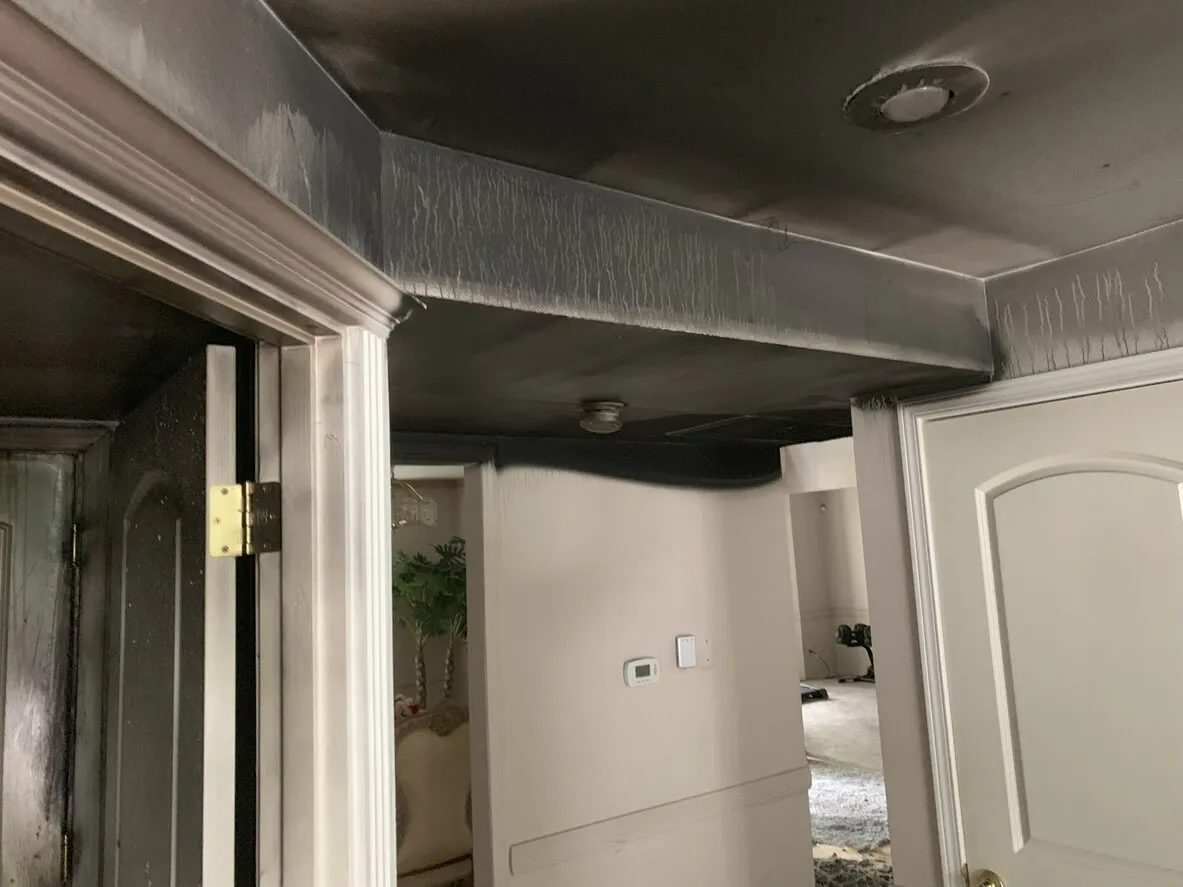
A contained fire in one room can leave residue across a whole floor. Smoke follows air, and air goes everywhere.
It moves through doorways, up stairwells and into wall cavities. It gets into closets, drawers and the backs of cupboards.
If the HVAC system was running, it went through the ductwork too. That distributes residue into rooms the fire never came close to.
Soot is not just dark dust. It is fine, oily and acidic, and it bonds to surfaces rather than sitting on them.
That acidity is why time matters so much. Soot etches metal, discolors grout and yellows paint the longer it sits.
Different fuels leave different residue. A grease fire, a plastic fire and a wood fire each produce a residue with different behavior.
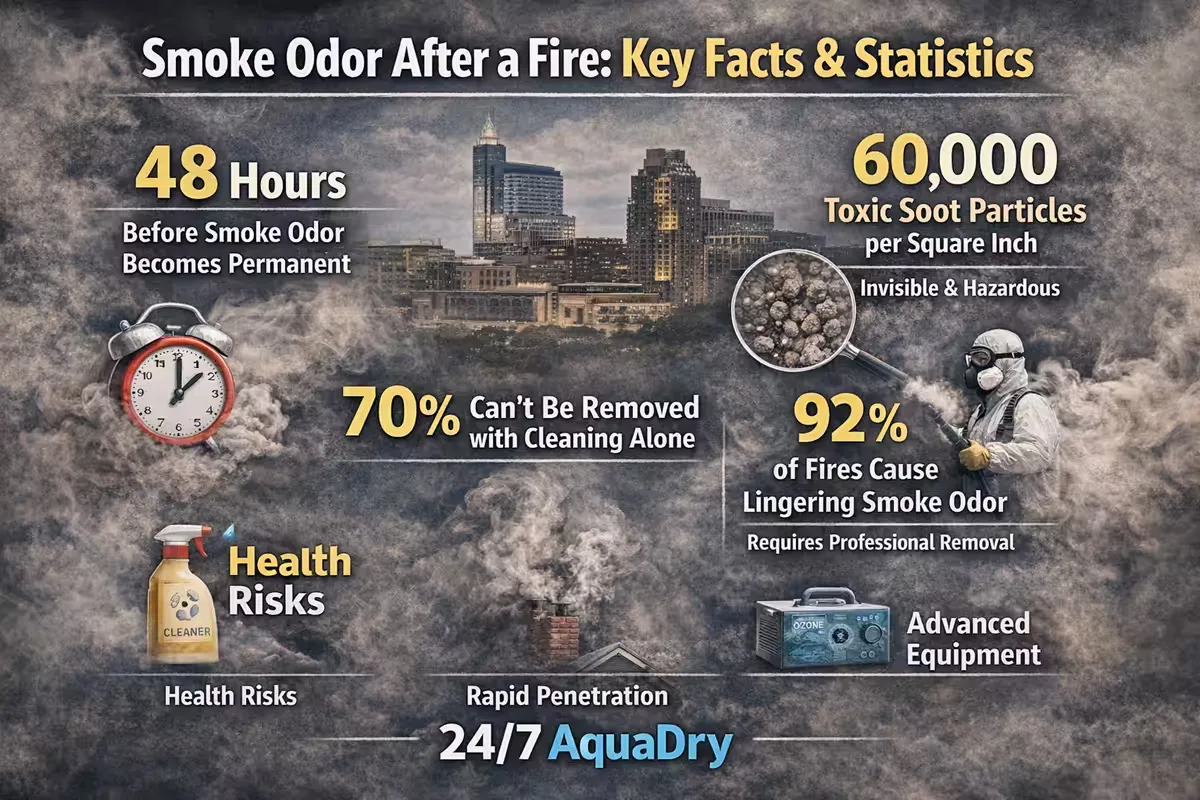
Odor is the third layer. Smoke particles lodge in porous material, which is why a cleaned room can still smell.
That combination is why fire and smoke damage restoration is a staged process rather than a deep clean.
What Happens in the First 24 Hours After a Fire?
Stabilisation, before any cleaning starts.
The first job is making the building safe and closed. That means checking what is structurally sound and what is not.
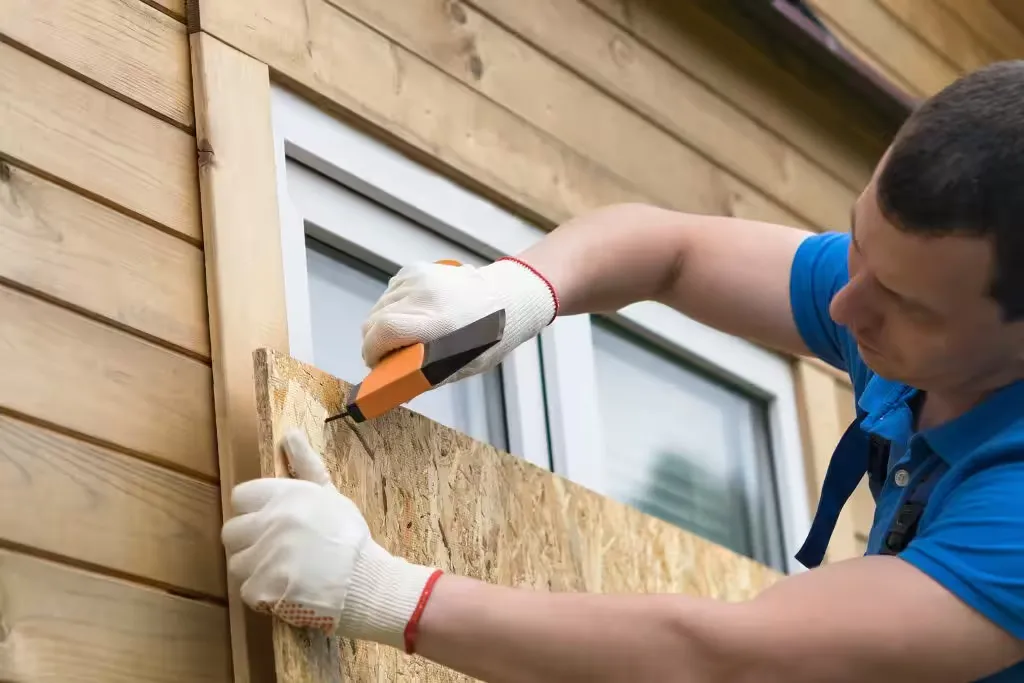
If the fire or the fire service opened the structure, it gets closed. Emergency board-up covers broken windows, damaged doors and holes in the roof.
That is not cosmetic. An open building takes weather and invites everything else that follows an empty house.
Water comes next, and it surprises people every time. Putting out a fire uses water, and that water is now in the building.
Extraction and drying start on the same day as the smoke work. The US EPA window of 24 to 48 hours applies here just as it does after a burst pipe.
Power gets assessed. Appliances and circuits that were in the fire do not go back on until they are checked.
Containment goes up where it is needed. Sealing off unaffected areas stops residue spreading during the work.
The point of all of this is to stop the damage growing. Nothing gets cleaned until the building has stopped getting worse.
What Does a Smoke Damage Inspection Cover?
More than the room the fire was in.
The crew maps how far the smoke travelled. That means checking rooms nowhere near the fire, including upstairs.
Soot patterns tell that story. The residue lines on walls and ceilings show where air moved.
The type of residue gets identified, because it changes the cleaning method. Dry soot, greasy soot and the residue from burnt plastic all behave differently.
Every affected material gets assessed. Painted drywall, unsealed wood, carpet, upholstery and metal all respond differently.
Moisture readings get taken wherever water was used. That runs alongside the smoke assessment rather than after it.
The HVAC system gets inspected specifically. If it ran during or after the fire, it is part of the problem.
Contents get sorted into what can be cleaned, what needs specialist treatment and what cannot be saved.
That inspection is what the scope of work is built from. A crew that starts cleaning before mapping is guessing at the size of the job.
How Does Soot Removal Actually Work?
Surface by surface, with a method chosen for each one.
The first pass is usually dry, not wet. Dry sponges and specialist vacuums lift loose residue without pushing it in.
That order is the part people get wrong at home. Wiping oily soot with a damp cloth drives it into the surface permanently.
Then wet cleaning, where the material allows it, with solvents matched to the residue. What works on a kitchen grease residue is wrong for a plastic fire.
Porous surfaces are the hard case. Unsealed wood, plaster and some paints absorb residue rather than holding it on the surface.
Sometimes those get sealed rather than cleaned. Sealing locks the residue in and stops it off-gassing.
Metal gets attention early because of the acidity. Fixtures, hinges and appliance housings can corrode within days.
Ceilings are done before walls, and walls before floors. Anything else means cleaning the same surface twice.
Ductwork is cleaned separately, with its own equipment. Skipping it is why some houses smell fine until the heating comes on in October.
HVAC filters get replaced rather than cleaned. A filter that ran during a fire is holding residue and will put it straight back into the air.
Anything that got wet is dried alongside all of this. Water inside a wall does not wait for the soot work to finish, and the mold window runs from the day of the fire.
The crew should be able to tell you which surfaces are being cleaned, which are being sealed, and which are coming out. If that answer is vague at the start, it usually gets vaguer.
Why Is Odor Removal a Separate Job From Cleaning?
Because the smell is not on the surface. It is in the material.
Smoke particles are small enough to lodge inside porous material. Cleaning the surface leaves them there.
That is why a room can look perfect and still smell. It is also why air freshener is not a treatment.
Masking the smell is the failure mode people pay for twice. It works for a week and comes back with the first humid day.
Real odor work starts with removing the source. Anything holding heavy residue that cannot be cleaned comes out.
Then the air and surfaces get treated. Depending on the job that can mean hydroxyl generators, ozone, thermal fogging, or more than one of them.
Those methods have different requirements. Some need the property empty while they run, which affects your timeline.
Sealing follows where needed. Porous surfaces that cannot be fully cleaned get sealed so residue stops releasing.
Odor work is also the stage most often cut short. If the smell comes back in a few months, this is usually the step that was rushed.
What Happens to Your Belongings After Smoke Damage?
Contents are handled as their own job, often off site.
The first step is sorting. What is cleanable, what needs specialist treatment, and what is not salvageable.
Soft goods usually go out for cleaning off site. Clothing, curtains and bedding do well with the right process.
Hard goods can often be cleaned on site or at a shop. Furniture, kitchenware and tools depend on the residue and the finish.
Electronics need specialist handling and should not be switched on. Soot inside a device is conductive and corrosive.
Papers and photographs have their own recovery methods. Do not throw them out before someone has looked.
Some things do not come back. Soot-soaked sofas and mattresses are usually replaced rather than cleaned.
Everything gets inventoried as it goes. That list is what an insurance contents claim is built from.
Ask how the inventory is recorded before the packing starts. It is much harder to reconstruct afterwards.
How Long Does Smoke Damage Restoration Take?
It depends on how far the smoke went, and the honest answer has a wide range.
A single room with light residue can be days. A whole-house job with rebuild work runs to weeks or months.
The mitigation phase is the fast part. Stabilisation, drying and cleaning usually happen first and quickest.
Odor work adds time, and some treatments need the property empty while they run.
Reconstruction is a separate clock entirely. Replacing cabinets, drywall and flooring depends on materials and trades.
Contents cleaning runs in parallel, often off site. That timeline is usually driven by the specialist facility.
Insurance approvals can add time between phases. Emergency work normally starts without waiting. The rebuild often does not.
Ask for the phases separately rather than one number. “Four days of drying, two weeks of cleaning, then a rebuild estimate” is a useful answer.
Anyone giving you one figure before inspecting the property is guessing.
How Does Insurance Handle Smoke Damage Restoration?
Fire is a covered peril on most standard homeowners policies, and smoke damage from that fire usually follows it.
Report the loss as soon as the property is safe. Reporting is not the same as committing to a claim.
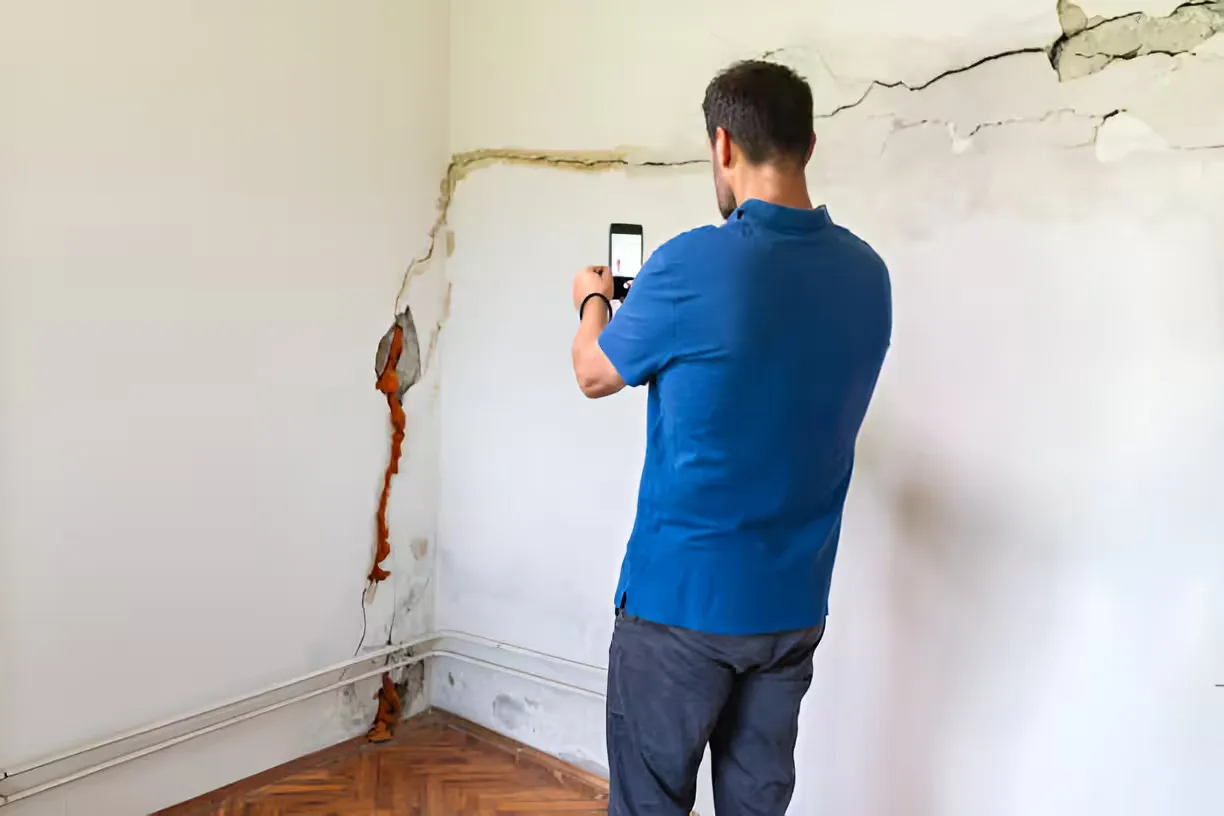
Document everything before cleanup starts. Photograph the rooms, the source, the soot patterns and the contents.
Keep the receipts for anything you spend in the meantime. Emergency accommodation and mitigation costs are often part of the claim.
Your policy may cover additional living expenses if the home is unliveable. That is worth asking about early rather than late.
Contents and structure are usually separate limits. Knowing both numbers changes how you approach the contents sorting.
The restoration company’s documentation matters as much as yours. Moisture readings, residue mapping, equipment logs and a contents inventory are what the claim runs on.
You generally choose who does the work. If you are told otherwise, ask your state’s Department of Insurance.
Our insurance claims process covers how the billing usually runs, including where the carrier pays the homeowner rather than us.
How Do You Choose a Smoke Damage Restoration Company?
Ask what they will do about the ductwork. It is the most commonly skipped step and the most common reason smells return.
Ask how they identify the residue type. If the answer is generic, the cleaning method will be too.
Ask whether odor treatment is a separate stage with its own method. If it is folded into “cleaning,” it is probably a masking product.
Ask how they document. Readings, photographs and inventories are what an insurance claim is decided on.
Ask whether they handle water damage as well. Fires get put out with water, and the two jobs run together.
Check the credentials you can verify. We are an IICRC Certified Firm, number 56517068, and licensed general contractors in North Carolina and South Carolina.
Ask about the rebuild. A company that does mitigation and reconstruction saves you handing off mid-project.
Speed matters more than the brochure. Acidic residue is doing damage every day it sits, so the company that starts tomorrow beats the one that starts next week.
If you are dealing with smoke damage now, call us. We handle fire and smoke damage restoration in Charlotte and across the metro, and the line is answered at any hour.