How Much Does Water Damage Restoration Cost? A Complete Guide
· Updated August 23, 2026
On this page
Are you trying to work out how much water damage restoration costs? You are in the right place, and this guide takes a different approach from most.
In this article we cover the four things that actually drive the number, why nobody can quote it over the phone, what changes with the type of water and the room, how mold multiplies a bill, and what you can do to keep it down. Keep reading, because a price range that does not describe your house tells you nothing about your bill. What does help is knowing what an assessment measures.
Why Can Nobody Quote Water Damage Restoration Cost Over the Phone?
Because the four things that set the price are all things you have to be in the house to measure.
Where the water came from is the first. Clean supply water and sewage are different jobs at the same volume.
How long it sat is the second. The same leak costs less on day one than on day four.
Which materials got wet is the third. Tile and drywall behave completely differently.
How far it spread is the fourth, and it is the one people underestimate most.
There is one number worth knowing before anyone arrives, and it is not a price. It is what insurers actually paid.
The Insurance Information Institute puts the average homeowners claim for water damage and freezing at $13,954 across 2018 to 2022. About one in 60 insured homes files one in a given year.
Read that for what it is. A national average of what carriers settled, not a quote, and not what this or any company charges.
Your loss can land well under it or well over it. What it does tell you is that water damage is an ordinary-sized claim rather than a rare disaster.
What Changes Water Damage Restoration Cost by Severity?
Severity is not a price band. It describes how much work the job needs.
A small, contained loss is clean water from a plumbing line, caught early, in one area. Extraction, moisture readings, air movers for a few days, minor material removal.
Almost nothing is thrown away and almost nothing is rebuilt. That is the cheapest version, and speed is what buys it.
A moderate loss crosses rooms or surfaces. Soaked carpet, wet drywall, saturated insulation, equipment running for several days.
The step up in cost is not the drying. It is the material that has to come out and go back in.
Once carpet pad, drywall and insulation are unsalvageable, you are paying for demolition and reconstruction on top of mitigation.
A severe loss brings in everything that multiplies a bill: flooding, an appliance failure nobody caught, or a burst pipe that saturated walls and subfloor.
Now there is demolition, sanitizing, longer dehumidification, mold prevention and a rebuild.
Square footage and structural involvement drive it from there, which is exactly why it cannot be quoted without a walkthrough.
How Does the Type of Water Change the Cost?
A lot, and this is the variable people never think about.
The industry standard sorts water into three categories, and the category decides how the job is run.
Category 1 is clean water from a sanitary source. The standard says a restorer “may proceed without contamination controls.”
That is the cheapest case. You are paying for extraction and drying and very little else.
Category 2 water arrived dirty or sat long enough to degrade. The standard requires cleaning before drying starts, plus contamination controls and protective gear.
That is an extra stage, so a Category 2 job costs more than a Category 1 job of the same size.
Category 3 is grossly contaminated. Sewage, waste line backflows and rising water from rivers or streams.
Here almost everything porous that got touched comes out rather than being dried. Carpet, pad and lower drywall are usually removed.
That is why a sewage backup of the same volume as a supply leak is a much larger bill. The water dictates the scope.
Which Rooms Cost the Most to Restore After Water Damage?
The room matters because of what is in it and what is under it.
Basements are usually the most expensive. They collect volume, and finished basements have flooring, walls, contents and often HVAC in them.
They also sit at the bottom, so water from anywhere above ends up there.
Kitchens are the second. Cabinets, toe kicks, drywall, flooring and appliances are packed tightly together.
Water from a refrigerator line or a dishwasher travels under cabinet bases where nobody can see it. Particleboard cabinet bases swell and do not recover.
Bathrooms vary enormously. A small overflow caught quickly is cheap, and water under tile or behind a vanity is not.
Crawl spaces are the quiet one. A wet crawl space is cheap to dry and expensive to ignore, because it feeds moisture upward for months.
Upstairs losses cost more than downstairs ones. Water goes down, so an upstairs bathroom leak damages two floors and the ceiling between them.
Hardwood is the material that changes the number most. It cups, it takes far longer to dry, and sometimes it does not come back.
What Are You Actually Paying For in Water Damage Restoration?
The job is a sequence, and each stage has its own cost driver.
Extraction is first. What it costs depends on how much standing water there is, how hard it is to reach, and what equipment that calls for.
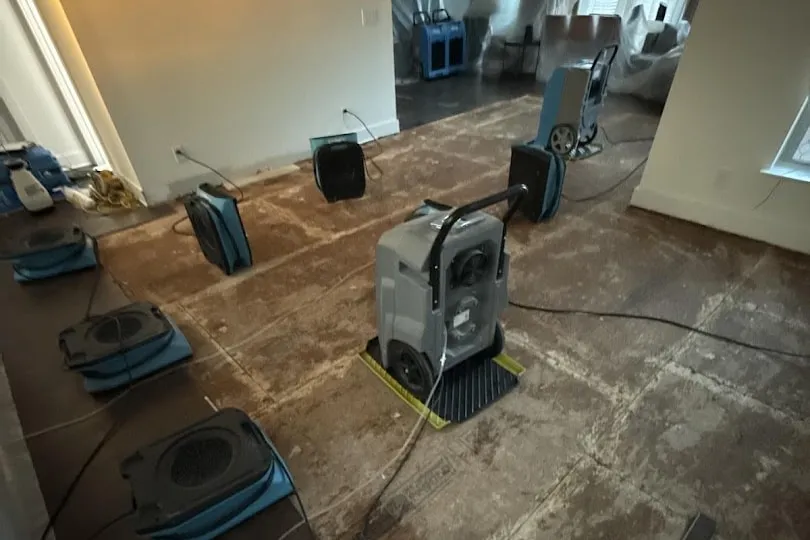
Drying is second, and it is billed by what the job needs. The two things that move it are how many days the equipment runs and how many materials are being treated.
This is the stage where catching the loss early pays for itself. A shorter drying run is a smaller bill.
Demolition is third, and it appears only when material cannot be saved. This is the step that separates a cheap job from an expensive one.
Sanitizing is fourth, and it depends entirely on the water category.
Reconstruction is fifth, and it is a different trade. Drywall, flooring, trim and cabinets are a build cost rather than a restoration cost.
Many people are surprised by that split. Drying the property is one phase. Returning it to pre-loss condition is another.
Ask for those two separately when you get a scope. It makes the number much easier to understand.
How Much Does Mold Increase Water Damage Restoration Cost?
Enough that avoiding it is the best money you will spend on the whole job.
The US EPA says to dry water-damaged areas within 24 to 48 hours, and that “in most cases mold will not grow” if you do.
Beat that window and there is usually nothing to remediate. Miss it and a drying job becomes a removal job.
Mold removal adds stages that drying does not have. Containment, negative air, removal of affected material, cleaning and then verification.
It also adds material loss. Mold in drywall or insulation means those come out rather than dry.
Then there is the insurance angle, which is where it really bites. Coverage for mold usually depends on it resulting from a covered water loss and on you acting quickly.
Mold that grew because a loss went unreported is much harder to claim. So the delay can cost you the coverage as well as the work.
That is the honest reason to move on day one rather than day four. It is not urgency for its own sake.
Speed is the cheapest lever you have on this entire bill.
Why Does a Fast Response Lower Water Damage Restoration Cost?
Because everything expensive about this job is a function of time.
Water spreads. Every hour it sits, it reaches more material, and material is what costs money.
Drying time grows with saturation. A material that is slightly damp dries in days and a saturated one may not dry at all.
Salvage rates fall with time. Carpet, pad, drywall and hardwood all have a window where they can be dried rather than replaced.
The mold clock is the sharpest one, at 24 to 48 hours.
Secondary damage compounds. Wet drywall sags, wet subfloor delaminates, and wet cabinets swell.
That is why crews doing water damage restoration in Charlotte push to get equipment in the same day.
It is also why we answer the line at any hour and arrive within 60 minutes on a dispatched emergency. It is not a marketing number, it is a cost lever.
Waiting for a convenient appointment is usually the single most expensive decision made on a water loss.
What Signs Mean You Need Professional Water Damage Restoration?
Not every spill needs a crew. Some do, and the line is clearer than people think.
Standing water over a small area is the obvious one. If a towel will not do it, equipment will.
Water that has been there more than 24 hours is the second. That is the window closing.
Anything involving Category 2 or 3 water is the third. Dishwashers, washing machines, toilets and any sewage.
Water that reached drywall, insulation or subfloor is the fourth. Those hold moisture and you cannot judge them by touch.
A musty smell is the fifth, and it means something has been wet for a while.
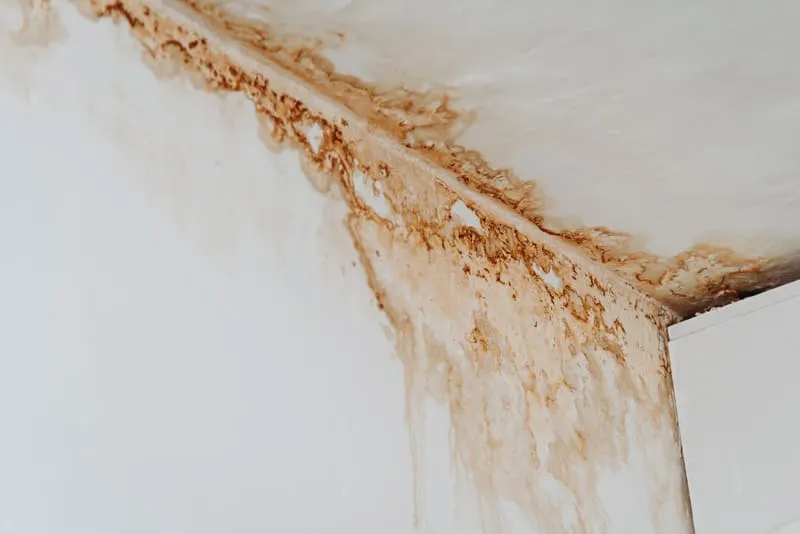
Cupping hardwood, bubbling paint, warped baseboard or a stain that keeps returning all point the same way.
If the ceiling below a wet room is stained or sagging, treat that as urgent. Water above a ceiling has weight.
And if you cannot find where the water went, that alone is a reason to call. Extent is the thing homeowners consistently underestimate.
How Can You Reduce Water Damage Restoration Costs?
Act immediately. That is the biggest single lever and it costs nothing.
Shut off the water at the source. If you cannot find the local valve, use the main.
Move furniture and contents off wet flooring. Furniture legs stain and cardboard wicks water upward.
Get air moving straight away, even before a crew arrives. Open interior doors and run the AC if the weather suits.
Photograph everything before anything moves. That record is what an insurance claim runs on.
Report the loss early even if you are unsure about claiming. Reporting is not the same as filing.
Do not turn the drying equipment off at night. It is sized for a number of hours, and every shutdown adds days.
Know where your main shutoff is before you need it, and check that it still turns. A valve that has not moved in fifteen years often will not.
Get the scope in writing, split into mitigation and rebuild. Two numbers are easier to check than one.
Ask what happens if a material can be dried instead of replaced. A crew that tries to dry hardwood before pulling it is doing you a favor.
If water is in your house right now, call us. We will start with measuring rather than quoting, because the measurement is what the number comes from.