From Sparks to Safety: Restoring a Home After an Electrical Fire
· Updated August 23, 2026
On this page
Are you dealing with electrical fire damage and trying to work out what happens next? You are in the right place, and this fire type differs from the others in one important way.
In this article we cover why electrical fires cause more property damage than their numbers suggest, what makes battery fires their own category, the first hour after one, what has to be replaced rather than cleaned, and how to reduce the risk. Keep reading, because the thing that makes an electrical fire different is where it starts, and that changes almost everything about the repair.
What Makes Electrical Fire Damage Different?
Where it starts. That is the whole distinction.
Most home fires start on a surface. A pan on a hob, a candle on a table, a heater next to a curtain.
Electrical fires start inside the structure. In wiring, in a wall cavity, in a ceiling void, in an attic.
The NFPA reports that electrical distribution or lighting equipment was the leading cause of home fire property damage.
That is the striking part. It is not the most common cause of fires, but it leads on damage.
The reason is location. A fire that starts inside a wall burns unseen for longer before anyone notices.
NFPA data shows where they begin. Twenty-nine percent start in the structure itself: an attic, a ceiling, a roof space or inside a wall.
Cable wire or cable insulation is the item first ignited in the largest share of them, at 36 percent.
So by the time an electrical fire is visible, it has usually been moving through the structure. What you can see understates it.
That is also why these fires are found late. There is no smell of cooking and no visible flame until it reaches a room.
Smoke alarms matter more here for that reason. They are often the only early warning there is.
Older homes carry more of this risk. Wiring installed for a house with three appliances is now running a house with thirty.
Why Are Lithium-Ion Battery Fires Their Own Category?
Because of what they do rather than how often they happen.
Lithium-ion batteries are in most of what we charge daily. Phones, laptops, tools, e-bikes and scooters.
The NFPA blames these fires on damage to the battery, overcharging, using the wrong charger, extreme heat or cold, and faults in the product.
The hazards are specific. The NFPA names them directly: “Heat, smoke, the release of toxic gases, and the potential for explosions are the dangers associated with lithium-ion battery fires.”
The mechanism is energy density. These batteries store a lot of energy in a small space.
When that energy comes out all at once it makes heat, and the heat turns parts inside the battery into gases that burn and are toxic.
That risk of blast is what makes these their own kind of job, rather than a version of a normal one.
Watch for the signs the NFPA lists. Stop using a device if the battery smells odd, gets very hot, makes popping sounds, swells, or changes color.
Charge on a hard surface, away from bedding, and not in a spot that blocks your way out of a room.
What Should You Do Immediately After an Electrical Fire?
Get everyone out first, including pets, and do not go back in for belongings.
Call 911 even if the fire looks out. This matters more with electrical fires than any other type.
Fire that started inside a wall can still be burning in the structure after the visible flames stop. Only a proper check settles that.
The fire service will look for it, usually with a thermal camera. That check is free and it is the reason to call even for a small one.
Do not put water on anything electrical. That includes the appliance, the outlet and the panel.
Do not touch the breaker panel if it is wet or if you have to cross a wet area to reach it. Let the fire service or an electrician handle it.
Once the property is released, keep the power off to the affected circuits. An electrician needs to inspect before anything is re-energised.
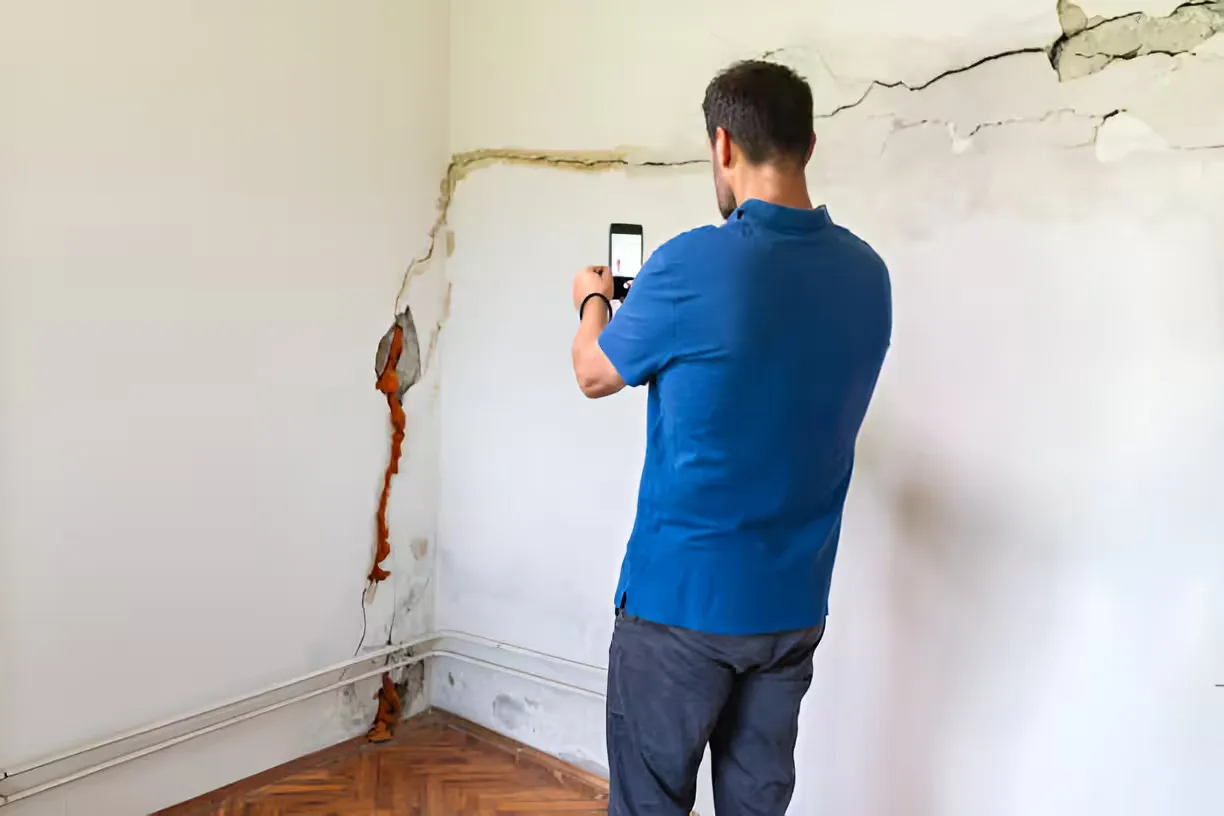
Photograph everything before cleanup starts, including the appliance or outlet involved.
Then report the loss to your insurer. Reporting is not the same as committing to a claim.
Why Should the Wiring Be Inspected After an Electrical Fire?
Because heat damages wiring in ways you cannot see from a socket.
The coating on cable breaks down with heat. A cable that looks fine can have damaged coating inside the wall.
That is a live risk, not a cosmetic one. Damaged coating is how a second fire starts weeks later.
Heat travels along conductors too. Damage is not confined to where the fire was visible.
Appliances on those circuits need checking too. A microwave or dishwasher that came through a fire may have damaged wiring inside.
The breaker panel gets checked as well. Breakers that met heat or water may not trip when they should.
This is an electrician’s job, not a restoration company’s, and a good restoration company will say so.
Ask for that inspection in writing. It is part of the record for the claim and for your own peace of mind.
Get it before the walls close up. Once drywall is back, any further inspection means opening it again.
If the house is older, ask whether the rest of the circuits are worth checking while the walls are open. Access is the expensive part of electrical work, and you have already paid for it.
Do not switch anything back on before that check. It is the most important rule after an electrical fire.
What Gets Cleaned and What Gets Replaced?
Wiring is usually replaced rather than cleaned. That decision belongs to the electrician.
Drywall over an affected cavity often comes out. You cannot inspect or replace wiring without opening the wall.
Insulation in an affected cavity generally goes too. It holds smoke residue and it is in the way of the electrical work.
Non-porous surfaces are usually cleanable. Metal, glass and sealed tile respond well.
Painted drywall depends on the residue and how long it sat. Soot is acidic, and acidic residue yellows paint over time.
Unsealed wood framing is often cleaned and then sealed. Sealing locks in what cannot be lifted.
Electronics are the ones people want to save and usually cannot. Soot inside a device conducts and corrodes.
Contents get sorted and listed like any other fire. Some clean up well off site and some do not.
Anything that was plugged in on an affected circuit goes on the list. Damage inside a device is not visible, and it is still damage.
Keep the failed part if the fire service leaves it. An adjuster may want to see the outlet, the cord or the appliance that started it.
Ask which surfaces are cleaned, which are sealed and which come out. If the answer is vague at the start, it gets vaguer later.
Does Water Damage Follow an Electrical Fire?
Almost always, and it is the half people forget.
Putting out a fire uses water, whether from a hose, a sprinkler or an extinguisher.
That water goes into the same wall cavities the fire was in. Now you have burnt material and wet material in the same space.
The US EPA says to dry water-damaged areas within 24 to 48 hours, and that in most cases mold will not grow if you do.
That clock starts on the day of the fire. It does not wait for the electrical inspection or the soot work.
So drying runs alongside everything else. Water damage restoration is part of a fire job, not a separate booking.
Open cavities dry faster, which is one advantage of the drywall having to come out anyway.
If the water reached the space under the floor, that gets dried too. A wet crawl space holds damp long after the rooms above look done.
If a pipe failed in the heat, that is a second source. Burst pipe cleanup runs alongside the fire work rather than after it.
Moisture readings get taken daily until the structure is dry. Dry to the touch means nothing inside a wall.
Skip this and a fire claim becomes a mold claim a month later. That is two claims where one would have done.
How Is an Electrical Fire Restored?
In stages, and the electrical inspection sits early in the order.
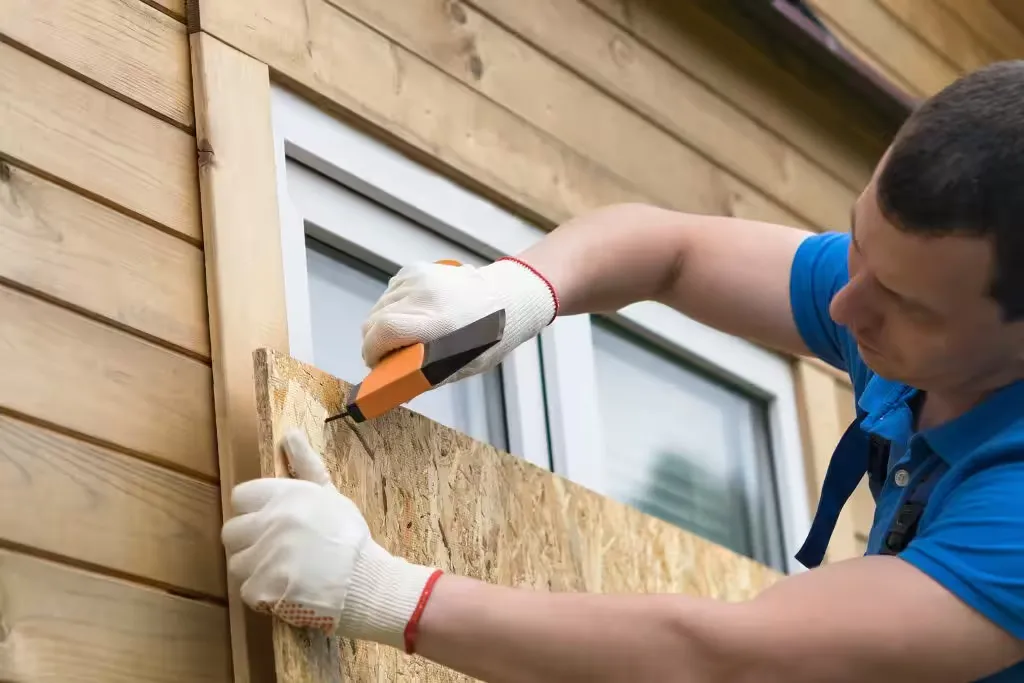
Stabilisation first. If the structure was opened by the fire or the fire service, an emergency board-up closes it.
Then the power goes off and the electrician looks. Nothing goes back on until that is done.
Water extraction and drying begin immediately, because that clock is already running.
Containment and air filtration go up before cleaning, so residue does not move into unaffected rooms.
Cleaning runs ceiling to floor, dry methods before wet, with the method chosen for the residue.
Affected cavities get opened where the wiring work requires it. That doubles as access for drying.
Odor treatment follows cleaning, then sealing on surfaces that cannot be fully cleaned.
Then the electrical repairs and the rebuild, in that order. Wiring goes in before the wall closes.
How Do You Reduce the Risk of an Electrical Fire?
Most of it is unglamorous and cheap.
Do not overload outlets, or run several hungry appliances off one circuit. Space heaters are the usual cause.
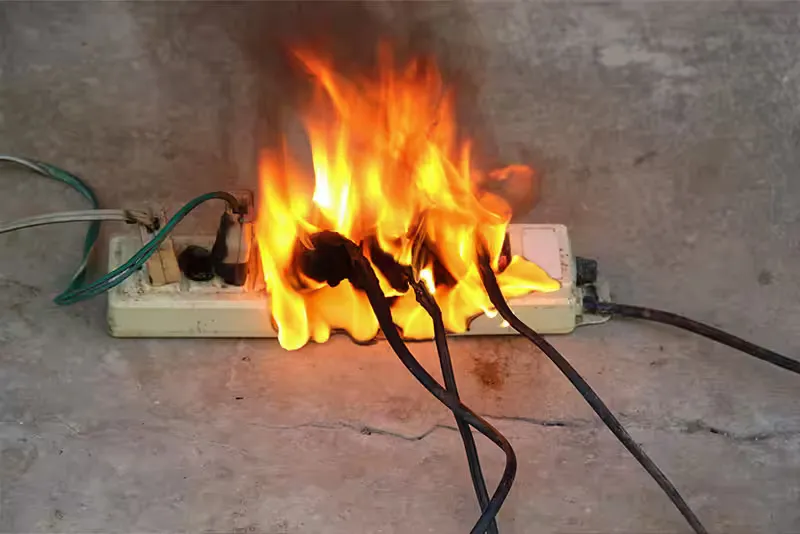
Replace damaged cords rather than taping them. A frayed cord is the item first ignited in a large share of these fires.
Do not run extension leads under rugs or across doorways. Being squashed damages the coating where nobody can see it.
Use the charger that came with the device. The NFPA warns against using charging gear that was not made for that battery.
Get the panel checked if the house is older, or if breakers keep tripping. Tripping is information, not a nuisance.
Get any warm outlet or switch plate looked at. Warmth at an outlet is not normal.
Buzzing, flickering or a burning smell near a fixture all warrant an electrician. Those are the warning signs people talk themselves out of.
Fit smoke alarms on every level and test them monthly. Electrical fires start where nobody is looking, so early warning matters more here.
Do not remove a battery from an alarm that keeps going off. Move the alarm instead, or replace it.
Keep the area around the panel clear. Storage stacked against it makes a bad night worse.
If you have had one electrical fire, treat the rest of the house as a question. The wiring that failed in one room is usually the same age as the wiring everywhere else.
If you have had an electrical fire, call us. We handle fire damage restoration in Charlotte, we are an IICRC Certified Firm, number 56517068, and we are licensed general contractors in both Carolinas.